 Follow Us on Google News


 Follow Us on Google Discover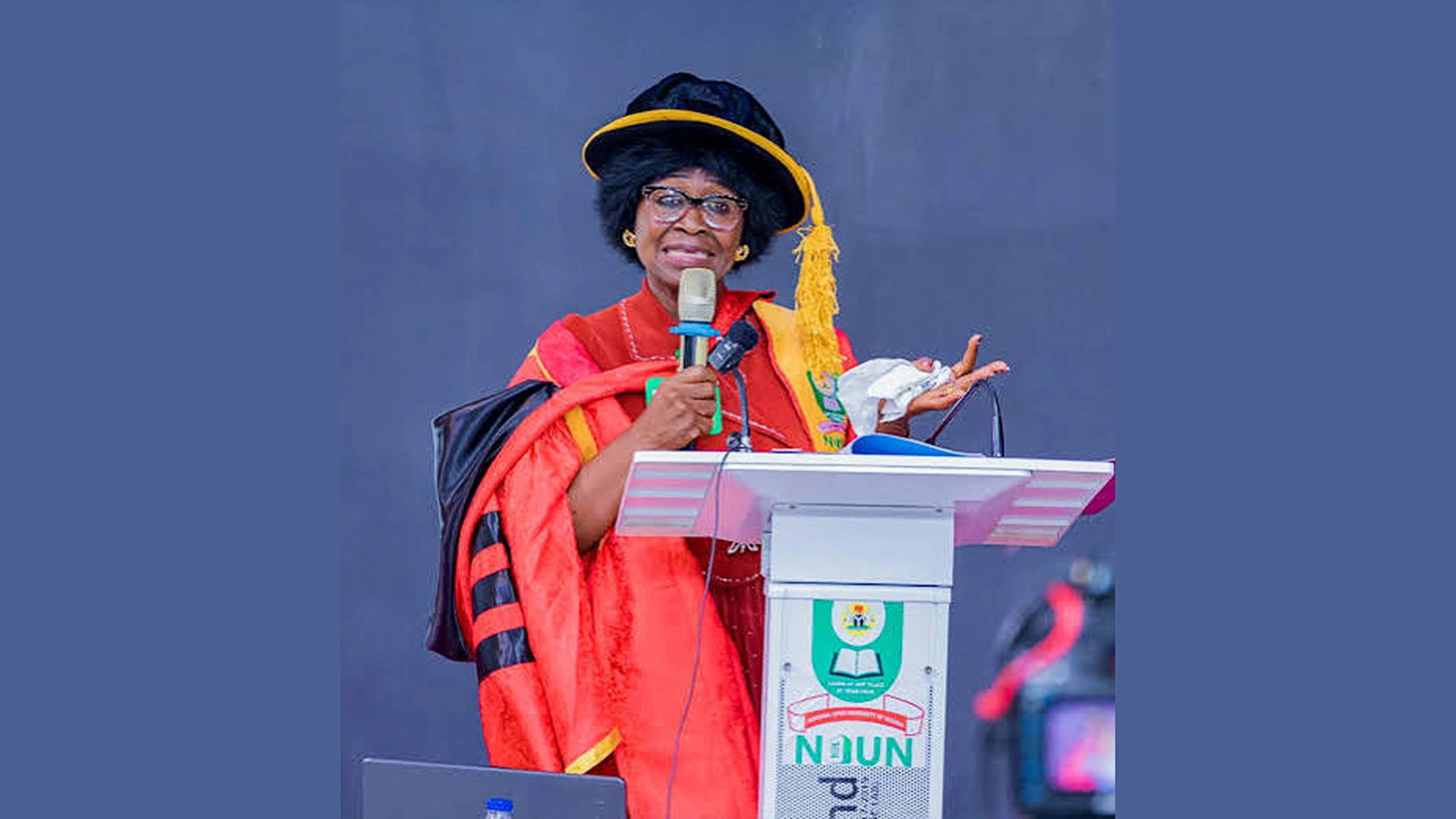
A Professor of Guidance and Counselling at the National Open University of Nigeria (NOUN), Professor Rosemary Ochanya Ogbodo-Adoga, has said that Nigeria cannot achieve meaningful and sustainable national development without investing in effective guidance and counselling services capable of addressing the educational, social and psychological challenges confronting its citizens.
Prof. Ogbodo-Adoga made the assertion while delivering the University’s 40th Inaugural Lecture, titled “Guidance and Counselling for All: A Pathway to National Development,” at the NOUN Conference Centre, Abuja.
She described guidance and counselling as indispensable instruments for addressing critical societal challenges, including examination malpractice, cultism, drug abuse, unemployment, insecurity, indiscipline, peer pressure, emotional instability and the growing burden of mental health concerns, particularly among young people.
According to her, guidance helps individuals understand themselves, discover their potentials and make informed life decisions, while counselling provides professional support that enables people to overcome personal, educational, vocational and social challenges.
Tracing the evolution of guidance and counselling from its global origins to its development in Nigeria, the professor highlighted the profession’s growing importance in responding to changing societal realities and the increasing complexities of modern education.
She stressed that every individual possesses unique talents and abilities that can be nurtured through proper guidance, noting that quality guidance services enable learners to make sound educational, career and personal decisions that ultimately contribute to national development.

The scholar identified occupational guidance as one of the most critical aspects of education, observing that many young people struggle to make informed career choices because of inadequate information and professional support. Proper career guidance, she noted, helps students align their interests, talents and abilities with appropriate career paths.
Ogbodo-Adoga further observed that rapid technological advancement, globalisation, changing family structures and evolving workplace demands have significantly increased the need for professional counselling services.
She also underscored the growing relevance of technology-assisted distance counselling, explaining that digital innovations now make it possible for individuals to access professional counselling services irrespective of their geographical location.
Describing counselling as both a preventive and intervention strategy, she said it equips individuals with healthy coping mechanisms, strengthens decision-making skills and promotes responsible life choices.
The professor outlined the essential qualities of professional counsellors, including integrity, empathy, confidentiality, emotional intelligence, effective communication, objectivity and unwavering adherence to ethical standards.
To strengthen the profession and improve service delivery, she recommended the development of standardised psychological tests and locally relevant counselling textbooks.
She also advocated the effective implementation of comprehensive guidance and counselling programmes in schools through orientation, appraisal, consultation, placement, follow-up services, research and counselling interventions.
The Don called for increased funding of guidance and counselling programmes and urged governments at all levels to create dedicated budget lines for counselling services within ministries of education.
She further recommended the continuous training and retraining of counsellors through scholarships and bursaries, as well as the recruitment and proper deployment of qualified professional counsellors in schools and other institutions.
Among her recommendations was strict adherence to the internationally recommended counsellor-to-student ratio of 1:250 to enhance the effectiveness of counselling services.
She also proposed the establishment of model educational institutions, including NOUN Nursery and Primary Schools in Abuja, Lagos and Port Harcourt, to expand access to quality education and strengthen learning outcomes.
Other recommendations included empowering the Counselling Association of Nigeria to regulate professional practice more effectively, enacting policies and legislation that promote counselling services, encouraging counselling for sustainable livelihoods, and strengthening entrepreneurship education to foster self-reliance among Nigerian youths.
Professor Ogbodo-Adoga maintained that no nation can attain sustainable development without making deliberate investments in the emotional, psychological, educational and career development of its people.
Reflecting on her years of service at the National Open University of Nigeria, she highlighted her contributions to teaching, research, mentorship, curriculum development and academic administration, noting that her efforts have consistently been directed towards advancing quality education and enhancing the University’s academic reputation.
The event featured the formal presentation of the inaugural lecture document to the Vice-Chancellor through his representative, as well as the presentation of a commemorative plaque to Professor Ogbodo-Adoga in recognition of her outstanding scholarly contributions and the successful delivery of the University’s 40th Inaugural Lecture.
Representing the Vice-Chancellor, Professor Uduma Oji Uduma, the Deputy Vice-Chancellor (Academics), Professor Chiedu Mafiana, described the lecture as timely, insightful and highly relevant, noting that guidance and counselling have become increasingly indispensable in addressing contemporary educational and societal challenges.
He observed that inaugural lectures provide distinguished professors with a unique platform to present the outcomes of years of rigorous research, scholarship and professional experience to the University community and the wider public.
Professor Uduma congratulated Ogbodo-Adoga on what he described as a well-researched, intellectually stimulating and impactful lecture, while urging policymakers, educators, parents and other stakeholders to accord greater priority to guidance and counselling as a strategic instrument for national development.

