
The Guardian learnt that most businesses now rely heavily on generators for their operations, with only a few able to afford solar power as an alternative.
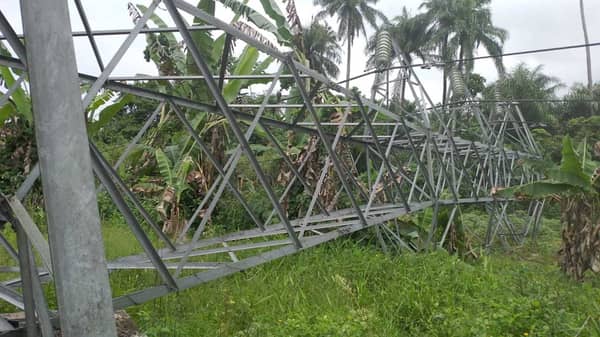
The situation arose after vandals destroyed 13 transmission towers along the Ahoada-Yenagoa 132KV Double Circuit transmission line, plunging parts of Rivers and Bayelsa States into darkness.
Although solar-powered streetlights installed by the Niger Delta Development Commission (NDDC) provide some relief, much of the Bayelsa State capital, Yenagoa, struggles to maintain nightlife and other economic activities dependent on electricity.
With fuel prices skyrocketing beyond the reach of many families, a significant portion of the population remains in darkness.
The high fuel cost has pushed low-income residents, who cannot afford solar power or generators, to buy water from vendors and pay to charge their phones and other essential appliances.
This has increased prices, with phone charging operators now demanding between N300 and N400 per device, up from the previous N200.
Similarly, water vendors have increased their rates, with a 20-litre container now costing N100, a steep rise from the previous N20 to N30.
A civil servant in the state lamented that he now spends between N2,000 and N4,000 weekly on water alone, aside from food and other expenses that push his monthly costs to around N250,000.
Chidi Ogugua, a phone merchant and repairer in the Tombia area of Yenagoa, said he spends N1,000 daily to access six hours of power from a private diesel-powered generator supplier. Additionally, he incurs transport costs of N600 to N800 daily and spends N1,500 per meal. He expressed deep concern over the harsh economic conditions.
Mabel, a single mother supporting her child and elderly mother, said the situation has left her struggling. As a petty trader selling used clothes, she earns an average of N50,000 monthly, depending on sales.
She disclosed that she could no longer afford rent for her one-bedroom apartment and had to withdraw her seven-year-old child from a private school due to the rising cost of fees, books, and transportation. Additionally, her mother, who has diabetes and high blood sugar, faces increasing medical expenses.
Coach Pere, a retired civil servant, shared his struggles in caring for his five children, who are still in school, amid the prolonged blackout and rising living costs.
Many residents are now questioning the government’s effectiveness, with the issue lingering for four months without resolution.
In response, Bayelsa State Governor Douye Diri acknowledged the hardship but emphasised that the damaged transmission infrastructure is under federal control.
He revealed that the state had stepped in with funds to address the situation.
Speaking at the Bayelsa Annual Thanksgiving Day, Diri apologised for the prolonged blackout and assured residents that power would be restored soon.
“We have intervened because our people are suffering. The Transmission Company of Nigeria should have fixed the infrastructure, but anytime from now, power will be restored,” he said.
The governor also highlighted efforts to accelerate the state’s independent power plant project, which is expected to be completed soon.

![[FILES] A picture shows the Argentinian flag. (Photo by DANIEL LEAL-OLIVAS / AFP)](https://cdn.guardian.ng/wp-content/uploads/2020/11/Argentina-.jpg)