 Follow Us on Google News
 Follow Us on Google Discover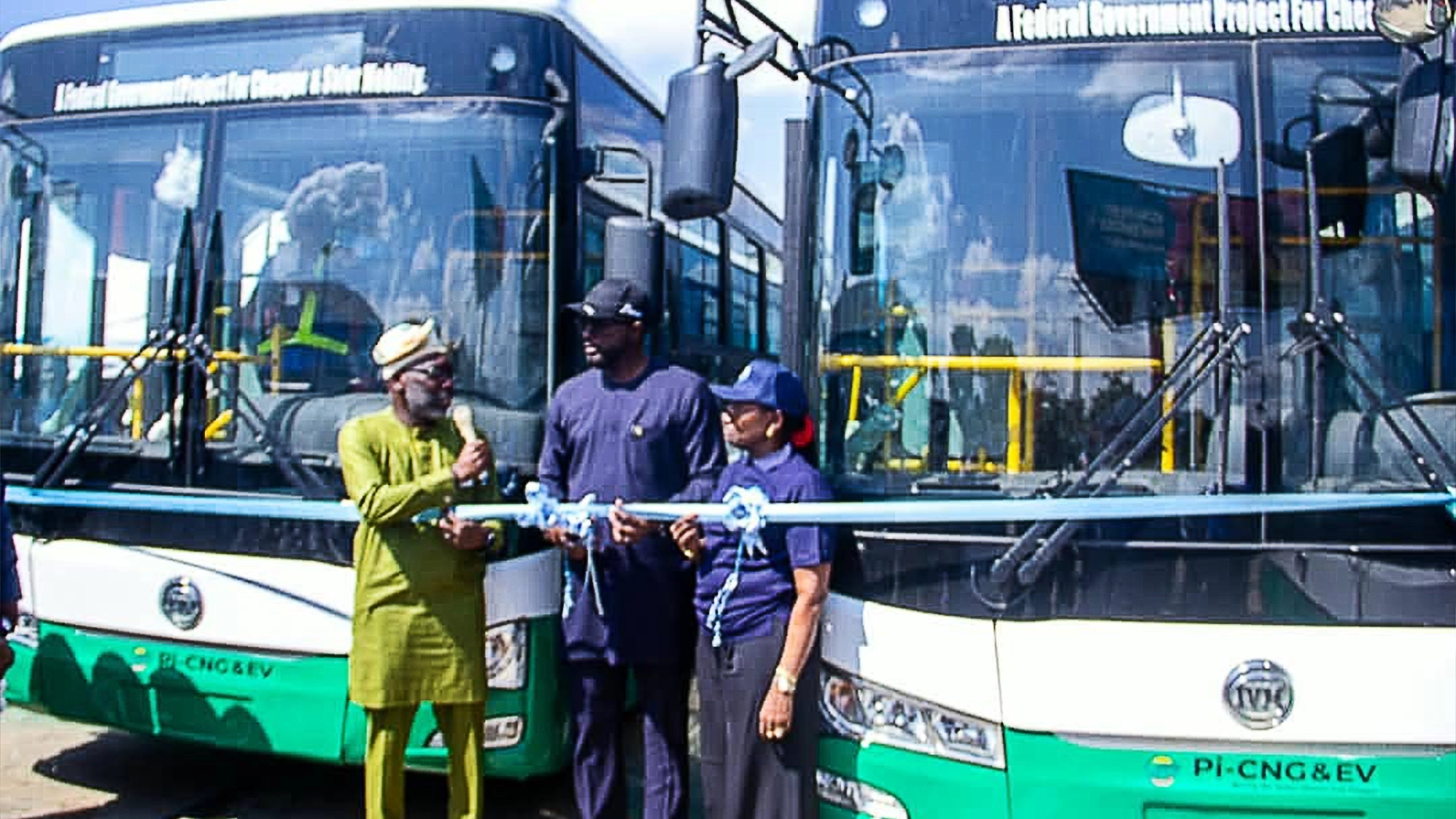
Despite the Federal Government’s October 1 target for Nigerians to begin experiencing measurable reductions in transportation costs, commuters in Lagos are yet to see any significant drop in fares, with fuel prices and daily transport costs remaining high.
President Bola Tinubu had, on September 19, said Nigerians should begin to see reductions in transportation costs from October 1, following an agreement with the 36 state governors.
He said an implementation committee had been established under the National Affordable CNG Transit Programme to identify priority transport corridors, determine appropriate interventions and put the necessary arrangements in place.
Tinubu also directed state governments to work with transport unions and commercial operators, support vehicle conversion and fleet deployment, facilitate infrastructure and ensure that savings from cheaper energy were passed on to commuters through lower fares.
The announcement came as the Federal Government expanded its Compressed Natural Gas (CNG) public transport initiative, with Lagos receiving 20 additional high-capacity CNG buses on September 30, a day before the October 1 target.
The buses were handed over to the Lagos Metropolitan Area Transport Authority (LAMATA), with its Managing Director, Abimbola Akinajo, saying the additional vehicles would increase public transport capacity and connect communities across the state.
The buses were expected to be deployed on routes with identified capacity gaps, particularly the Ikorodu-TBS corridor.
According to LAMATA, the latest delivery brought the number of CNG buses within Lagos’ regulated public transport system to about 170.
However, checks by The Guardian yesterday showed that the expected reduction in fares was not yet evident on several routes.
For instance, a trip from Ojota to Oshodi cost N1,000 on September 23, while the fare from Ojota to Toyota on the Oshodi Expressway was N1,300. The N1,300 fare was still being charged on the route yesterday.
On the Ikeja-Fagba route, commuters travelling by conventional buses paid N400 from Ikeja to Ogba and another N500 from Ogba to Fagba, bringing the total cost to N900.
Other routes monitored yesterday also showed little evidence of a fare reduction.
A trip from Cele to CMS cost about N1,500, while commuters paid another N1,500 from CMS to Oshodi. The fare from CMS to Ikotun was N1,800.
Oshodi to Obalende cost between N1,300 and N1,600, while commuters travelling from Mowe to Adeniji paid about N1,400. A trip from Adeniji to Obalende cost N500, while another N500 was charged from Obalende to the Eko Hotel roundabout.
Passengers interviewed said they were largely unaware of the promised reduction, and in some cases, did not know where to access the government-backed CNG transport services.
A passenger, simply identified as Ejiroghene, said she was unaware of the October 1 target but welcomed any move that could reduce the burden of daily transportation.
“I wasn’t aware. It would really be a good thing,” she said.
She said lower fares would provide relief for workers whose take-home pay was already being eroded by the cost of commuting.
Another passenger, Olugbenga Ade, said he had heard about the proposed reduction but was yet to see a significant change in fares.
Ade said he had also not noticed the CNG buses referred to in the government’s announcement operating on the routes he used or seen information explaining where commuters could access them.
He urged the government to provide clear information on the routes, locations and fares of the buses to enable commuters to benefit from the programme.
Commercial transport workers expressed similar concerns.
A commercial bus driver, who declined to be named, said he had heard about the government’s announcement but did not know where the CNG buses were operating or how commuters could access them.
Another driver, who also requested anonymity, said he was unaware of the planned fare reduction.
A commercial bus conductor interviewed by The Guardian equally said he had not heard about the programme.
He questioned how a major transport intervention could be implemented without adequate information reaching commuters and transport workers.
“If something like that is coming, information should already be everywhere because the buses will not hide. People are supposed to see them,” he said.
For commuters, the issue is therefore no longer simply whether CNG buses are available in Lagos, but whether they are sufficiently deployed, accessible and affordable to make a meaningful difference to everyday transportation costs.
The limited awareness among some passengers and transport workers also raises questions about how information on the new services is being disseminated and whether commuters know where and how to access them.
For workers who depend on public transport every day, the success of the initiative will ultimately be measured not by the number of buses delivered, but by how much they spend travelling to work and returning home.
Photo: CNG buses. Caption: Pi-CNG & EV Chief Operating Officer Tosin Coker (left) presenting the CNG vehicles to Lagos Commissioner for Transportation, Oluwaseun Osiyemi and LAMATA MD, Abimbola Akinajo at LAMATA PLACE in Ketu-Ojota, recently

