 Follow Us on Google News


 Follow Us on Google Discover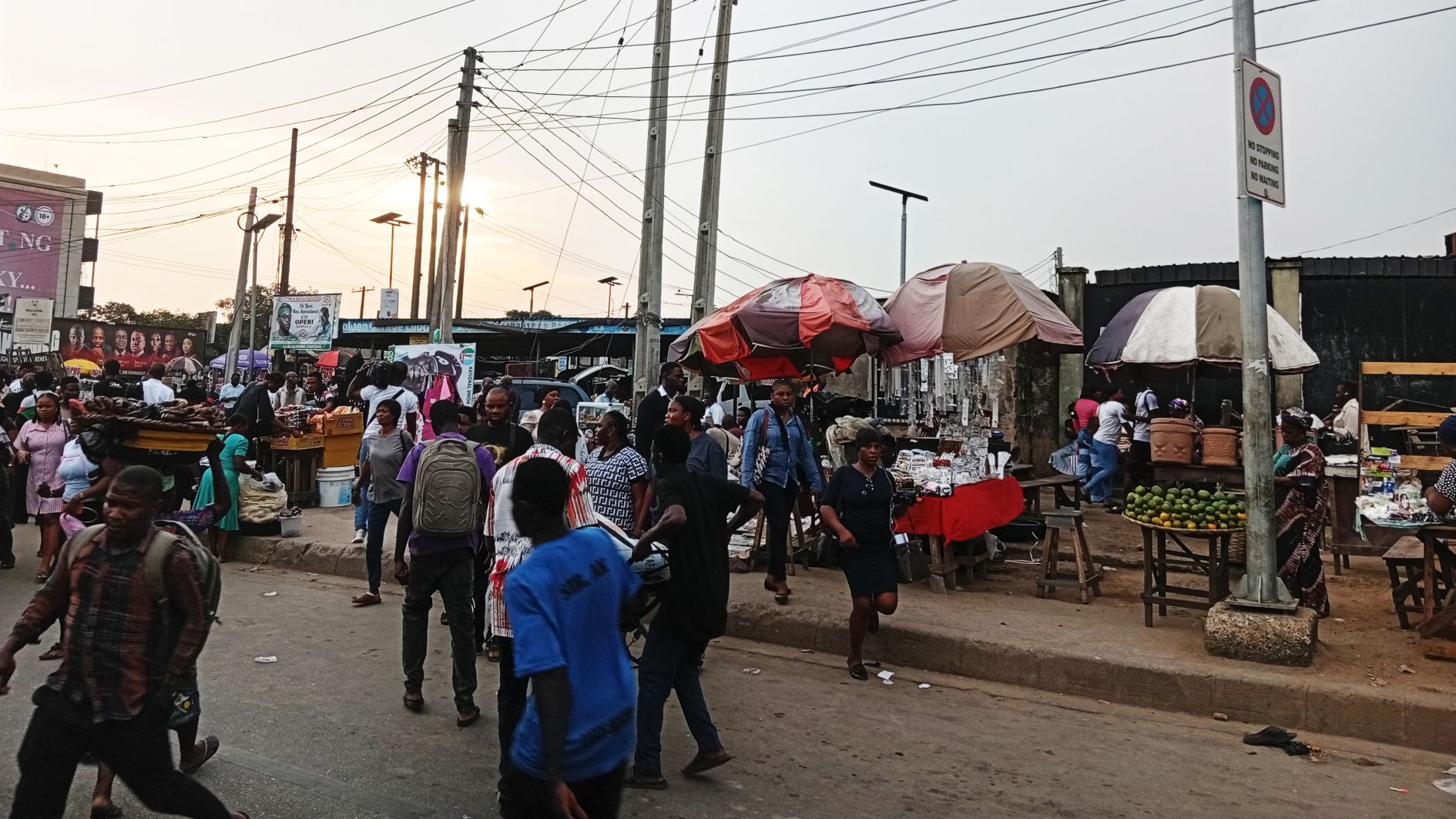
LAWMA begins clearing traders from unauthorised locations
Every evening, as traffic builds around Ojota bus stop in Lagos, traders spread their wares along the roadside, turning busy junctions into informal markets.
For commuters heading home from work, the stalls offer a convenient place to buy foodstuffs, footwear and household items without making a separate trip to a conventional market.
From Ojota to Cele Junction, Oshodi and the Secretariat axis leading to Magodo Phase 2, the pattern is familiar. As the working day winds down, traders emerge with their goods, positioning themselves where passing commuters can easily stop to shop.
Within minutes, spaces meant for vehicles and pedestrians become bustling commercial centres, highlighting the challenge of balancing informal commerce with the need to keep public spaces accessible.
For many Lagos residents, roadside markets have become part of their daily routine. But their persistence raises a question: will the state ever be able to move trading activities away from busy roads and junctions?

At Ojota bus stop, Madam Rafat Bello, who sells women’s palm slippers, said securing a regular trading spot was not simply a matter of arriving early and setting up shop.
According to her, different people control particular spaces, and traders have to make payments before using them.
She added that sellers generally return to their designated spots rather than occupy any available space.
Her account raises questions about how these spaces are allocated, who collects the payments and whether the arrangements have official authorisation. For traders, however, having a regular spot offers some certainty in a business where location and access to customers can determine daily sales.
Mallam Hussaini, who sells yams from a wheelbarrow, said he usually arrived at about 4:00 p.m., when other traders, including those selling tomatoes, also begin setting up. He explained that evening traffic brought more potential customers, making the hours after work particularly important for business.
Rather than wait for customers to visit conventional markets, traders take their goods to the routes commuters use daily. For those operating with limited resources, the evening rush offers an opportunity to make sales within a few hours.
For buyers, the attraction is equally straightforward: the market comes to them.
Ifunanya Okechukwu, a receptionist at an office along the Ikeja axis, said she often bought foodstuffs at Ojota on her way home from work. Because her route took her past the junction, she could pick up what she needed without making an additional trip to a market.
She described the prices as reasonable and said the variety of traders made shopping easier. If one seller did not have what she wanted, she could check with another nearby.
For Okechukwu, the convenience saves time and effort, particularly after a long working day.
Peter Chima, who repairs and sells phones around the Ikeja underbridge, also shops at Ojota on his way home to Ogudu. He said the junction provided an accessible place to buy items before continuing his journey, as he usually closed work around 7:00 p.m. The range of goods available, he added, made the area useful for people looking for everyday necessities beyond foodstuff.
Not all commuters depend on roadside markets for their regular shopping. Olamide, a student undertaking industrial training along the Ikeja axis, said he passes through Ojota daily while travelling between work and his home around Mile 2.
Although he rarely buys anything because he lives with his parents, he occasionally stops for small items such as shaving sticks, slippers and belts.
His experience reflects the different ways commuters use roadside markets. While some rely on them for regular household purchases, others stop occasionally to buy items without making a separate shopping trip.
The steady flow of potential customers helps explain why traders continue to return to the same locations, particularly during the evening rush hour.
Yet the commercial appeal of roadside markets comes with questions about the use of public space. Busy junctions must accommodate vehicles, pedestrians and public transport, as well as the movement of goods and people. When trading spreads into these areas, it can obstruct movement and create competing demands over access. The challenge is to balance the livelihoods of traders and the convenience of shoppers with the need to keep roadsides and junctions accessible to other users.
Clearing traders from busy junctions may address the immediate occupation of public space, but it does not necessarily remove the demand that sustains roadside commerce. The convenience of shopping along familiar routes, the availability of customers and the need for accessible trading locations all contribute to the markets’ continued appeal.
Any lasting solution would therefore need to consider not only where trading should take place, but also why sellers and buyers continue to favour these locations. As long as commuters find roadside shopping convenient and traders can earn a living from the evening rush, Lagos will continue to face the challenge of managing informal commerce in its busiest spaces.
The question is no longer simply whether roadside markets can be cleared, but whether the city can provide practical alternatives that protect livelihoods, meet shoppers’ needs and keep roads and junctions accessible to everyone.
Meanwhile, the Lagos Waste Management Authority (LAWMA), working with Kick Against Indiscipline (KAI) officials and the police, has begun clearing traders operating in unauthorised locations, including in Ikorodu.
The authority’s Managing Director, Dr Muyiwa Gbadegesin, said some people were arrested for street trading in unauthorised locations in Festac, Mile 2 and Ikorodu following enforcement operations conducted on October 12 and 13, 2026.
He said roads, walkways, medians and road setbacks must remain clear, urging traders to operate only in designated markets.
Gbadegesin added that LAWMA would sustain monitoring and enforcement to prevent traders from returning to the affected areas.
He said illegal street trading could contribute to indiscriminate waste disposal, obstruction and other environmental nuisances, undermining efforts to maintain a clean environment.
“Public roads and walkways must remain clear and accessible. We will sustain enforcement against unauthorised trading. We urge traders and residents to use approved markets,” he said.

