 Follow Us on Google News


 Follow Us on Google Discover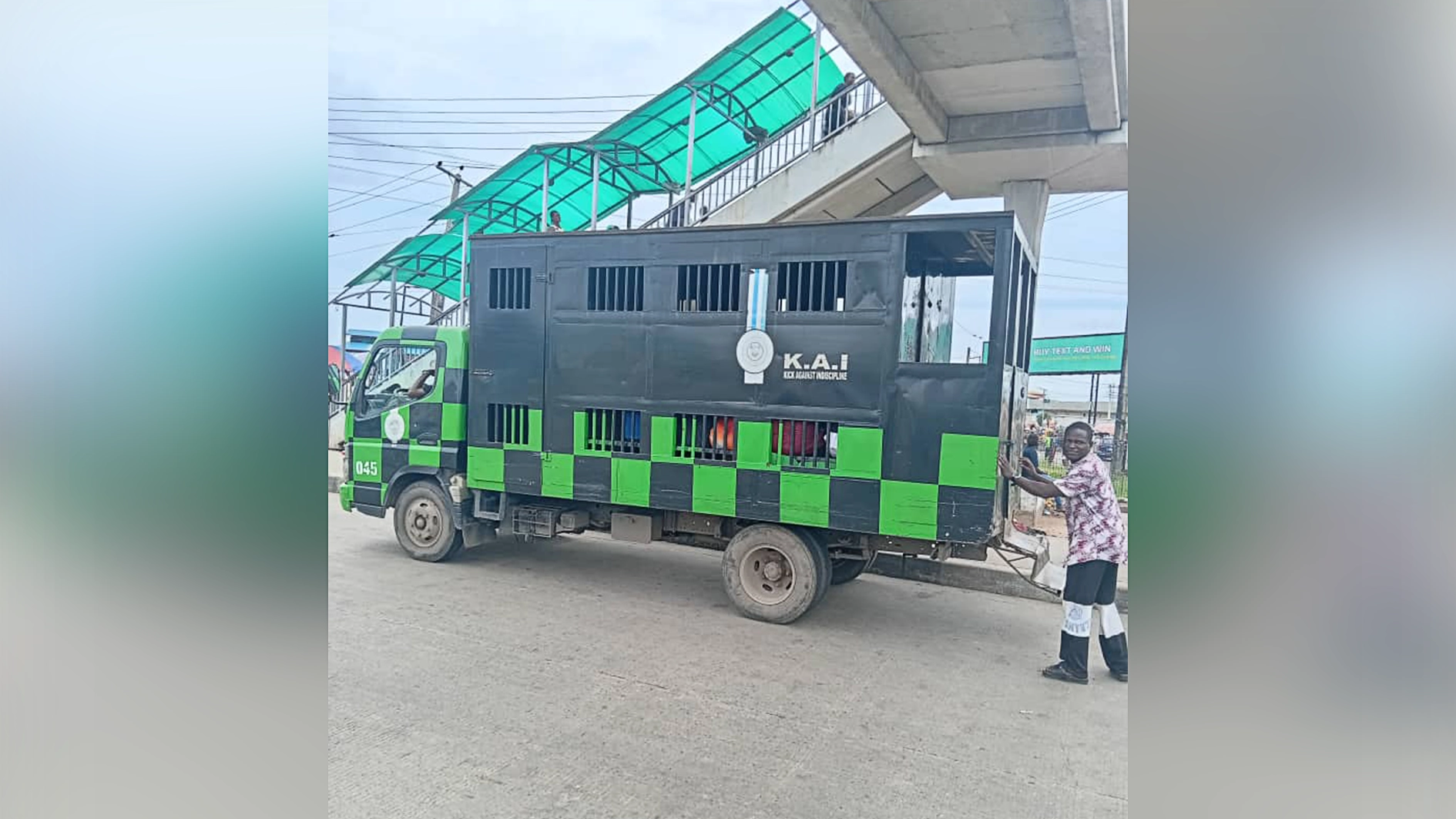
For many pedestrians at Cele Bus Stop along the Oshodi-Apapa Expressway, using the pedestrian bridge is a matter of choice and increasingly, a choice they are unwilling to make.
Despite repeated arrests and prosecution by the Lagos State Environmental Sanitation Corps (LAGESC), popularly known as Kick Against Indiscipline (KAI), pedestrians continue to risk their lives by crossing the busy highway instead of using the bridge provided for them.
The Guardian observed that KAI officials have been deployed to the Cele axis at least once a week over the past two years to enforce compliance.
Yet, the repeated enforcement has not stopped pedestrians from taking the shorter and, to them, seemingly easier route across the expressway.
Last week, September 8, 2026, The Guardian witnessed KAI officials intercepting pedestrians who crossed the highway. Some of those apprehended were taken into a KAI van stationed at the bus stop.
The arrests offered a glimpse into the difficulty authorities face in enforcing the ban on highway crossing, even where pedestrian bridges are available.

Head of the Public Affairs and Advocacy Unit of LAGESC, Lukman Ajayi, told The Guardian that between 15 and 20 pedestrians are arrested an average of three times a week in the Cele axis for crossing the highway.
He said those arrested on Tuesday were taken to the Oshodi Mobile Court, which has jurisdiction over the area, to determine their cases.
According to Ajayi, KAI officials do not determine the punishment imposed on offenders, as that responsibility rests with the court.
The recurring arrests have, however, raised a more fundamental question: why do pedestrians continue to risk being knocked down by speeding vehicles, or arrested by enforcement officers, when a pedestrian bridge is available?
Lagos State prohibits pedestrians from crossing highways at locations where designated pedestrian bridges are provided.
The government has repeatedly urged residents to use the bridges at major road crossings rather than put their lives at risk.
In February 2024, the Commissioner for the Environment and Water Resources, Tokunbo Wahab, described unlawful highway crossing as an offence and directed KAI and other law enforcement agencies to arrest and prosecute offenders.
He said convicted offenders could face a fine of N50,000 or imprisonment.
The state government later disclosed that KAI arrested 6,789 people in 2025 for unlawful highway crossing and failure to use pedestrian bridges.
But while enforcement statistics point to persistent defiance, conversations with some pedestrians suggest that the problem goes beyond unwillingness to obey the law.
For some, the bridge feels like an unnecessary detour, particularly when they are rushing to work, trying to catch a bus or returning home after a long day.
Kelechi Chibuzor, who said he was new to Lagos, told The Guardian that he was surprised to see pedestrians being arrested for crossing the highway.
He said he was unaware that crossing the road was an offence and would be more careful in the future.
According to him, crossing the highway saves time and is considerably less stressful than using the bridge.
For Omoye Fejiro, however, the problem is not simply about convenience. She said climbing pedestrian bridges, particularly in the evening after a tiring day, could be physically stressful.
“How many bridges will I have to climb at different stops on my way home? Besides, there are many places where the bridge has long been broken. What do we do then?”
Fejiro said her concerns were also shaped by a personal experience. She recalled that her phone was stolen while she was using the Cele pedestrian bridge early one morning on her way to work.
Although she acknowledged that she knew crossing the highway was an offence, she said she had yet to understand why pedestrians should not be allowed to cross in circumstances where using the bridge was difficult or unsafe.
The situation at Cele therefore presents a familiar dilemma in Lagos: authorities insist that pedestrian bridges are essential for public safety, while some commuters see them as inconvenient, poorly maintained or, in some instances, unsafe.
For motorists, however, every pedestrian who suddenly darts across the expressway creates another hazard. On a busy corridor such as Cele, where vehicles move at speed, an unexpected pedestrian can leave drivers with little time to react.
The continuing arrests may force some commuters to change their habits, but the persistence of the problem suggests that enforcement alone may not be enough.
For lasting compliance, pedestrians may also need to feel that the bridges provided for them are safe, accessible, well-maintained and worth using.

