A groundbreaking documentary chronicling one of the Nigerian Civil War’s darkest chapters, the Asaba Massacre of October 1967, premiered on October 26, 2025, at The Africa Centre in London, bringing renewed attention to an atrocity that has remained largely unacknowledged for nearly six decades.
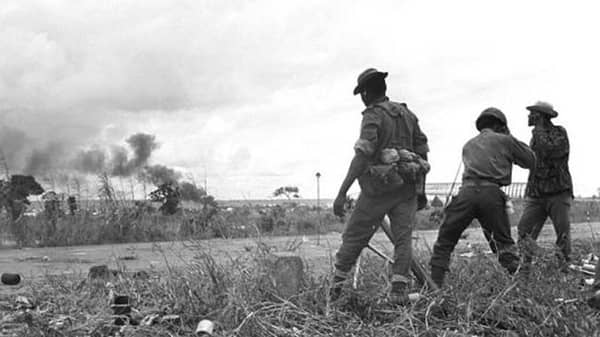
The film, titled “Earth Conceal Not the Blood Shed on Thee,” examines the systematic killing of scores of unarmed male residents of Asaba, the capital of present-day Delta State, by soldiers of the 2nd Infantry Division of the Nigerian Army. The killings began on October 4, 1967, and continued in sporadic waves for several weeks, fundamentally altering the character of the once-peaceful riverside community.
The Isama Ajie of Asaba, Chief Chuck Nduka-Eze, serves as the documentary’s narrative anchor, guiding audiences through a personal journey of discovery while exploring the broader implications of the tragedy. The film features testimony from eyewitnesses, historians, legal experts, and cultural figures, including Nobel Laureate Professor Wole Soyinka, the late musician and activist Onyeka Onwenu, and former BBC Legal Correspondent Professor Jon Silverman.
Among the most harrowing accounts captured in the documentary is that of Celestina Isama, an eyewitness who recalls the moment soldiers pulled her brother from her grasp. “I held my brother, they pulled him out of my hands, and in my presence, shot him down,” she recounts. “And I fell on top of my brother, shaking him, hoping that he will stand up, but he didn’t.”
The documentary reveals that men were separated from women before the massacre, with women taken to a maternity hospital while men were mowed down by machine gun fire at Ogbeosowe. Victims had gathered dressed in white regalia, dancing and chanting “One Nigeria” in a show of support for federal forces, unaware of the fate that awaited them.
The current Asagba of Asaba, Professor Epiphany Azinge, emphasizes the need for closure, noting that while the period from 1967 to today represents a healing process, “that healing process can never be concluded unless there is a foreclosure.”
The film’s producers describe the project as part of a “sacred quest of memorialisation” pursued on behalf of the Asaba community and for those who were silenced. Chief Nduka-Eze notes the painful irony that innocent blood shed for “One Nigeria” remains unacknowledged, while the names of perpetrators continue to adorn public spaces.
Lead Pastor of Trinity House Church, Pastor Ituah Ighodalo, laments the absence of meaningful dialogue about the massacre, stating that the questions surrounding the tragedy have never been “effectively, really, boldly, confidently, calmly addressed.”
The documentary also explores broader themes of justice and reconciliation. Lawyer and former counsel to the Oputa Panel, Professor Ibrahim Gambo Pam, underscores that “justice is based on truth-telling,” while legal historian Supo Shasore draws parallels between colonial suppression of identity and military government occupation.
Despite the trauma, the film presents Asaba’s recovery as a thriving Delta State metropolis as a testament to resilience. The producers suggest that Asaba’s experience offers lessons in “sangfroid resilience, survival, courage and positive accommodation” for communities worldwide grappling with historical trauma.
The documentary’s message is unequivocal: “Never Again.” As Onyeka Onwenu emphasizes in her contribution, “We must never forget, we must tell our children, we must tell our grandchildren, they must know what happened.”
The premiere represents a significant step toward ensuring that one of Nigeria’s most tragic episodes receives the recognition and remembrance its victims deserve.