 Get Guardian on Google
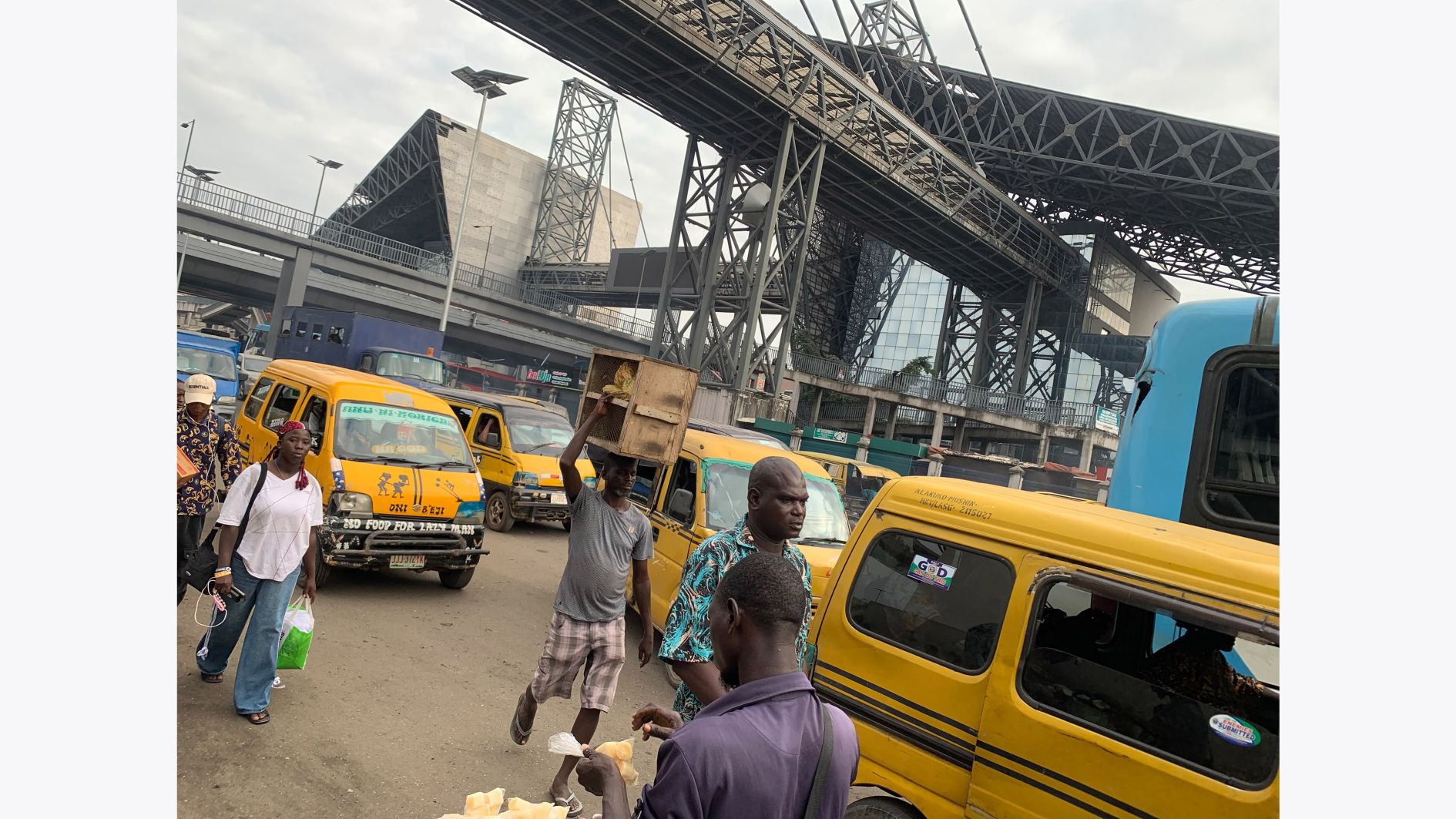
A Routine traffic stop on a Lagos road can quickly degenerate into an argument, accusations of extortion, physical assault and, sometimes, deadly violence.
Behind the recurring confrontations is a growing trust deficit between traffic enforcement officers and motorists, with both sides increasingly viewing each other with suspicion.
The breakdown in relations was evident on September 7 when a Lagos State Traffic Management Authority (LASTMA) official confronted a motorist, identified as Afeez Onifade, along a busy road during an enforcement operation.
The incident disrupted the movement of vehicles commercial buses travelling from Magboro towards Oshodi and other motorists were caught in the resulting traffic congestion.
From the roadside, the official appeared to be demanding payment from the motorist, although the purpose of the payment could not be independently established.
Onifade resisted, and an exchange of words soon escalated into a physical struggle as the official grabbed him.
For commuters and other motorists, the incident was another reminder of how quickly encounters with traffic officials can turn confrontational in Lagos.
While enforcement personnel complain of increasing hostility, attacks and resistance from motorists, road users accuse some officers of harassment, intimidation, arbitrary fines and extortion.
The opposing experiences have created an atmosphere in which routine enforcement is increasingly approached with apprehension rather than cooperation.
A review of publicly reported incidents by The Guardian identified at least 21 cases of assaults and serious confrontations involving traffic and other enforcement personnel between 2020 and August 2026.
The incidents involved motorists, transport operators and personnel of LASTMA, the Lagos State Environmental Sanitation Corps (LAGESC), popularly known as KAI, and the Vehicle Inspection Office (VIO). They were recorded in different parts of the state, including Anthony, Ojota, Mile 2, Costain, Lekki, Ile-Epo and Apongbon.
Although the figure does not capture every confrontation, as Lagos has no single publicly accessible database tracking such incidents, their recurrence over six years points to persistent friction between enforcement agencies and the public.
For motorists, the problem often begins with uncertainty over why they have been stopped, how an alleged offence is determined and whether the penalty imposed is legitimate. When an officer’s decision is disputed, the absence of an immediate, trusted mechanism for resolving the disagreement can turn a routine stop into a confrontation.
For enforcement personnel, however, resistance to lawful instructions, insults, threats and physical attacks have made roadside operations increasingly dangerous.
In March 2021, a LASTMA operative, Godwin Obasu, was killed during an attack by commercial drivers around Anthony, while his colleague, Adeniyi Hakeem, sustained serious injuries.
In September 2023, another officer was stabbed in Costain after stopping a bus for alleged obstruction.
In November 2024, a bus driver near Mile 2 allegedly set his vehicle and officers ablaze while resisting an enforcement operation.
In June 2026, a commercial bus conductor allegedly stabbed a LASTMA officer at Ile-Epo Market.
LASTMA’s Public Relations Officer, Adebayo Taofiq, told The Guardian that 48 officers had been involved in accidents in the preceding year, while one suffered an amputation, two were attacked and four died while on duty.
He said the agency, which started with about 350 officers, now had more than 4,000 personnel. By the first quarter of 2026, technology-driven monitoring had recorded nearly 18,000 traffic offences, alongside almost 5,000 physical enforcement operations.
The agency has also introduced handheld devices capable of capturing photographs, videos and timestamps of alleged traffic violations to provide evidence and reduce disputes.
However, the increasing use of technology has not entirely addressed the trust problem, particularly where motorists question the interpretation of an offence or the conduct of the officer enforcing it.
LASTMA has taken disciplinary action against personnel found guilty of misconduct.
In 2025, it announced the dismissal of 12 officers and demotion of 19 others, alongside other sanctions. In January 2026, it disclosed another 19 disciplinary actions, including five dismissals.
It also operates a toll-free complaint line, 3367, while supervisors conduct spot checks on officers.
Yet, for motorists confronted during enforcement operations, the immediate concern is often how to challenge an officer’s decision without risking vehicle impoundment, financial loss or a physical altercation.
A commercial bus driver on the Oshodi-CMS route, Fashina Ayomide, said rising fuel costs, passenger demands and traffic congestion placed motorists under considerable pressure, making roadside disagreements more difficult to manage.
“The road is hot. We are all under pressure,” he said.
Another driver, Olawale Rotimi, who operates between Oshodi and Ladipo, called for clearer procedures that would enable motorists to challenge fines and enforcement decisions without prolonged arguments.
The problem also extends beyond traffic enforcement. The Head of Public Affairs and Advocacy of LAGESC, Lukman Ajayi, said some of the agency’s personnel had been attacked at Ladipo Market, resulting in the arrest of 16 offenders.
He also cited an incident around a livestock market in Agege, where about 13 people were arrested after operatives were allegedly attacked with stones.
Although Ajayi acknowledged that misconduct by enforcement personnel occurs, he maintained that difficult working conditions should not excuse wrongdoing.
The State Secretary of the National Union of Road Transport Workers, Usman Olaniran Teslim, declined to comment on the confrontations involving commercial transporters, saying none of his members had been identified as participating in the clashes.
The Lagos State Ministry of Transportation attributed some confrontations to motorists’ resistance to lawful enforcement but acknowledged that the conduct of some officers could also contribute to disputes.
Its Public Relations Officer, Bolanle Ogunlola, said the government had introduced technology-driven traffic management systems, including Traffic Management Solution (TMS) cameras, Automatic Number Plate Recognition (ANPR) cameras and Intelligent Transport Systems, to reduce direct physical interactions between officers and motorists.
She said the government was also training and retraining personnel in communication, professionalism, civility and restraint to improve their relationship with road users.
For security experts, however, restoring public confidence requires more than technology and additional enforcement personnel.
The Director and Chief Executive Officer of Badinson Security Limited, Ibadin Matthew, called for a more structured transport system, improved regulation of commercial vehicles and a deadline for withdrawing partially functional and unroadworthy vehicles from the roads.
He also advocated better road infrastructure and stronger deterrence against attacks on enforcement personnel, arguing that convictions and appropriate punishment would discourage violence.
Similarly, the Director of Chiguard Services Nigeria Limited, Wilson Esangbedo, said technology could help reduce confrontations by allowing traffic violations to be documented electronically rather than through prolonged roadside arguments.
Esangbedo, who is also the Chief Executive Officer and Executive Secretary of the Nigerian Institute for Industrial Security, proposed linking electronically recorded traffic offences to vehicle licence renewal processes.
He also called for public reorientation on cooperation with law enforcement personnel and regular training of officers on courteous engagement with motorists.
The Lagos State Police Command’s spokesperson, Abimbola Adebisi, said confrontations between enforcement personnel and motorists, transport operators, traders and other members of the public could arise from misunderstandings over regulations, poor communication and heightened emotions during enforcement operations.
She added that some individuals resorted to threats and violence when confronted by enforcement officials, stressing that preventing such incidents required responsibility from all parties.
According to her, enforcement agencies must operate professionally, lawfully and with restraint.
The recurring clashes suggest that the problem goes beyond motorists’ refusal to obey traffic regulations or officers’ alleged misconduct. At its centre is a relationship in which neither side appears sufficiently confident that the other will act fairly.
When motorists suspect that an enforcement operation is intended to intimidate or extract money from them, compliance becomes difficult. Equally, when officers approach road users expecting resistance or abuse, routine enforcement can become unnecessarily confrontational.
Restoring confidence will therefore require transparent procedures for issuing fines, accessible channels for appealing enforcement decisions, prompt investigation of complaints and consistent punishment for both attacks on officers and proven misconduct by personnel.
Ultimately, the effectiveness of traffic enforcement in Lagos will depend not only on the number of officers deployed or the technology available, but also on whether motorists trust the people enforcing the law and whether officers can perform their duties without fear of assault.
Until that confidence is restored, routine traffic stops will remain potential flashpoints between those enforcing the law and those expected to obey it.