 Follow Us on Google News


 Follow Us on Google Discover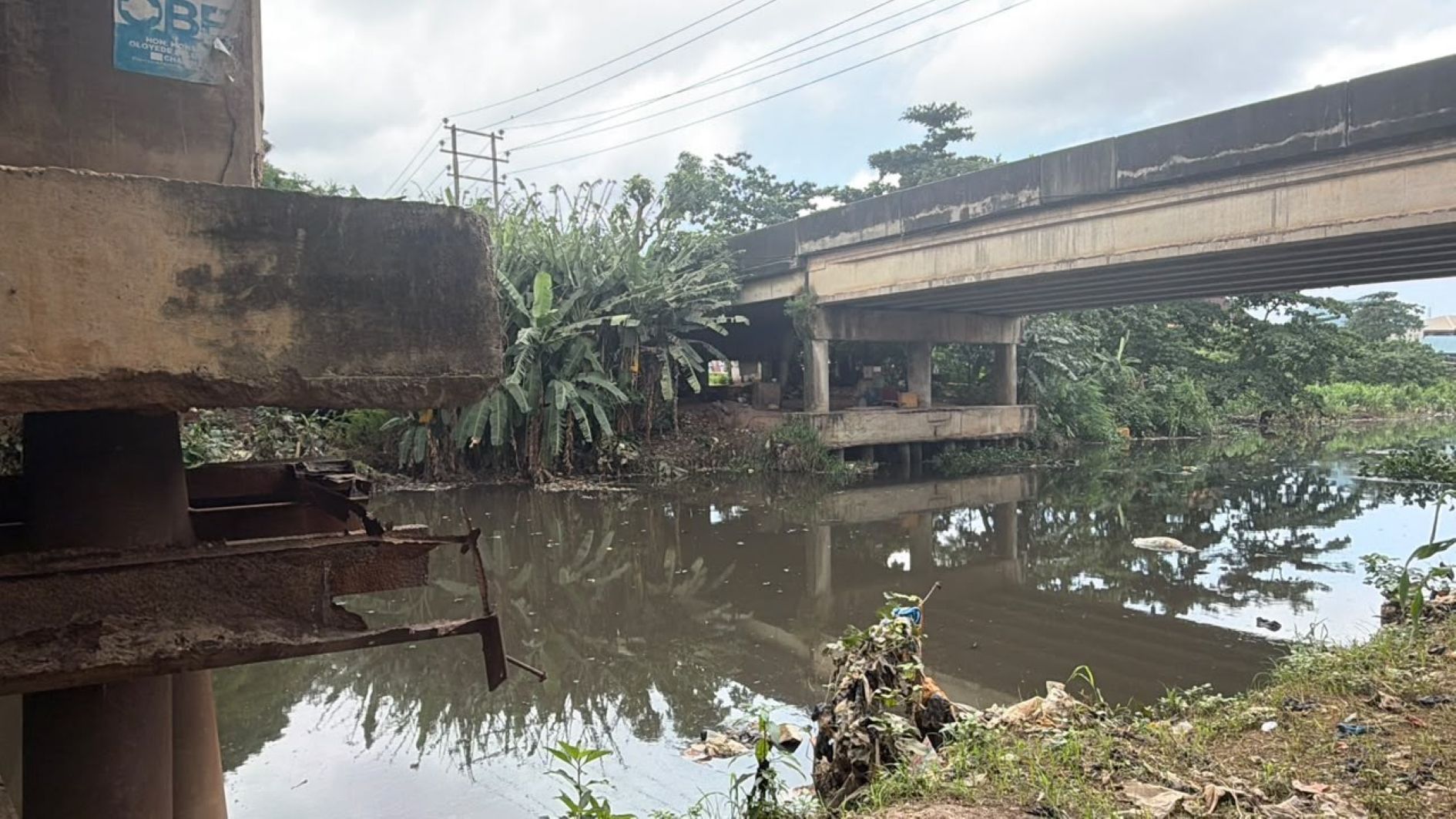
FG assures of repairs, rules out demolition
Residents of Isolo, Oke-Afa and adjoining communities have expressed growing concern over the worsening condition of the Oke-Afa Bridge, warning that the structure could become a major disaster if urgent repairs are not carried out by the Federal and Lagos State governments.
The bridge, a critical link between Oshodi-Isolo and Ejigbo, connects several densely populated communities, including Isolo, Jakande, Oke-Afa and Ikotun.
Residents say years of neglect, coupled with the daily movement of heavy-duty trucks, have left the over-35-year-old structure in a dangerously deteriorated state.
Beyond its failing condition, sections of the bridge deck have also been turned into an illegal dumpsite, raising additional environmental and public health concerns.
The canal beneath the bridge is remembered for one of Lagos’ darkest tragedies. On January 27, 2002, during the Ikeja Military Cantonment bomb explosions, hundreds of panicked residents fleeing the blasts mistakenly ran into the canal, believing it to be a safe escape route.

More than 1,000 people reportedly drowned, with many bodies never recovered.
Although the road network and bridge were rehabilitated after the disaster, residents said the intervention offered only temporary relief.
For months, community members have continued to raise concerns about the bridge’s deteriorating condition, noting that it has received little or no major maintenance since it was constructed more than three decades ago.
Every passing trailer sends noticeable vibrations through the structure, accompanied by the groaning of ageing joints and the rattling of loose metal.
Despite its battered appearance, the bridge remains heavily used daily by cars, commercial buses, motorcycles and trucks.
Weeds now grow through cracks on the bridge deck, while the underside of the structure shows visible signs of distress, including rusting reinforcement bars, cracked concrete and ageing support pillars.
Guard rails have become unstable in several sections, with exposed iron rods protruding from parts of the bridge deck.
A resident and businessman, Ariyo Usman, described the bridge as increasingly unsafe.
“The exposed iron rods are becoming more visible every day, and the bridge is getting scarier. The surface is wearing out badly. The government should act as a matter of urgency,” he said.
He urged the authorities to consider reconstructing the bridge if repairs would no longer guarantee its safety.
Another resident, who identified himself simply as Stanley, said the bridge reflected a broader pattern of inadequate infrastructure maintenance.
“The Oke-Afa Bridge is one of many bridges left without regular structural inspections until visible signs of failure force a response.
“By then, the cost of intervention is much higher and the risk to human life has remained elevated for years,” he said.
According to him, the bridge’s location over a canal, constant exposure to seasonal flooding, the heavy volume of traffic it carries daily and the apparent lack of consistent maintenance have significantly increased its structural risk.
“The iron reinforcements have weakened because the bridge vibrates whenever heavy trailers pass over it. The question is how many more warnings the government needs before the risk of structural failure turns into a catastrophe,” he added.
Responding to the concerns, the Federal Controller of Works in Lagos State, Olufemi Dare, assured residents that the bridge would be repaired.
“We are working on the bridge. We are going to repair it. We are not demolishing the bridge; we will repair it,” Dare declared.

