
 Get Guardian on Google
The Rule of Law and Empowerment Initiative, also known as Partners West Africa Nigeria (PWAN), has warned that traditional rulers are not above the law and cannot use their positions or authority to justify conduct that amounts to gender-based violence.
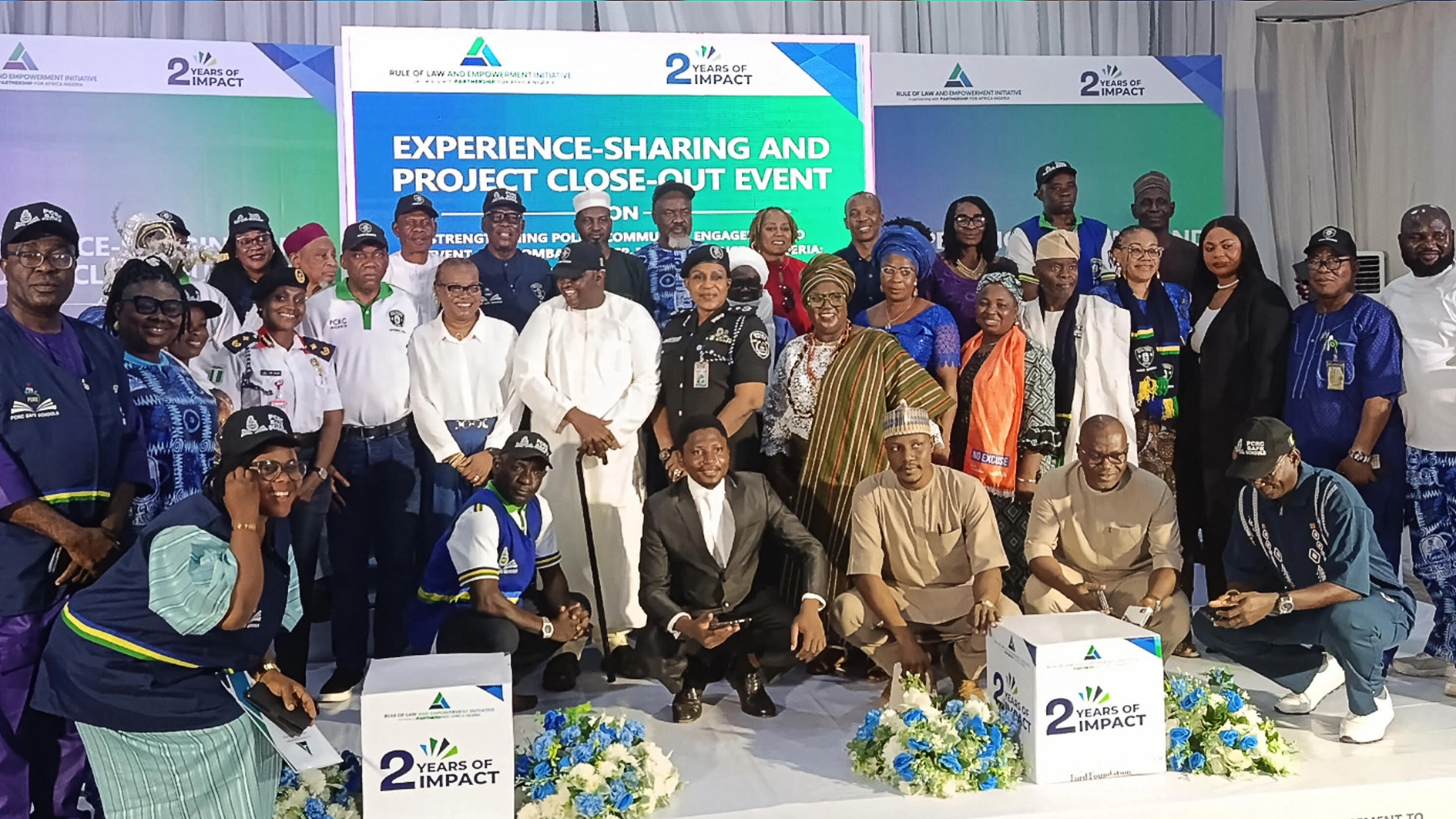
Executive Director of PWAN, Kemi Okenyodo, stated this in Abuja during an interview with journalists at the sideline of PWAN’s project experience-sharing and close-out event on its Ford Foundation-supported initiative, Strengthening Police-Community Engagement to Prevent and Combat Gender-Based Violence in Nigeria.
The warning came amid growing reactions to a viral video where a foreign tourist, identified as Mirka Czee, accused the Emir of Daura, Alhaji Dr. Faruk Umar Faruk, of inappropriate sexual conduct during a November 14, 2026 palace visit.
The tourist had alleged that the monarch held her hand, hugged her and kissed her cheek before touching her breasts without her consent.
She said she repeatedly told him not to touch her, adding that she activated the recording function on her Meta smart glasses after becoming uncomfortable when he held her hand.
Czee, who was born in the Czech Republic, said the incident happened on November 14, during a 30-day tour of Nigeria, but she waited until she had left the country before making the allegation public
While reacting to the sexual assault controversy, she stressed that traditional and religious leaders needed reorientation on what constitutes gender-based violence and inappropriate behaviour.
Okenyodo said the organisation would engage stakeholders in Katsina State to deepen understanding of gender-based violence, insisting that occupying a traditional or public office did not confer the liberty to engage in conduct that violates the rights and dignity of others.
“But ignorance is not an excuse. Those days, in the olden days, they would say that the traditional ruler has authority over everybody and everything within his domain. But that was before; things have changed,” she said.
She explained that the organisation’s ongoing project had revealed that some traditional and religious leaders were unaware that certain actions, utterances and behaviours could constitute gender-based violence.
“One of the things they realised from this project was that there are certain things that constitute gender-based violence which they thought they did not know was gender-based violence,” she said.
According to her, traditional rulers must understand that their positions do not place them above the law or give them the authority to engage in inappropriate conduct.
“By virtue of the office you occupy does not give you the liberty or the authority to engage in certain behaviour that is gender-based violence,” she added.
Okenyodo said PWAN would use the forthcoming 16 Days of Activism against Gender-Based Violence to strengthen engagements, particularly on the responsibilities of traditional and religious institutions in preventing violence against women and girls.
She also called for greater sensitisation of relevant authorities on appropriate conduct and the need to recognise behaviours that could amount to gender-based violence.
Earlier in her welcome remarks, Okenyodo said the project had demonstrated that tackling GBV required more than responding to reported incidents, stressing the need to confront harmful social norms, cultural practices, power dynamics and institutional weaknesses that allow violence to persist.
She said the initiative was implemented across Kano, Niger, Kaduna, Ondo and Ebonyi states, with engagements involving traditional rulers, religious leaders, women and youth groups, security agencies, justice institutions, government representatives and civil society organisations.
According to her, the interventions included community dialogues, training, sensitisation programmes, development of community structures and institutional engagements aimed at strengthening trust, improving coordination and encouraging local ownership of GBV prevention.
Highlighting some of the achievements, Okenyodo said the project in Kano evolved from stakeholder engagement and awareness creation to community-led prevention agreements, local action plans, referral pathways and prevention pledges. She also highlighted the engagement of Imams through Family Learning Circles.
In Niger State, she said, the organisation strengthened relationships with traditional institutions, established community GBV Prevention Task Forces and supported stakeholders to develop prevention strategies and action plans.
On lessons from the project, Okenyodo said awareness creation alone was insufficient without practical mechanisms, clearly defined responsibilities, trusted referral pathways and structures capable of sustaining interventions beyond the lifespan of donor-funded projects.
Speaking at the event, Commandant-General of the Nigeria Security and Civil Defence Corps (NSCDC), Prof. Ahmed Audi, said gender-based violence remained a serious security, human rights and social development concern.
Audi represented by the Corps’ Gender Adviser, DCC Kemi Alao Ajet, said addressing the problem required more than law enforcement, calling for stronger community engagement, public awareness, timely reporting, survivor-centred responses and collaboration among security agencies and other stakeholders.
She said the NSCDC was strengthening its institutional capacity for gender-responsive security service delivery through its Sexual and Gender-Based Violence Unit and gender desk officers across commands.
National Chairman of the Police Community Relations Committee (PCRC), Alhaji Mogaji Ibraheem Olaniyan, said sustainable security could not be achieved through law enforcement alone, emphasising the importance of trust and cooperation between security institutions and the communities they serve.
Olaniyan described gender-based violence as a violation of human rights, a threat to human dignity and a challenge to national development.
He insisted that stakeholders must move beyond condemning the practice to building systems that prevent violence, protect survivors and ensure perpetrators are held accountable.
He said PCRC’s participation in the project across the five states had reinforced the importance of grassroots engagement, particularly with traditional rulers, religious leaders, women, youth groups and civil society organisations.
The PCRC chairman also proposed a deeper institutional partnership with PWAN, particularly in youth and women development, community protection and security awareness.