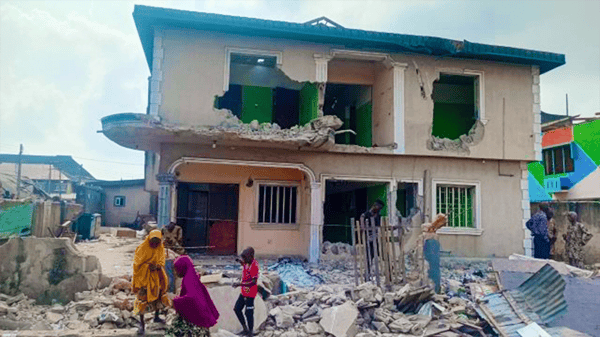
Mile 12, a town in Nigeria’s commercial centre, Lagos State, has always been a beehive—bustling with activities. It houses one of the biggest food markets in the country and, some may say, peoples from every tribe, state in Nigeria. This week, residents in the area were united in tears as the Lagos State government continued its massive wave of demolition exercises that reduced once-vibrant communities in the state to rubble, leaving the families who occupied them homeless to make way for something they call progress. David Meshioye was on the ground to report the devastating impact.
Inusa Baba Saara (as he is fondly called) was not prepared for what was to come upon him and his household on the fateful day of December 16th, 2025. His name translates to mean ”free giver” in the Hausa language, but sadly, little did he realise that fate was about to deliver a big blow. He had woken up in the morning believing that his kindness and self-built image, dating back 50 years, would be more than enough to save him from impending homelessness. Having said his early morning prayers, nature took its toll, and he fell back to sleep. But a few minutes later, he was jolted back to life by his neighbours as a bulldozer tore through buildings. His four plots of homes were not spared either.
Having emigrated to the community in 1975, fate had smiled on him as he raked in millions from his onion business. According to him, he toiled day and night to build what would become an empire where homeless children and orphans called home. But his world came crashing down when the jarring noise of massive excavators demolished his buildings.
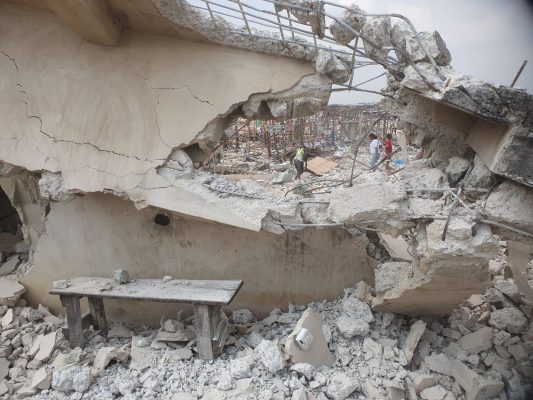
The terrifying sound of residents in the area can be heard miles away as they stood helplessly, watching their decades-old homes being turned to rubble. Home to nearly 50,000 Yoruba and Hausa migrant families who cohabitate in peace (and at times mayhem), the decades-old cluster was demolished within hours, following a Lagos State order to remove what it described as “encroachments” and ongoing demolition plans to get the city ready for its predicted population of 40 million people.
For over four decades, Mile 12 residents have lived and worked, contributing to its economy through various trades: buying and selling, grocery business, sanitation, domestic work, and construction. Among them is 68-year-old Inusa Baba Saara, who migrated from Sokoto. He met his wife, Hanatu, during one of his trips back home. The couple married in their native village before returning to Mile 12 to build a life together. Baba Saara spent the next several decades raising a family in the settlement, which, in a discussion with The Guardian and tears streaming down his face, he described as “my home ever since I migrated from Sokoto. We celebrated Sallah here, and the children were able to go to school, but everything is gone now.”
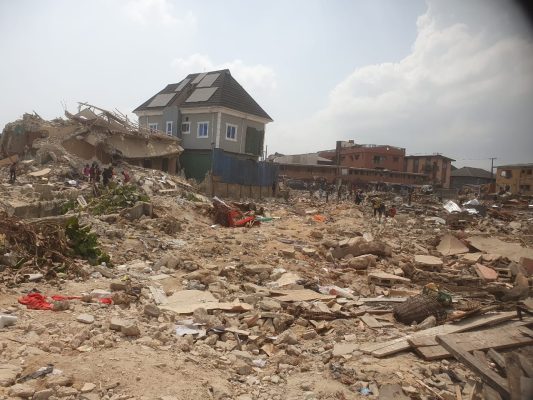
Ten footsteps away from Inusa’s rubble, Mrs Serifat Abdulahi was seen picking her pieces from the rubble. All she could gather were pieces of wood from her demolished wooden abode, which she rented. Having stayed in the house for over seven years despite a series of fire incidents, she endured her agony in silence, appealing to the Lagos State government to come to her rescue. Around her, while residents wallowed in regrets, opportunists slammed sledgehammers on rubble, trying to separate iron rods from bricks, as miscreants carted away valuables unabated.
“It came as a rude shock to all of us living here. This was recently rehabilitated after it was gutted by fire, but there is no place to call home at the moment,“ she said, wiping sweat with her wrapper.
A doctor’s nightmare
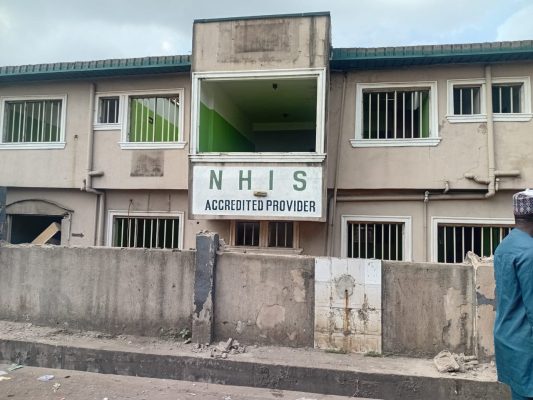
Perhaps the most pathetic event was the demolition of Al-Sadiq Hospital by the Lagos Ministry of Physical Planning and Urban Development on Wednesday afternoon. Nestled at the intersection where Alhaja Aiyastu and Ayodele Awodeyi streets meet, the hospital, residents say, has provided healthcare for the community for almost two decades.
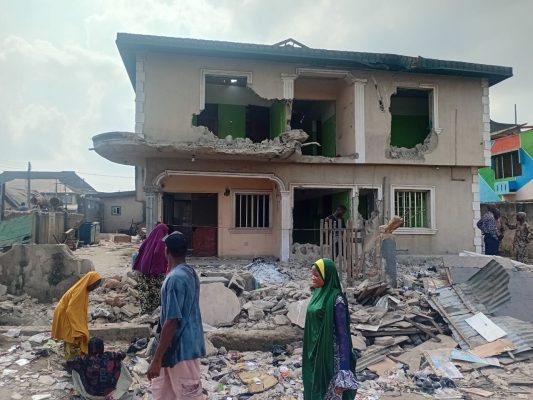
Dr Sadiq was said to have started his practice in a small rented apartment before saving up (some said he took a loan) to acquire a building in the area, demolish it and build a two-storey building, which served as his source of livelihood before the bulldozer roared.
Unapologetically, the bulldozer also tore into a school right beside what remained of Dr Sadiq’s hospital. The doctor reached out for chilled bottled water and took a long drink before barking out orders to his workers, who were scrambling to save whatever they could.
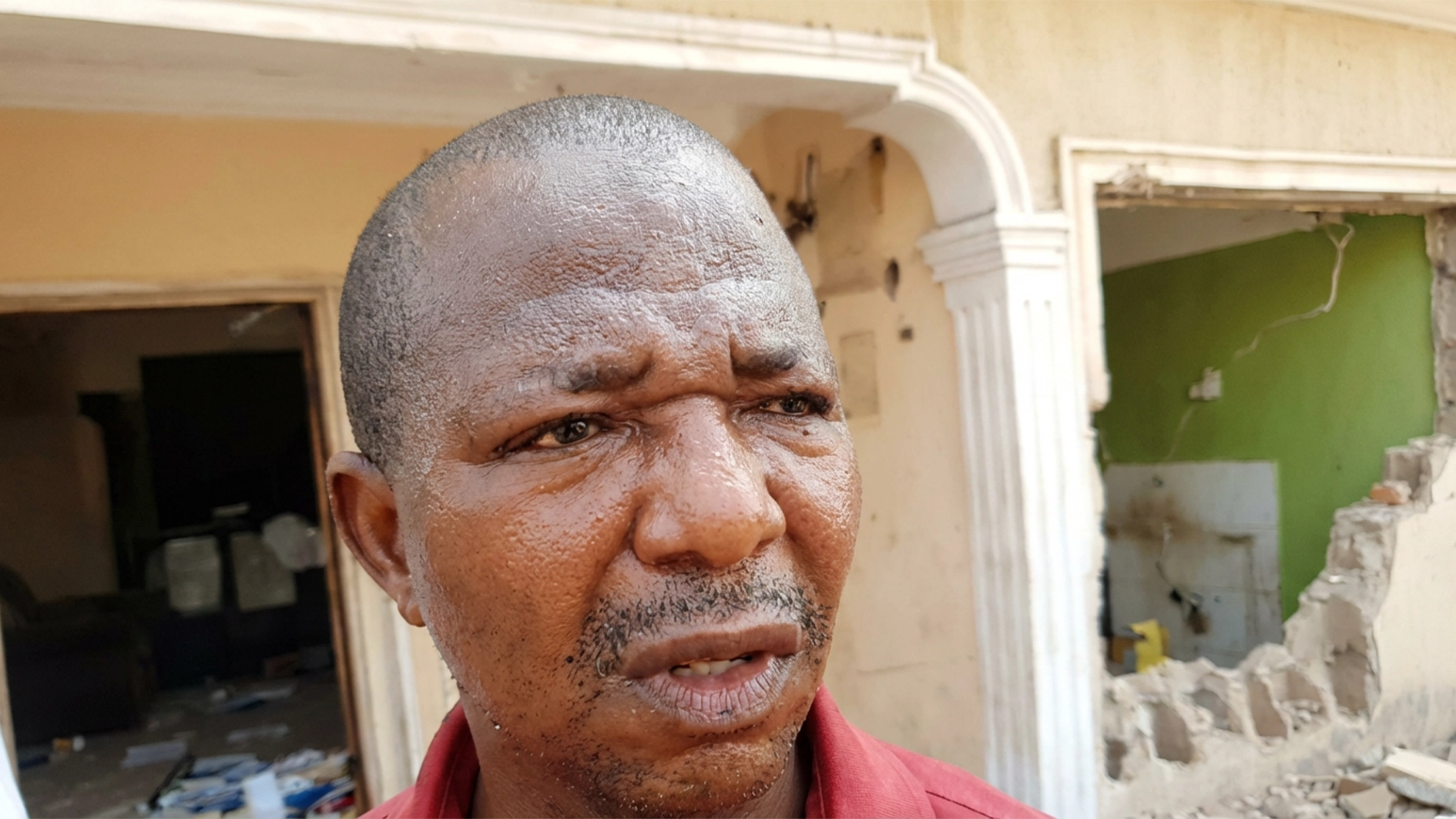
‘This is injustice! begins, Dr Sodiq. I thought my building would be spared, being a hospital, but I was shocked when I was given one hour to pack whatever I could before the demolition began,” he told the Guardian
No notice
Contrary to the general rumour that the demolition was triggered by constant demands by land grabbers and Omo Onile that residents repurchase the land which they bought for as low as 2,000 naira in the 70’s, a staff member of the Lagos Ministry of Physical Planning and Urban Development, who pleaded anonymity, revealed that the ministry had issued warning, quit and demolition notices to residents who, instead, turned a blind eye. ‘
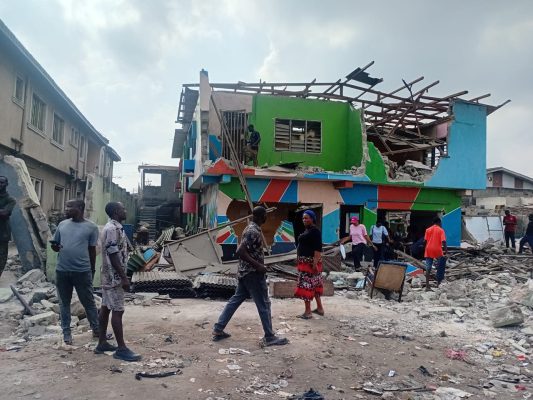
‘We have issued all necessary notices to residents that these houses will be demolished,’ she said.
“They did not send any notice. Nobody knew what was happening, ” a passerby screamed. “They just came one morning unannounced and started destroying everything. We just could not believe what our eyes were seeing.”
Residents said that the demolition not only removed physical structures but also disrupted long-standing networks of support, family, and shared identity.
“We had mosques, shared kitchens, festivals together,” said Baba Saara. “We built our homes slowly, bit by bit, whenever we had savings.” I just bought granite and sand to commence another construction before the demolition begins.”
To the Lagos State government, the shanty town constituted an “environmental nuisance, security risk and an impediment to the economic and gainful utilisation of the area” and undermined the “megacity status” of Lagos.
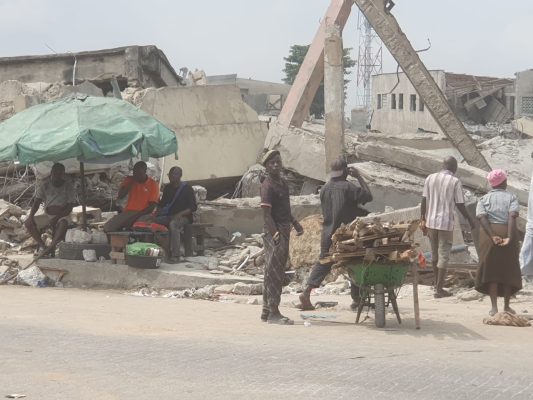
Mass demolition, the new trend
Demolition activities in Mile 12 are just one example among many settlements in Lagos where families have been left homeless. The state has witnessed a new wave of demolitions targeting the urban poor. The demolition in Makoko, for instance, was anticipated by many who believe the residents have been sitting on a keg of gunpowder, and the explosion is just a matter of time. National Public Radio’s international correspondent, Emmanuel Akinwotu, reports that nearly 10,000 people were forcibly evicted from a riverside community in Lagos over the past month. Mass evictions have become a recurring issue in Africa’s most populous city, and it won’t end anytime soon.
Another area affected by this trend is Oworonsoki, which experienced significant demolition efforts. The Oko-Baba area of Ebute-Metta also suffered, with residents facing devastating losses as millions in property were destroyed, and thousands displaced. Reports indicate that massive violations of housing rights have intensified throughout the capital. According to data compiled by a coalition of activists and civil society organisations advocating for housing rights, over 3,000 homes have been demolished across 23 settlements, leaving around 30,000 people homeless in just a few months.
Conclusion
This surge in demolitions appears to confirm a warning issued before this administration came into power that the Lagos State government is bent on developing the state into a megacity. The state plans to clear every slum cluster in the city within five years, and like a moving train, it is determined to crush anything obstructing its vision. As landlords turned to tenants elsewhere, no provision has been made by the state government to relocate residents to a safe abode, as practised in advanced nations. Already, activists and civil society organisationshave maintained that residents of Owode Elede must be compensated for their losses just like their Oworonsoki counterparts
As the dust settled yesterday, other houses stood silent, waiting patiently for the Lagos State government’s bulldozers — their undertaker.