
 Get Guardian on Google
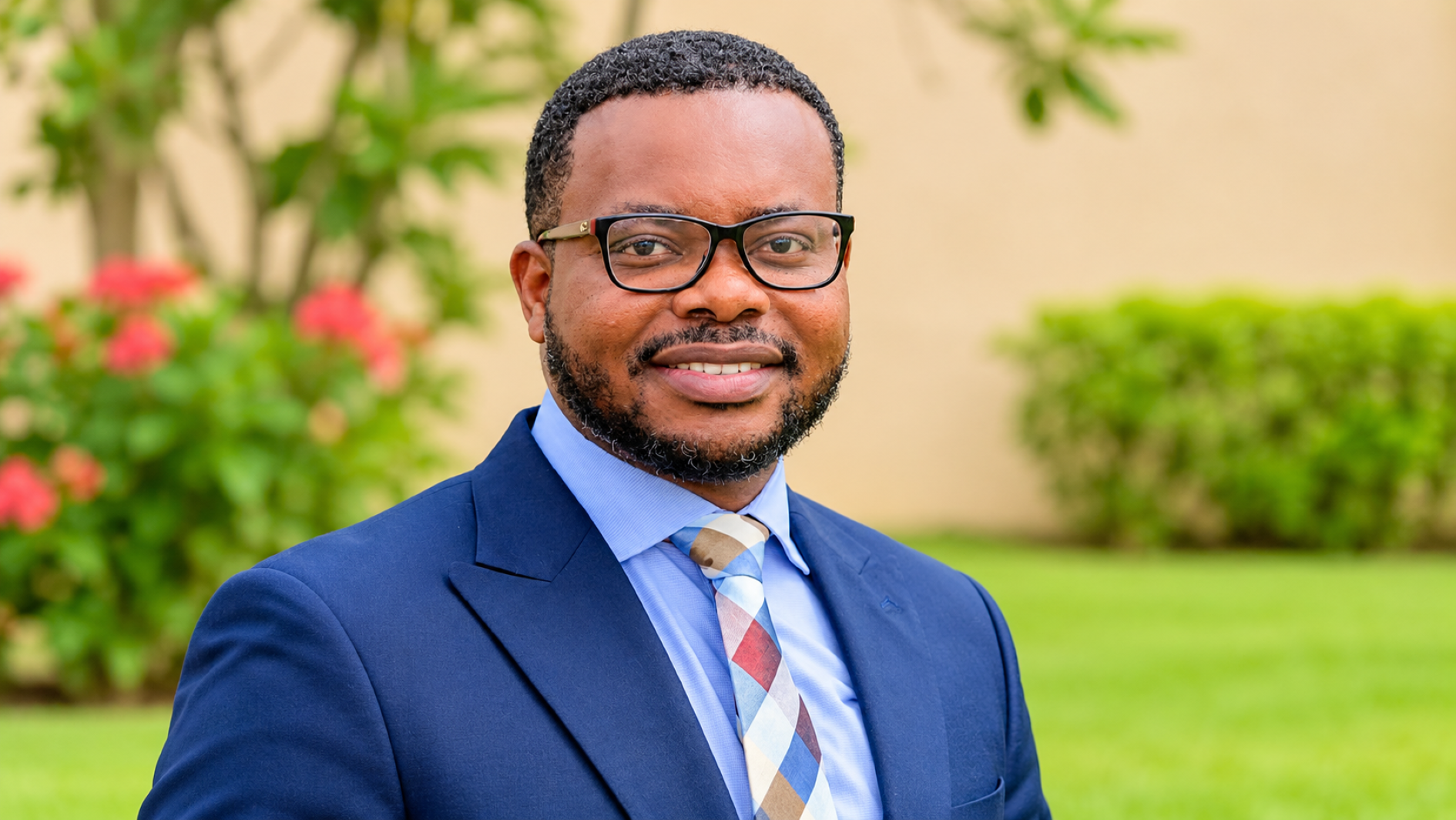
A Nigerian engineer and researcher, Dr. Stanley Agbakansi, is advancing innovative approaches to detecting, monitoring, and mitigating corrosion in ageing bridges and wastewater pipelines, with potential applications for improving infrastructure durability and safety in Nigeria and beyond.
Dr. Agbakansi earned his bachelor’s and master’s degrees in Metallurgy and Materials Engineering from the University of Lagos.
In 2018, he moved to the United States under the Petroleum Technology Development Fund (PTDF) Overseas Scholarship Scheme to pursue further studies in Mechanical Engineering at the University of South Florida. After completing his master’s degree, he continued his academic journey at the same institution, where he earned a PhD in Mechanical Engineering.
He is currently an Assistant Professor of Mechanical Engineering at Marian University in Indianapolis, United States, where he teaches undergraduate engineering courses and conducts research in electrochemistry, corrosion engineering, and materials failure analysis.
His research addresses three critical challenges in infrastructure maintenance: detecting corrosion before significant damage becomes visible, developing strategies to slow material deterioration, and helping engineers predict failures and identify infrastructure requiring urgent inspection or intervention.
Through his work, Dr. Agbakansi seeks to contribute to the development of more reliable and cost-effective approaches to infrastructure maintenance, particularly in countries such as Nigeria, where ageing bridges, deteriorating pipelines, and limited maintenance resources present significant engineering challenges.
One of the areas examined in his research is corrosion affecting steel tendons embedded in post-tensioned concrete bridges. These high-strength steel cables help support bridge structures by keeping concrete under compression. However, when moisture and salts penetrate their protective covering, corrosion can develop internally without obvious external signs.
Working with other researchers, Agbakansi investigated the use of corrosion inhibitors that could be pressure-injected into laboratory specimens designed to represent bridge tendons. One water-based formulation demonstrated the most promising protective performance among the products tested while maintaining the bond between the steel and surrounding grout.
Although the findings are promising, the research was conducted under laboratory conditions, meaning further field trials are necessary to establish its effectiveness on actual bridge structures.
In another study published in the peer-reviewed journal Electrochimica Acta, Dr. Agbakansi and his doctoral advisor and co-author, Dr. Christopher Alexander, investigated an innovative electrochemical technique for assessing corrosion in steel tendons embedded within concrete structures without requiring direct electrical contact with the steel.
Their laboratory investigations demonstrated the technique’s ability to distinguish between specimens subjected to different exposure conditions and corrosion-inhibiting treatments, while tracking changes in corrosion activity over time. The findings highlight the potential of this approach to support the assessment of structural integrity and facilitate more informed maintenance decisions for critical infrastructure.
Beyond bridge infrastructure, Dr. Agbakansi has also investigated corrosion-related deterioration in wastewater pipelines. His research examined how hydrogen sulphide gas can accumulate at high points in pressurised wastewater pipelines, creating conditions that promote the formation of corrosive sulphuric acid. Over time, this process can deteriorate protective cement mortar linings, expose the underlying metal to corrosion, and ultimately lead to premature pipeline failure.
One case modelled in his doctoral research estimated that pipeline failure could occur within as little as six years after an air pocket formed.
The research suggests that examining pipeline profiles, air valve records and inspection findings could help utility owners identify vulnerable sections and prioritise maintenance.
The findings have potential relevance for Nigeria, where ageing infrastructure presents continuing maintenance challenges. The Third Mainland Bridge in Lagos, for instance, has required repair work involving the removal of corrosion and marine growth from damaged underwater piles, alongside other rehabilitation measures.
The research proposes practical opportunities for collaboration between Nigerian road agencies, water utilities, universities and engineering laboratories.
Pilot projects could help establish baseline infrastructure conditions, test monitoring techniques and compare their findings with conventional inspection methods.
Dr Agbakansi’s work highlights the role of materials and mechanical engineering research in improving infrastructure inspection, maintenance planning and the management of structures that deteriorate internally before visible damage appears.