
 Get Guardian on Google
…Agency reports 60% decline in AIDS-related deaths, 50% drop in new infections
Nigeria’s national HIV prevalence has dropped significantly from 5.8 per cent in 2001 to 1.3 per cent in 2025, but about 20 per cent of people living with the virus remain unaware of their status, the National Agency for the Control of AIDS (NACA) has said.
The agency also disclosed that annual AIDS-related deaths declined by approximately 60 per cent, from 80,000 in 2010 to 32,000 in 2025, while new HIV infections fell by more than 50 per cent, from 130,000 to 64,000 within the same period.
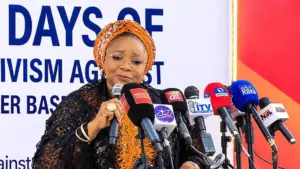
Director-General of NACA, Dr Temitope Ilori, disclosed these figures during the agency’s 2026 pre- World AIDS Day briefing in Abuja, where she outlined Nigeria’s progress and outstanding challenges in the campaign to end AIDS as a public health threat by 2030.
Ilori attributed the progress to sustained government commitment, strategic coordination and support from international development partners, but warned that significant gaps in HIV testing, prevention and treatment must be addressed to consolidate the gains.
According to her, 80 per cent of Nigerians living with HIV knew their status in 2025, while 98 per cent of those diagnosed were receiving antiretroviral therapy. She added that 94 per cent of those on treatment had achieved viral load suppression, meaning the virus was reduced to undetectable levels.
Despite the progress, the figures indicate that Nigeria is yet to achieve the UNAIDS 95-95-95 targets, particularly in identifying people who are unaware that they are living with HIV.
The NACA director-general also expressed concern over gaps in the prevention of mother-to-child transmission, revealing that early infant diagnosis coverage among HIV-exposed babies increased from 15 per cent in 2022 to 66 per cent in 2025.
She said the improvement represented significant progress in identifying HIV-exposed infants and linking them to timely care, but noted that 34 per cent of exposed infants were still not covered by early diagnosis services.
Ilori stressed that ending AIDS by 2030 would require more than medical interventions, insisting that equitable access to testing and treatment, community participation and sustainable domestic financing were essential.
She said the theme of this year’s World AIDS Day, “Ending AIDS Starts with Access: Equity, Ownership, and Sustainability,” underscored the need to remove barriers preventing Nigerians, particularly vulnerable populations and residents of rural communities, from accessing HIV services.
The NACA boss called for stronger domestic funding of HIV programmes, noting that Nigeria could no longer afford to depend excessively on external financing for its national HIV response.
She urged state governments to increase counterpart funding and integrate HIV prevention, testing and treatment into primary healthcare services and national health insurance frameworks.
On discrimination, Ilori called for stronger enforcement of the HIV and AIDS (Anti-Discrimination) Act, saying stigma and institutional barriers continued to discourage people from seeking testing and treatment.
She said NACA would prioritise community-led testing, expanded HIV self-testing, targeted prevention programmes and partnerships with traditional institutions, civil society organisations and networks of people living with HIV.
Ilori appealed to Nigerians to know their HIV status, support people living with the virus and reject discrimination, stressing that access to healthcare and dignity should not depend on an individual’s location or socioeconomic status.
On funding, Ilori disclosed that the $200 million approved by the Federal Government in 2025 for HIV, tuberculosis and malaria interventions had been released.
She clarified, however, that the money was not exclusively for HIV or paid directly to NACA, explaining that it was deployed through a sector-wide approach to relevant agencies for the procurement of drugs, consumables, reagents and the strengthening of primary healthcare facilities.
According to her, the government is also pursuing increased domestic health financing, while Nigeria has entered into a five-year memorandum of understanding with the United States government involving about $2 billion in US support and approximately $3 billion in Nigerian co-financing.
She said the government was committed to increasing domestic resources to protect the country’s health programmes against uncertainties in international funding.
World AIDS Day is commemorated annually on December 1 to raise awareness about HIV/AIDS, remember those who have died from AIDS-related illnesses and renew global commitment to ending the epidemic.
Also speaking, the National Coordinator of the National AIDS and STIs Control Programme (NASCP), Dr Adebobola Bashorun, said Nigeria had commenced a phased expansion of access to Lenacapavir, a long-acting injectable HIV prevention drug.
He disclosed that Nigeria had received close to 50,000 doses, with more than 30,000 already being used under the pilot implementation programme.
According to him, the country expects to have about 175,000 vials as of January 2027, which will be spread across some months based on availability, consumption, and the supply plan for efficient utilization.
Bashorun explained that Lenacapavir was intended for people at substantial risk of HIV infection and was not designed as a general-population intervention.
The injectable, administered every six months, offers another prevention option alongside oral pre-exposure prophylaxis (PrEP) and other available interventions.
He noted that there is a very high demand for Lenacapavir globally, adding that there will still be more of the generic brands that will be shipped to Nigeria outside this number.
On his part, the Chief Executive Officer of the Institute of Human Virology Nigeria (IHVN), Dr Patrick Dakum, called for stronger domestic commitment, community participation and resilient health systems to guarantee equitable access to HIV prevention, treatment and care.
He reaffirmed the institute’s commitment to ending AIDS through equitable access to quality HIV prevention, treatment and care services .
Dakum emphasized that ending AIDS goes beyond making HIV services available, stressing that it requires ensuring that everyone, regardless of age, gender, location or socioeconomic status, can access quality healthcare without discrimination.
He stressed the need for stronger community ownership, sustained domestic commitment, strategic partnerships and resilient health systems to achieve lasting progress in the HIV response and called for concerted efforts to eliminate barriers to HIV services, tackle stigma and discrimination, empower communities and strengthen local capacity.
The National Secretary of the Network of People Living with HIV and AIDS in Nigeria (NEPWHAN), Nicholas Ugbenyen, urged the government to place people living with HIV and affected communities at the centre of the national response.
He called for stronger community-led interventions, sustained domestic funding and protection of vulnerable groups, particularly women, children and other populations at increased risk.
Similarly, the Executive Secretary of the Country Coordinating Mechanism of the Global Fund, Mr Tajudeen Ibrahim, urged healthcare facilities to prioritise confidentiality and provide stigma-free HIV testing and treatment services.
He also called on the media to promote accurate information, counter misinformation, and encourage Nigerians to know their HIV status.