
 Get Guardian on Google
The Federal Government has acknowledged that Nigeria’s 52 Sexual Assault Referral Centres (SARCs) are grossly inadequate to address the scale of sexual and gender-based violence (SGBV) in a country with a population of over 240 million, pledging to establish at least one centre in each of the 774 local government areas.
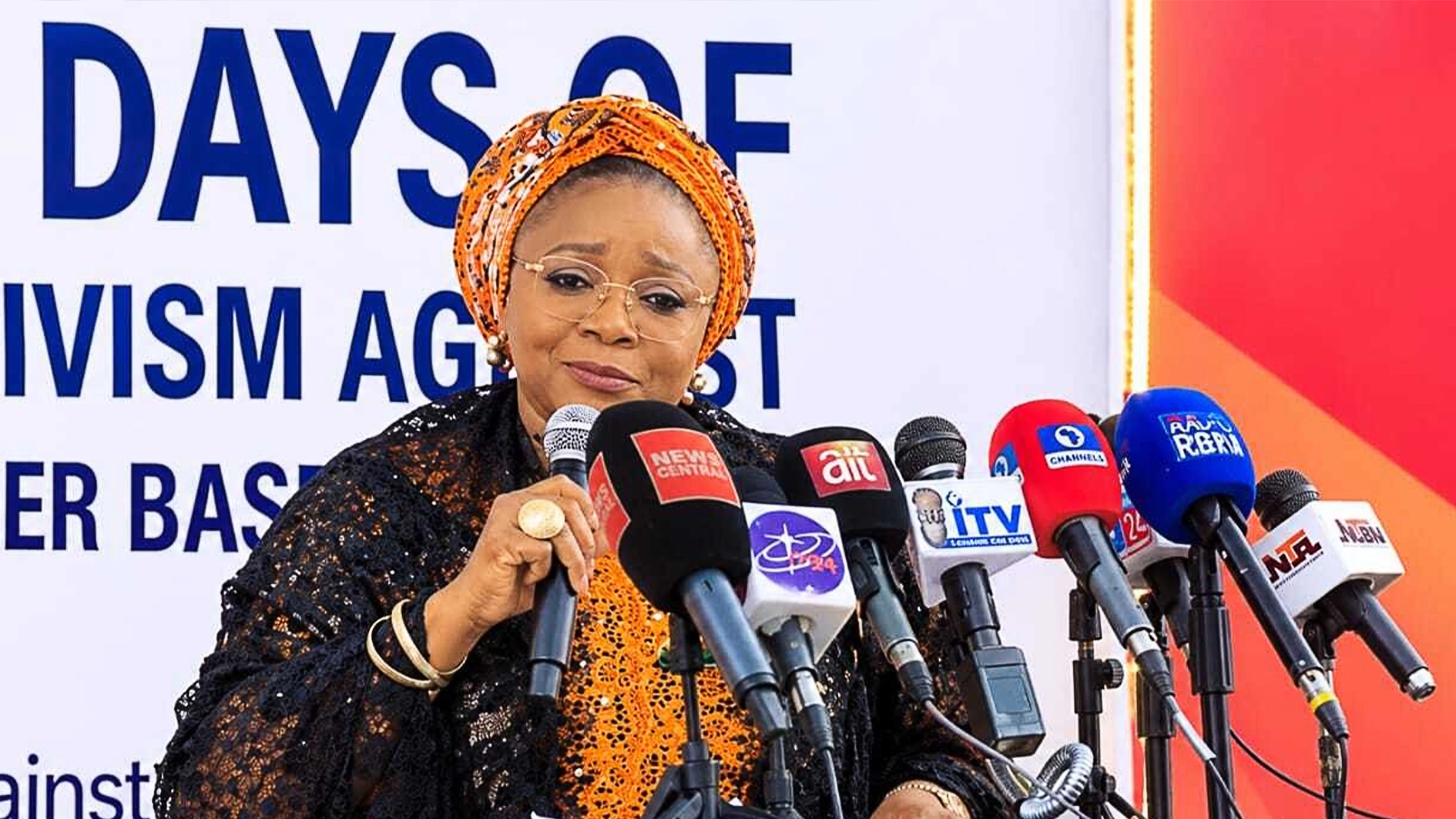
Minister of Women Affairs and Social Development, Imaan Sulaiman-Ibrahim, disclosed this on Monday in Abuja at the 2026 ministerial press briefing to commemorate the International 16 Days of Activism Against Gender-Based Violence, amid concerns over weak enforcement of existing laws, inadequate survivor support services and persistent impunity.
The minister, who acknowledged the disparity between the country’s population and available response facilities, said the government was working with state governments to expand access to medical, psychosocial and referral services for survivors.
“For a nation of over 240 million people, 52 centres are grossly inadequate,” she said, adding that the ministry would continue to champion the establishment of centres in every ward as part of its broader intervention framework.
The disclosure comes against the backdrop of the ministry’s estimate that nearly one in three Nigerian women aged 15 to 49 has experienced physical or sexual violence, while more than 27,000 SGBV cases were documented in recent reporting cycles, with millions of incidents believed to remain unreported.
Beyond the human cost, Sulaiman-Ibrahim said gender-based violence was estimated to cost Nigeria about 1.5 per cent of its Gross Domestic Product, equivalent to approximately $3 billion annually through lost productivity, healthcare expenses and disrupted livelihoods.
The minister said the government was therefore seeking to move beyond annual awareness campaigns towards stronger institutional responses, survivor protection and accountability for perpetrators.
She announced the commencement of a review of the National Gender Policy (2021–2026), which expires this year, following the completion of an end-term assessment and development of the Nigeria Gender Profile.
According to her, the review will involve technical experts from federal ministries, departments and agencies, as well as the Nigerian diaspora, with development partners and civil society organisations invited to participate.
She also disclosed that the ministry had developed, reviewed and validated more than 38 policy instruments, standard operating procedures and specialised frameworks aimed at strengthening protection standards.
Although the Child Rights Act 2003 has been domesticated in all 36 states, the minister said the Violence Against Persons (Prohibition) Act 2015 had been domesticated in 35 states, highlighting the continuing need to address legislative and implementation gaps.
The minister further announced that Nigeria’s National Gender-Based Violence Electronic Dashboard and Situation Room was now operational to improve real-time data management, coordination and evidence-based interventions.
However, development partners stressed that the existence of laws and policies would remain insufficient without predictable funding, effective enforcement and accessible services.
UN Women Country Representative to Nigeria and ECOWAS, Beatrice Eyong, represented at the event, said approximately 840 million women globally, representing one in three, had experienced physical or sexual violence in their lifetime.
She urged the government to strengthen legislation, close implementation gaps and invest in survivor-centred services, warning against treating the 16-day campaign as an annual symbolic exercise.
Similarly, the International IDEA representative said justice must not depend on survivors’ social status or economic circumstances, citing the persistent victim-blaming of rape survivors and the normalisation of domestic violence.
The representative called for effective implementation of the VAPP Act, stronger protection systems and accountable institutions.
UNICEF representative, Wafaa Abdelatef, also urged the media to protect survivors’ identities, report cases responsibly and challenge the normalisation of violence against children and adolescent girls.
Meanwhile, the SPRiNG Programme disclosed that it was working with community leaders, legal experts and the police to strengthen referral systems, provide pro bono legal services and improve forensic evidence gathering for investigations and prosecutions.
The 16 Days of Activism, which runs from November 25 to December 10, is being observed this year under the theme, “UNiTE to End Violence Against Women and Girls: Ensure Justice, Protect Survivors, End Impunity.”
Sulaiman-Ibrahim said the ministry’s activities would include a nationwide advocacy walk, community and interfaith engagements, and a town hall meeting with Nigerian women ahead of the 2027 general elections.
She maintained that the campaign must translate into sustained action beyond the 16 days, insisting that survivors must have access to justice and perpetrators face the consequences of their actions.