
 Get Guardian on Google
…As TUC warns workers against selling votes
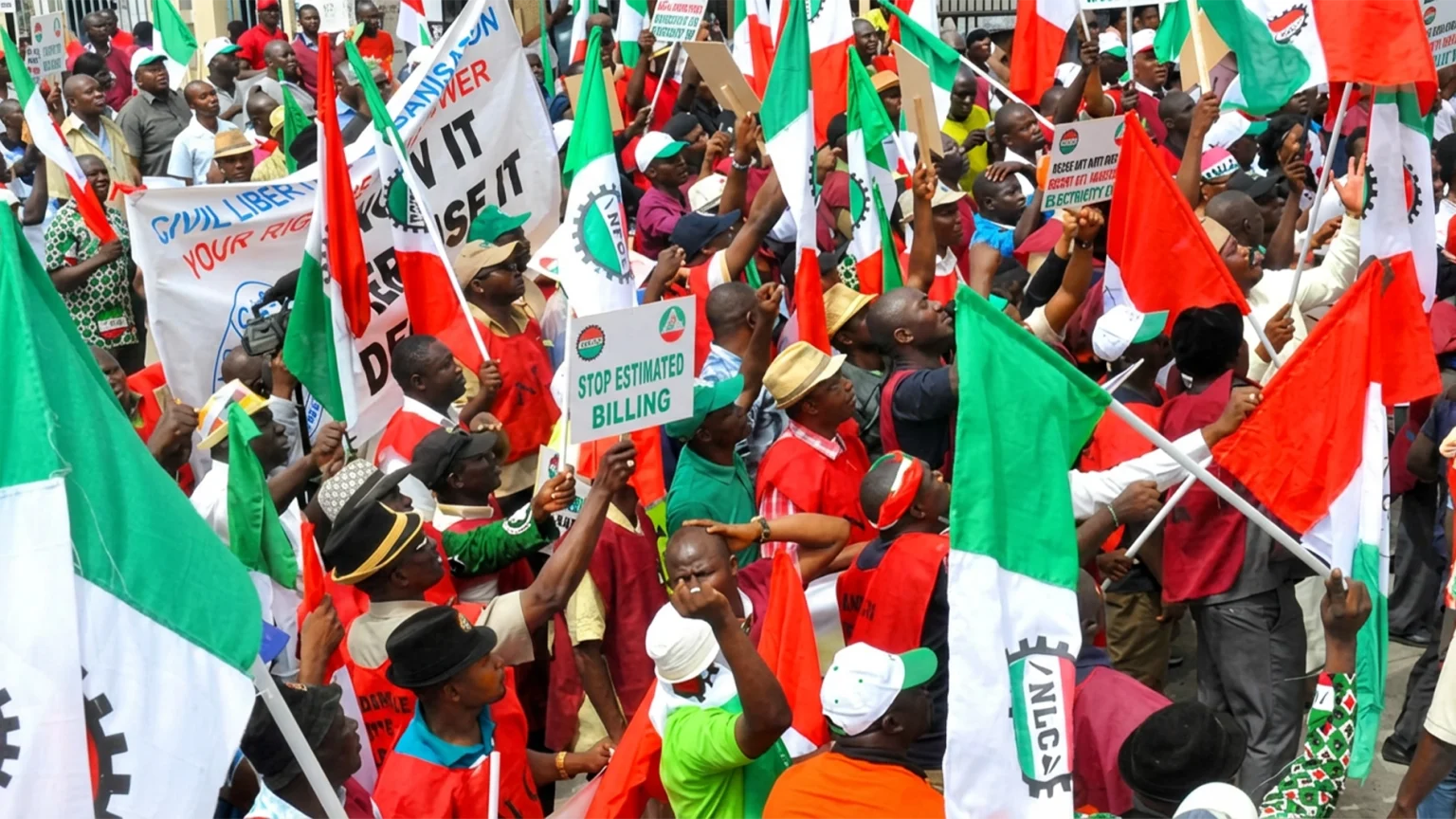
The Nigeria Labour Congress (NLC) has called for an inflation-linked national minimum wage in the 2027 review, insisting that workers’ earnings must reflect prevailing economic realities, including the cost of housing, transportation, food and other essential needs.
NLC President Joe Ajaero said the next minimum wage negotiation should move beyond arbitrary figures and adopt a framework that accounts for inflation and the cost-of-living index to ensure workers’ wages retain their purchasing power.
Speaking at the Labour Writers Association of Nigeria (LAWAN) 2026 Conference in Lagos, where he spoke on the theme “Workers at the Centre of Nigeria’s Political Transition: Defending Rights, Advancing Welfare and Building Economic Justice”, Ajaero argued that successive wage reviews had failed to adequately protect workers because increases were often determined without sufficient consideration of the rising cost of essential goods and services.
He said organised labour would not approach the next negotiation by simply demanding a particular amount, such as N500,000 or N1m, without examining the economic factors that determine what workers need to earn to maintain a decent standard of living.
“If inflation moves by a particular percentage, then you adjust wages accordingly. Or we look at how much the cost of living is, how much house rent is, how much transportation costs, and factor these into the calculation,” he said.

Ajaero’s position comes amid growing concerns about the erosion of workers’ purchasing power, despite the 2024 National Minimum Wage Act raising the national minimum wage from N30,000 to N70,000.
He also insisted that preparations for the next review should be guided by April 2027, arguing that the three-year review cycle introduced by the 2024 legislation should not be shifted by delays in negotiations or the eventual signing of an agreement.
The NLC president explained that the 2024 Act amended two major provisions of the previous minimum wage legislation: increasing the statutory wage floor from N30,000 to N70,000 and reducing the review period from five years to three years.
He maintained that the review timetable should be respected, warning against a situation in which negotiations could be delayed until the end of the year, with the government subsequently treating the date of signing as the commencement of the review cycle.
For Ajaero, however, the next wage review must also address the broader economic conditions undermining the value of workers’ incomes.
He recalled that organised labour had, during previous negotiations, emphasised the need for complementary interventions in transportation and other essential services to reduce the financial burden on workers.
He particularly criticised the failure to translate government commitments on compressed natural gas (CNG) transportation into meaningful relief for Nigerian workers.
According to him, the distribution of CNG buses to labour unions during the previous intervention had not sufficiently addressed the transportation challenges facing workers.
Ajaero said temporary financial relief, including the additional N70,000 payment introduced for workers for six months, could provide some immediate assistance but should not be treated as a sustainable solution to the country’s cost-of-living crisis.
He warned that workers should not be returned to their previous financial hardship after the expiration of temporary interventions.
The NLC president also called for a broader economic policy response that would address transportation costs, inflation and the purchasing power of the naira, arguing that wage increases alone could not resolve the economic difficulties confronting Nigerian households.
Meanwhile, President of the Trade Union Congress (TUC), Festus Osifo, has urged Nigerian workers to exercise greater political responsibility as the country approaches another electioneering period, warning against selling their votes and subsequently expecting labour leaders to fight governments they helped elect.
Osifo, who was represented at the summit by the President of the Petroleum and Natural Gas Senior Staff Association of Nigeria (PENGASSAN), Bosun Olabiyi-Agoro, said workers must protect their interests by making informed choices during the transition period.
He urged workers to place their collective interests above partisan considerations, stressing that they should not compromise their votes and later turn to organised labour to challenge governments whose emergence they had facilitated.
In his own remarks, Olabiyi-Agoro called for reconciliation and stronger cooperation between the NLC and TUC, urging both labour centres to resolve their differences and establish a more effective working relationship.
He proposed that the two organisations develop a memorandum of understanding (MoU) to strengthen their relationship and ensure a common position on issues affecting Nigerian workers.
He said it would be disappointing if the Federal Government watched the two labour centres remain divided, adding that their differences should not undermine the collective interests of workers.
Olabiyi-Agoro expressed confidence that the labour centres would eventually overcome their disagreements and unite against policies inimical to workers’ welfare.
He said, just as water naturally finds its way into a common channel, the NLC and TUC would ultimately become a formidable force against the Federal Government’s neoliberal policies and a stronger voice for Nigerian workers.
He stressed the need for both centres to harmonise their positions before engaging the government, explaining that disagreements over issues such as the N70,000 transportation allowance should not automatically be interpreted as opposition to workers’ welfare.
Drawing from his experience as a former TUC chairman in Oyo State, he recalled how cooperation between the two labour centres had helped advance workers’ interests.