 Follow Us on Google News


 Follow Us on Google Discover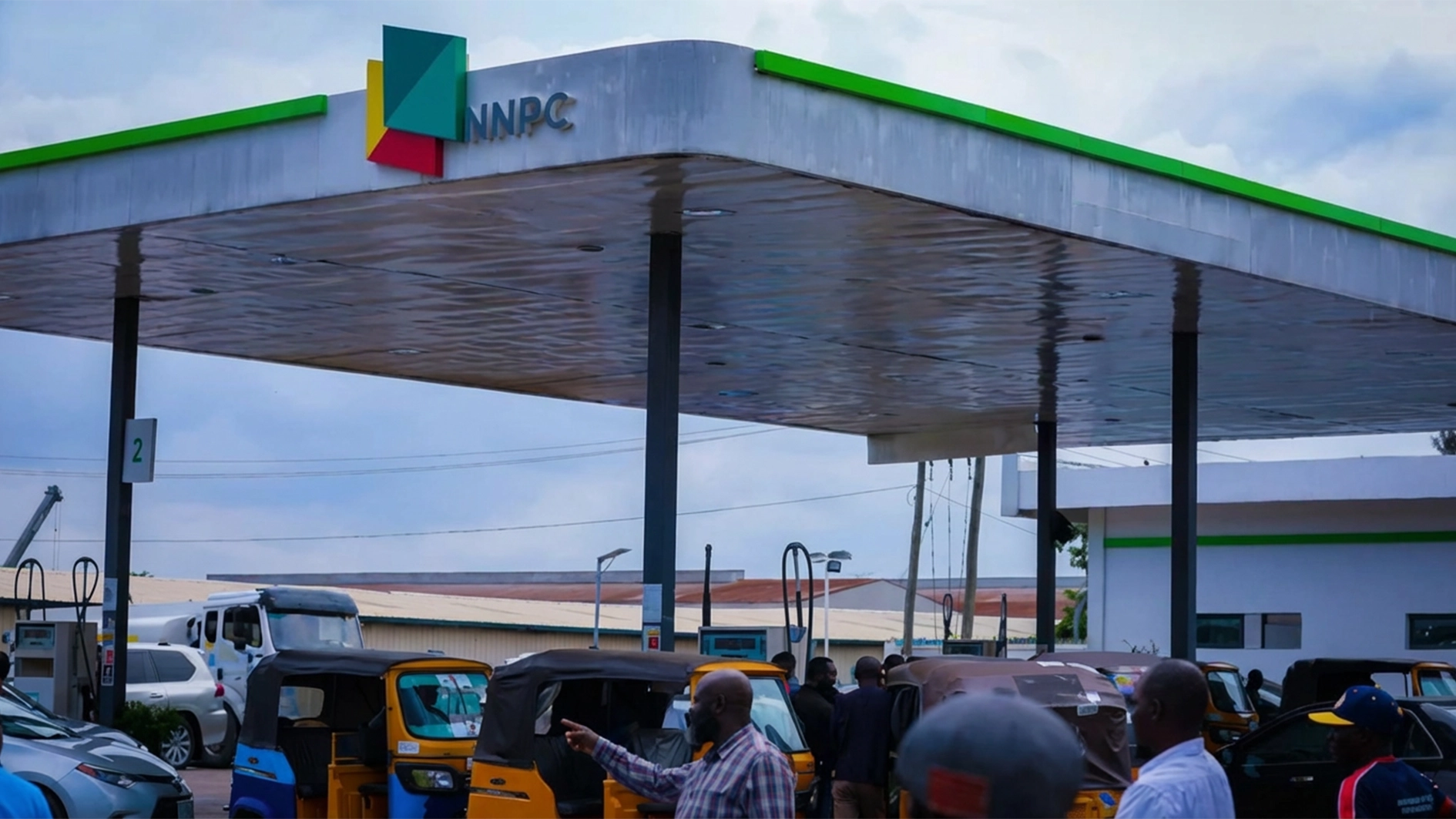
The Parliamentary Support Network and allied civil society organisations have commended the Group Chief Executive Officer of the Nigerian National Petroleum Company Limited (NNPCL), Bashir Bayo Ojulari, over the company’s reported ₦7.2 trillion profit after tax and ₦5.8 trillion dividend declaration for 2025.
The groups also praised the nationwide ₦66-per-litre discount on Premium Motor Spirit (PMS) introduced by the company to mark Nigeria’s 66th Independence Anniversary, urging Ojulari to sustain reforms aimed at improving the performance of the oil and gas sector and delivering tangible benefits to Nigerians.
Speaking at a press conference in Abuja on Friday, representatives of the organisations described the company’s 2025 audited financial statements and the petrol discount as indications of progress in implementing the Petroleum Industry Act (PIA) and improving NNPCL’s financial and operational performance.
The press conference was jointly addressed by Amb. Muhammad Abdulrazaq and Comrade Adams Umoren on behalf of the Parliamentary Support Network, in collaboration with the Reformers Network.
According to the groups, the audited financial statements presented to President Bola Ahmed Tinubu showed that NNPCL recorded a profit after tax of ₦7.2 trillion in 2025, representing a 33 per cent increase over the previous year.
They also cited the declaration of ₦5.8 trillion in dividends, increased remittances to the Federation Account and crude oil and condensate production of 1.77 million barrels per day, described as the company’s highest output in five years.

The organisations said the reported performance demonstrated the importance of sustained reforms, improved operational efficiency and stronger financial discipline in repositioning the national oil company.
They argued that higher earnings and remittances could provide additional resources for public services, including roads, schools, hospitals, security and social intervention programmes.
“It is with a deep sense of national pride and responsibility that the Parliamentary Support Network stands before you today. We gather not merely to mark another public engagement, but to reflect on a decisive chapter in Nigeria’s petroleum history—one defined by the bold vision of the Petroleum Industry Act and the determined leadership that is translating that vision into measurable results for the ordinary Nigerian,” the statement said.
The groups described the PIA, enacted in 2021, as a major legislative intervention designed to address longstanding structural challenges in the petroleum industry, improve transparency and create a more attractive environment for investment.
They maintained that the law had provided the legal and institutional framework for transforming the sector, adding that its implementation required sustained commitment from NNPCL’s management and other industry stakeholders.
“The Petroleum Industry Act of 2021 remains one of the most far-reaching legislative achievements of our democratic era. For decades, the Nigerian oil and gas sector operated under a framework that bred opacity, discouraged investment, and denied the Federation its rightful value. The PIA changed that trajectory,” the statement added.
The organisations said the reported financial and operational improvements were achieved amid volatile global oil prices, changes in downstream petroleum market arrangements and longstanding infrastructure challenges.
They attributed the performance to what they described as Ojulari’s emphasis on operational efficiency, cost discipline and production recovery.
Beyond the financial figures, the groups highlighted NNPCL’s nationwide ₦66-per-litre discount on petrol at its retail stations as an intervention intended to cushion the impact of high living costs on motorists, transport operators and households.
The initiative, introduced to commemorate Nigeria’s 66th Independence Anniversary and extended through the end of October, was described by the organisations as a corporate social responsibility measure funded from the company’s retail margin rather than the Federation Account.
They stressed that the discount should not be confused with the former petrol subsidy regime, arguing that it represented a temporary relief measure undertaken by the company.
“Beyond the balance sheet, the impact on the Nigerian masses is becoming visible in practical ways. In a period of elevated global crude prices, NNPCL under Ojulari’s leadership introduced a nationwide ₦66-per-litre discount on Premium Motor Spirit at its retail stations,” the statement said.
“The initiative is funded from the company’s own retail margin—not from the Federation Account. It is not a return to the old subsidy regime. It is a deliberate act of corporate responsibility that prioritises relief for motorists, transporters and households struggling with the cost of living.”
The groups said the discount provided immediate relief to consumers facing increased transportation and household expenses, adding that interventions of this nature should complement broader efforts to improve petroleum supply, strengthen market efficiency and expand domestic energy infrastructure.
They also pointed to ongoing gas infrastructure projects, including the Ajaokuta-Kaduna-Kano (AKK) gas pipeline, as important to Nigeria’s ambitions for industrial development, improved power supply and greater utilisation of its natural gas resources.
According to them, sustained investment in gas infrastructure and commercialisation could help diversify the country’s energy mix, support industrial activities and create opportunities for economic growth.
The organisations, however, acknowledged that challenges remained in the petroleum industry, including legacy liabilities, market volatility, infrastructure constraints and the complexities of transforming a longstanding institution.
They urged NNPCL’s management to maintain its focus on production growth, cost management, gas development and transparent corporate governance to ensure that the reported gains were sustained.
The groups also called on lawmakers, regulators, industry operators and civil society organisations to support reforms that strengthen accountability and improve the sector’s contribution to national development.
They said the success of the PIA should ultimately be measured by its impact on citizens rather than financial results or changes in corporate structure alone.
“We recognise that no reform is without challenges. Legacy issues, global market volatility, and the sheer scale of transforming a decades-old institution will continue to test resolve,” the statement said.
“Yet the Parliamentary Support Network believes that the direction of travel under Engr. Ojulari is the right one. The PIA provided the legal and institutional framework. What we are witnessing is leadership that is giving that framework practical meaning.”
The organisations added that the ultimate test of the reforms would be whether Nigerians experienced more stable petroleum supply, improved public revenue, greater accountability and relief from the pressures of rising living costs.
“For the Nigerian masses, the ultimate test of any petroleum reform is not the elegance of its legal language or the sophistication of its corporate structure. The ultimate test is whether the ordinary citizen feels the benefit—in more stable supply, in fairer pricing when possible, in greater revenue for public services, and in a national oil company that operates with a sense of accountability,” the statement added.
The groups concluded by commending Ojulari and his management team for the progress they said had been recorded, urging them to sustain the reforms and ensure that improvements in the company’s financial performance translated into lasting benefits for Nigerians.

