
 Get Guardian on Google
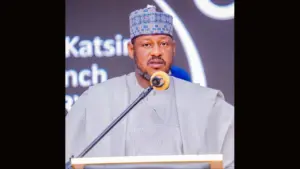
A member of the House of Representatives, Hon. Philip Agbese, has commended the Nigerian National Petroleum Company Limited (NNPCL) for its transparent leadership and openness to legislative engagement, describing its collaboration with the National Assembly as an example other government institutions should emulate.
Agbese, a Labour Party lawmaker from Benue State, said the recent conference on the implementation of the Petroleum Industry Act (PIA), organised by the House of Representatives in collaboration with NNPCL and other partners, demonstrated the importance of transparency, accountability and constructive engagement in managing Nigeria’s petroleum industry.
He particularly praised the Group Chief Executive Officer of NNPCL, Mr Bayo Ojulari, for promoting a culture of openness and collaboration, noting that the company’s willingness to engage lawmakers had strengthened institutional relationships and created opportunities for meaningful discussions on the implementation of the Act.
The lawmaker urged other government agencies to adopt similar approaches by embracing transparent leadership, maintaining open channels of communication with the legislature and building partnerships that promote effective governance.
Agbese spoke following a retreat on Petroleum Industry Act Implementation: The PIA, Corporate Governance and Legislative Oversight, organised by NNPCL in collaboration with the Office of the Speaker of the House of Representatives in Abuja.
Declaring the retreat open, Speaker of the House of Representatives, Abbas Tajudeen, said the PIA was designed to establish a more transparent, commercially viable, accountable and investment-friendly petroleum industry.
Abbas, who was represented by the House Leader, Prof. Julius Ihonvbere, however, stressed that the success of the legislation would depend largely on effective implementation, warning that the passage of a reform law did not automatically translate into the desired transformation.
He said the conversion of the Nigerian National Petroleum Corporation into a commercially oriented company, the establishment of distinct regulatory institutions and the introduction of a host community development framework were designed to address longstanding institutional deficiencies in the petroleum sector.
According to him, achieving these objectives requires a change in institutional culture, greater transparency and sustained commitment from all stakeholders.
The Speaker maintained that NNPCL’s commercial autonomy must be matched with corporate accountability, stressing that the freedom to make business decisions should go hand in hand with responsibility for their consequences.
He also emphasised that legislative oversight should promote good governance without undermining operational efficiency or arbitrarily interfering in legitimate commercial decisions.
Abbas said effective oversight should encourage transparency, protect public resources and ensure that institutions established under the PIA fulfil their statutory responsibilities.
He noted that the 10th House had sustained its engagement with the petroleum industry through retreats, committee-level interventions and investigations into crude oil theft, pipeline surveillance arrangements and the protection of critical energy infrastructure.
The Speaker identified production constraints, crude oil theft, pipeline vandalism, infrastructure deficiencies, investment uncertainty and regulatory bottlenecks as some of the major challenges confronting the industry.
He urged participants to identify implementation gaps, areas requiring legislative attention and more effective channels of engagement between relevant House committees and NNPCL.
Abbas further said the National Assembly must distinguish between shortcomings arising from inadequate legislation and those resulting from poor implementation, noting that some challenges confronting the industry required stricter enforcement of existing laws rather than fresh amendments.
He said the ultimate success of the PIA should be measured by increased oil production, greater investment, improved energy security, stronger domestic refining capacity, enhanced revenue generation and tangible benefits for Nigerians, particularly communities hosting petroleum operations.
Commending the Speaker for initiating the conference, Agbese described the retreat as a practical demonstration of the 10th House’s commitment to strengthening legislative oversight through dialogue, institutional collaboration and accountability.
He said Abbas’ initiative reflected his determination to promote an open parliament where lawmakers and critical institutions could engage constructively on policies and legislation affecting the country’s development.
According to Agbese, the conference provided an important platform for lawmakers to examine the implementation of the PIA, engage directly with NNPCL management and identify areas where legislative intervention could improve the performance of the petroleum industry.
He argued that legislative oversight should go beyond routine investigations to embrace constructive engagements capable of producing practical solutions, strengthening institutions and protecting the interests of Nigerians.
The lawmaker added that the Speaker’s initiative had demonstrated that effective legislative oversight and corporate transparency could complement each other in advancing national development.