 Follow Us on Google News


 Follow Us on Google Discover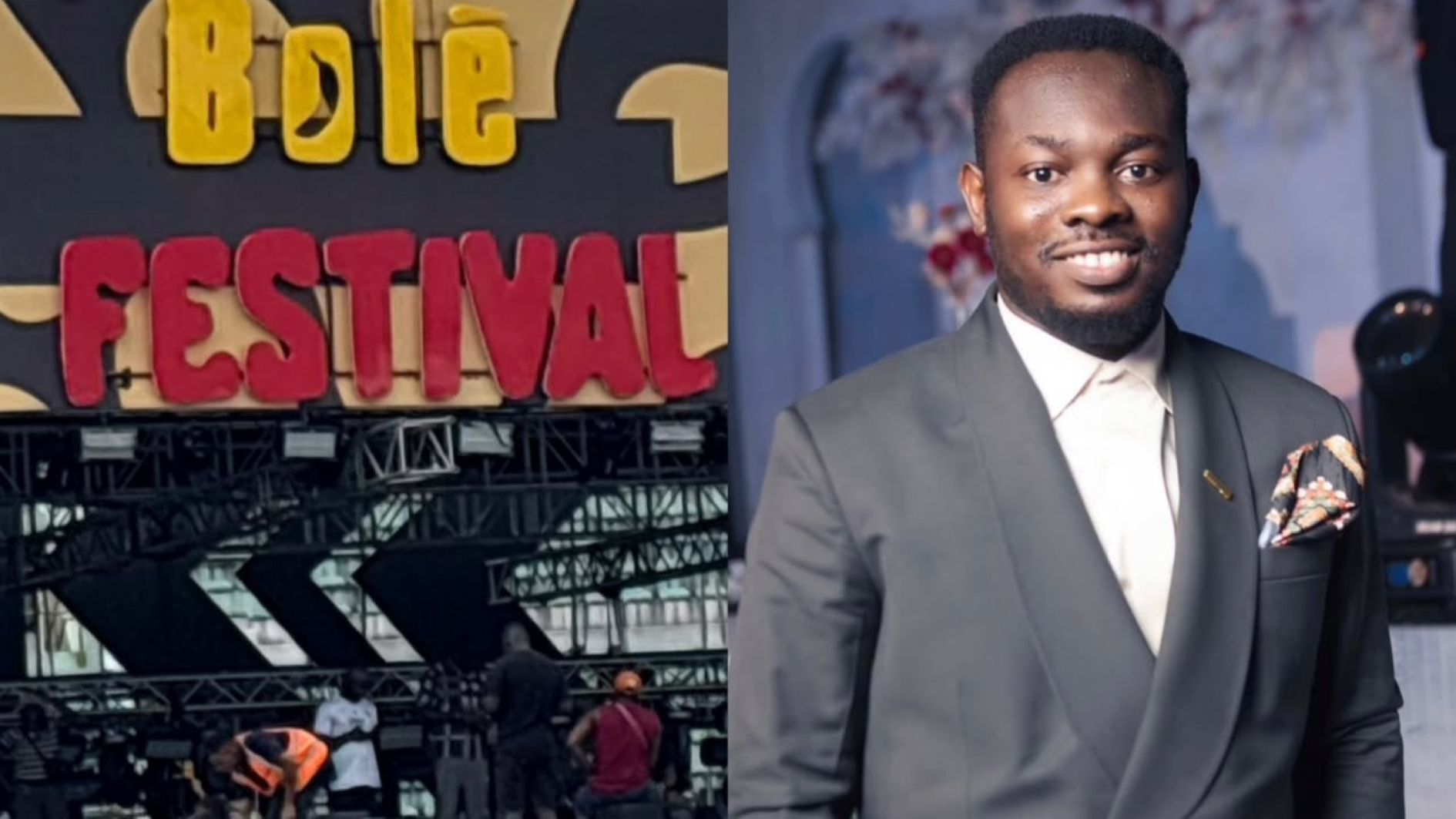
Ten years ago, a food event with two vendors and a few hundred guests set up in Port Harcourt to celebrate a roasted plantain dish most Nigerians outside the Niger Delta had never heard of.
This year, from September 4–6, thousands of people filled the Yakubu Gowon Stadium in Elekahia over three days for the festival’s 10th anniversary edition; now backed by some of the biggest consumer brands operating in Nigeria,
Bole Festival did not arrive at that scale by accident, nor did it arrive there overnight.
When Nonso Iwuh used his NYSC allowance to launch the inaugural Bole Festival in 2016, the ambition was modest by design: give “bole”, a roasted plantain delicacy typically served with fish, native to the Niger Delta’s street-food culture; a stage of its own. Roughly 300 people and two vendors showed up.
The festival returned yearly through 2017, 2018 and 2019, drawing crowds in the low thousands, before a pandemic-era pause reshaped its trajectory rather than ending it. By 2021, attendance had climbed past 25,000 at the time, organisers called it a record. The following year, the sixth edition, staged under the theme “Level Up” at the Yakubu Gowon Stadium, drew more than 28,000 attendees and over 100 vendors across two days despite heavy rain, prompting Iwuh to invoke a Port Harcourt catchphrase, “We Pin” loosely, “we don’t move.”
That growth has continued year on year. The ninth edition, held in September 2025 at the same stadium, drew over 40,000 attendees according to reporting corroborated across multiple Nigerian outlets, an organiser-reported figure, not an independently audited one, but consistent across coverage.

“More than 50,000 attendees was recorded in this year’s edition, according to ticket-sales and giveaways; with attendance reported to have peaked on the third day. The lineup featured Duncan Mighty, Ajebo Hustlers, Mavo, Timaya, M.I.A (“the Action Queen”), Magixx, Johnny Drille, Guchi, Sabinus, KimOprah, Carter Efe and BBNaija’s Thelma Lawson, among other performers and appearances, according to the festival’s official Instagram announcements.
The sponsor roster has grown alongside the crowd. This year’s edition was backed by Moniepoint, International Breweries, Ballantines, MTN, Red Bull, TrashCoin and Golden Penny Oil, among others. That builds on 2025’s headline group of Guinness, Johnnie Walker, Campari and Maggi, with the British Council Nigeria supporting a showcase for ten emerging artists. Earlier editions built a track record with brands including Nigerian Breweries, Tecno, La Casera and Chipper Cash; evidence of a sponsorship pipeline built edition by edition, not overnight.
Iwuh, who founded the festival and now runs it through his company Nonii Entertainment, has framed Bole Festival’s expansion consistently in terms of economic opportunity rather than spectacle alone. “The festival’s growth shows the power of culture to generate jobs, promote local businesses, and foster community development,” he said in a statement following the 2025 edition.
His account of the festival’s evolution from a two-vendor gathering to a stadium-scale event with fashion shows, art exhibitions, live music and food demonstrations alongside the bole stands, tracks with independent reporting on each edition. What has shifted is the scaffolding around him: Bole Festival is no longer a one-man operation but a branded enterprise with a corporate structure, a fixed venue, and a sponsorship calendar that stretches across telecoms, beverage and fintech sectors.
That distinction matters for how the festival’s success should be read. Its growth reflects not just Iwuh’s original instinct; that a regional street food deserved an international stage, but ten years of relationship-building with sponsors, vendors and, increasingly, government.
Organisers describe the Rivers State Government as having “remained a consistent supporter” of the festival, a characterisation that, as reported, comes from the festival’s own statements rather than a direct government pronouncement. MTN Nigeria’s regional leadership has offered a more direct endorsement: Ifeanyichukwu Udom, the company’s Regional General Manager for South-South Operations, said at the 2025 edition that “Bole Festival is now an international event, gathering momentum at every edition,” describing the company’s sponsorship as a way to “connect with our customers and support the enablement for their livelihood and aspirations.”
On the economic side, claims that the festival has boosted Rivers State’s internally generated revenue have been made by organisers and echoed by sponsor representatives. Vendors and traders selling everything from roasted plantain to clothing and jewellery, have reported brisk sales at recent editions, a qualitative signal of commercial activity that has not yet been converted into an audited economic-impact study.
Founder, Pizzazz Agency, David Adeyemi, said the milestone edition reflected a deliberate widening of the festival’s reach. “Bole Festival has become one of the clearest examples of how a homegrown cultural event can grow into an economic platform for an entire state. Crossing 50,000 attendees in our tenth year isn’t just a number — it’s proof that Port Harcourt can hold its own on the same stage as any major cultural destination in Africa.”
Bole Festival’s arc, 300 to 25,000 to 40,000-plus to this year’s tenth-anniversary crowd places it among the more closely tracked culture-and-food events to emerge from Nigeria in the past decade, alongside older, larger fixtures like Calabar’s carnival, and the Osun-Osogbo festival. Organisers have already signalled intent to keep expanding both the festival’s footprint and its list of institutional backers, with attendees and commentators pointing to venue capacity as the next constraint on growth.
Whether that growth eventually produces the kind of quantified economic case like jobs created, naira generated, tourism revenue captured that would let Port Harcourt make a harder pitch to investors and tourism boards remains an open question. For now, the festival’s clearest achievement is a simpler one: turning a plantain dish and a few hundred food lovers into an annual reason for tens of thousands of people to show up in Port Harcourt.

