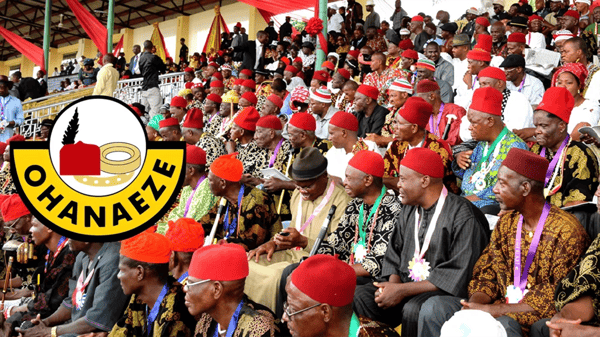
Ohanaeze Ndi Igbo and Arewa socio-cultural groups have expressed support for the commencement of Nigeria’s new tax regime, backing President Bola Tinubu and the Federal Inland Revenue Service (FIRS) amid legal challenges and opposition criticism surrounding the reforms.
In a joint statement, the groups said the smooth take-off of the new tax framework reflected coordination and planning by the Federal Government, following a Federal Capital Territory High Court ruling that cleared the way for implementation from January 1, 2026.
They commended President Tinubu and the Executive Chairman of FIRS, Mr Zacch Adedeji, for what they described as a hitch-free start to the policy, despite concerns raised by political parties and civil society groups.
Ohanaeze Ndi Igbo said the rollout demonstrated the administration’s resolve to strengthen revenue generation and improve fiscal discipline, arguing that an efficient tax system was essential for national development.
“A transparent and efficient tax system is critical to national development,” the group said, urging Nigerians to support the reforms in the interest of the country.
Similarly, Arewa groups praised the leadership of the President and FIRS for proceeding with the policy in line with the administration’s economic agenda, noting that early concerns and court actions had not disrupted implementation.
They also acknowledged the role of the judiciary, saying recent rulings provided clarity that enabled the timely commencement of the tax laws.
The groups said that if properly managed and sustained, the new tax regime would enhance government revenue, reduce reliance on borrowing and support improved delivery of infrastructure and social services across the country.
Their comments came as President Tinubu reaffirmed that the tax laws would take effect as scheduled, despite calls by the Peoples Democratic Party (PDP) for a suspension over alleged discrepancies between the harmonised and gazetted versions of the legislation.
In a statement titled “New Tax Laws Will Commence On January 1, 2026 As Planned”, the President said: “The new tax laws, including those that took effect on June 26, 2025, and the remaining acts scheduled to commence on January 1, 2026, will continue as planned.”
He added: “The tax laws are not designed to raise taxes, but rather to support a structural reset, drive harmonisation, and protect dignity while strengthening the social contract.”
Tinubu also said his administration was willing to work with the National Assembly to address any issues identified during implementation, insisting that “no substantial issue has been established that warrants a disruption of the reform process”.
However, the PDP maintained its position that the commencement date should be suspended pending a full investigation into alleged insertions in the tax laws.
In a statement by its National Publicity Secretary, Ini Ememobong, the party said: “Nigerians have demanded a thorough investigation of this anomaly and sought to know who carried out the illegal insertion and how it was done.”
Meanwhile, the Federal Capital Territory High Court in Abuja dismissed an application seeking to halt the take-off of the tax regime, ruling that there was no legal basis to stop the implementation of laws already enacted and gazetted.
Delivering the ruling, Justice Bello Kawu held that fiscal policy reforms fell within the lawful powers of government and that any perceived errors in the legislation could only be addressed through legislative amendment or a substantive court order.
Against this backdrop, Ohanaeze and Arewa urged continued engagement between government and stakeholders to sustain public confidence in the reforms, while reiterating their support for measures aimed at repositioning the Nigerian economy.