 Follow Us on Google News



 Follow Us on Google Discover
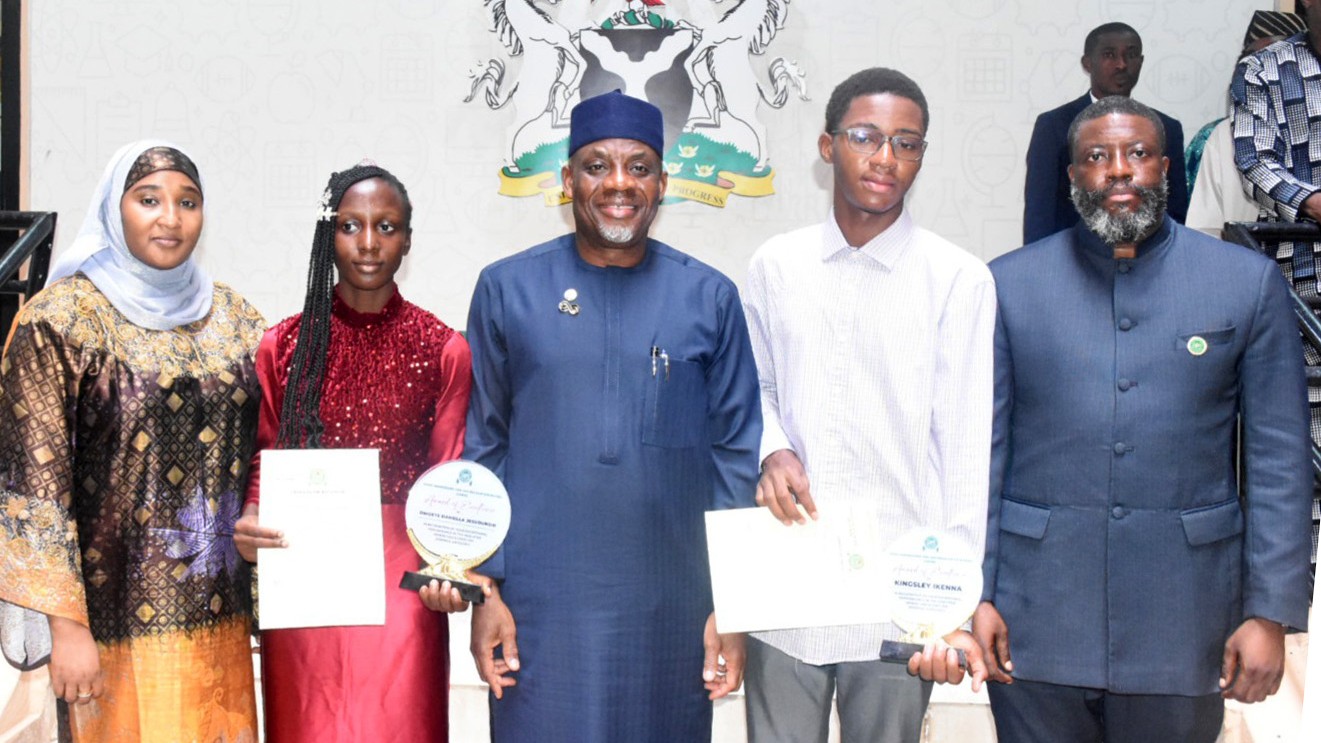
Only 108 underage candidates out of more than 2.17 million students who sat the 2026 Unified Tertiary Matriculation Examination (UTME) have qualified for possible admission into tertiary institutions after meeting the Federal Government’s stringent academic and maturity requirements.
The Minister of Education, Dr Tunji Alausa, disclosed this on Wednesday in Abuja while receiving the two highest-scoring candidates and six best-performing underage candidates in the 2026 UTME, presented by the Registrar of the Joint Admissions and Matriculation Board (JAMB), Prof. Segun Aina.
Alausa said 2,244,149 candidates registered for the 2026 UTME, while 2,174,396 sat the examination. Of these, approximately 39,000 were below the age of 16, the minimum age prescribed by the government for admission into tertiary institutions.
He explained that candidates seeking exemption from the age requirement had to satisfy multiple screening conditions, including scoring at least 320 out of 400 in the UTME, equivalent to 80 per cent.
They were also required to score at least 80 per cent in their post-UTME examinations, attain the prescribed 80 per cent threshold in the assessment of their O-level results and pass a screening exercise designed to establish their psychological, emotional and intellectual readiness for university education.
According to the minister, only 391 candidates from the underage group scored at least 320 in the UTME, while further assessments narrowed the number of successful candidates to 108.

He described the candidates as exceptionally gifted, saying they represented approximately 0.005 per cent of those who sat the examination.
The minister said the decision to maintain a minimum admission age of 16 was not intended to prevent gifted children from advancing academically but to ensure that those admitted at a younger age possessed the intellectual ability and emotional maturity required for higher education.
All eight candidates, including the two top performers, Owoeye Daniella Jesudunsin, who scored 372, and Enwere Kingsley Ikenna, who polled 370, received plaques and certificates from the Minister.
Meanwhile, the Joint Admissions and Matriculation Board (JAMB) is considering introducing critical thinking and life skills assessments for candidates seeking admission into tertiary institutions as part of efforts to improve the quality of its selection process.
The board is also leveraging technology to make its admission system more transparent, reduce candidates’ anxiety and ease the difficulties associated with updating personal information.
JAMB Registrar, Prof. Segun Aina, disclosed this on Wednesday during an interaction with Unified Tertiary Matriculation Examination (UTME) candidates as part of activities marking the board’s 2026 Customer Week at its Abuja Zonal Office.
Aina said the reforms were driven by two priorities: building public trust and reducing the difficulties candidates encounter while navigating the registration, examination and admission processes.

