 Follow Us on Google News


 Follow Us on Google Discover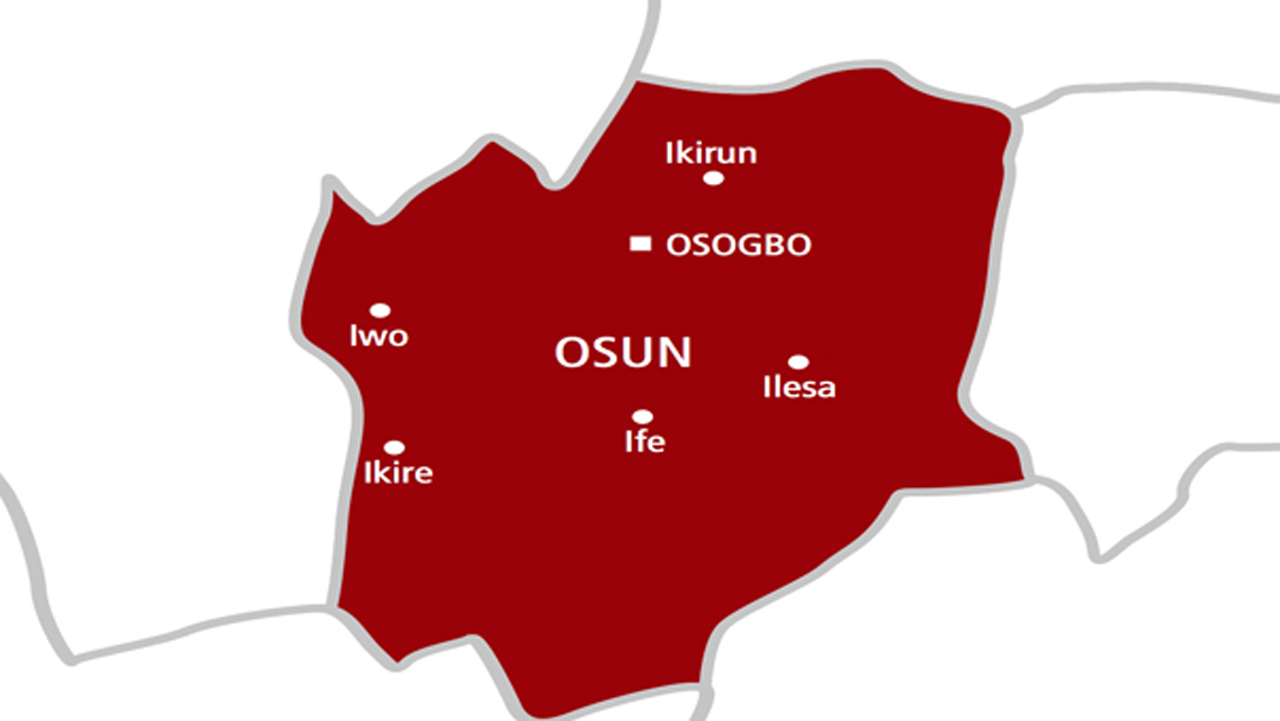
By Richard Elesho
The State of Osun is not only in the news. It is in the political labour room. The birth pangs have been deafening. Ominous enough to put both the medical and paramedical staff midwifing the delivery at their wits end. In fact, within a window of about a week, the state played host to the topmost echelons of the Nigerian Police hierarchy.
The first to visit was Adegoke Fayoade, the Deputy Inspector General of Police in charge of the southwest on Friday, 26 June. The next Friday; 3 July, the big Oga, the Inspector General of Police, IGP, Tunji Disu, followed up. The aim of the visits was to calm frayed nerves over escalating tensions in the region where a guber poll is in the offing.
As to be expected, the state has been in the grips of allegations and counter-allegations of electoral violence and vote buying plots by diverse political groups. This compels the law enforcement agencies to work round the clock in order to put spanner in the works of the non-state merchants.
The first tenure of the dancer-governor, Ademola Adeleke, wobbles to a close and an off-cycle poll to determine the next number one citizen is knocking fast on the door. The exercise is scheduled to be held in a matter of weeks, precisely on Saturday 15 August, according to the Independent National Electoral Commission, (INEC).
Mindful of the imperatives of peace to the conduct of a credible poll, INEC, embarked on a risk assessment initiative. The intelligence driven risk assessment exercise uncovered and exposed a disturbing picture. The commission discovered a horrendous haul of 385 flash points and another 200 difficult terrains that would be hard to access in the state. That is not all. The electoral umpire expressed concerns about the high prospects of kidnapping or banditry in parts of the state. It has raised the alarm, and appropriate security agencies have stepped up their game.

Osun is in the league of six states where gubernatorial elections are staggered due to judicial pronouncements that nullified previous elections because of diverse infractions of the laws moderating the political space of the country. Others in that bracket are Kogi, Edo, Ondo, Anambra, and Ekiti. However, this year’s election is unique in other respects. Following those in Anambra and Ekiti, it is the third election to be conducted by INEC since Prof. Joash Amupitan, SAN, assumed its leadership last year. It is also the last in the series of staggered polls before next year’s general election.
Clearly, just as morning shows the day, Osun represents a litmus test or a glimpse into what awaits Nigerians in the fast approaching 2027 general elections. Get it right or wrong in Osun and expect a similar outcome next year. The implications of a shoddy poll in ‘the land of virtue,’ as the state was formerly nicknamed, are all too conspicuous. It’s totally an evil cloud.
Fourteen political parties are arrayed in battle attires and already in the ring against the incumbent, but not all of them are in the real contest. Notably missing in the list are the Peoples Democratic Party, (PDP), and the Labour Party, (LP), both parties participated in the last Osun guber poll. They also made a strong showing in the 2023 general elections.
To be sure, 66-year-old Adeleke assumed office in 2022 on the platform of the now bifurcated PDP. He currently seeks reelection for a statutory second and final term on the platform of Accord Party, (AP). His running mate is Adenusi Kola Adegboyega. The All Progressives Congress, (APC), candidate is Bola Oyebamiji, 60, a former chief executive of the National Inland Waterways Authority, (NIWA), with Benjamin Kayode Adereti as his joint ticket holder.
The African Democratic Congress, (ADC), is fielding Salaam Najeem Folasayo, 60, as its standard bearer, while Agiri Yemisi Temitope, 55, is his deputy and the only woman in that capacity. Olanrewaju Farinloye, 40, and Fadahunsi Olaniyi, 67, are candidate and deputy candidate respectively of the Action Alliance, (AA). The oldest candidate and only female is Adegabo Opawoye Yemisi, 84, who is paired with Atanda Eniola Babatunde, 43 on the African Democratic Party ticket, (ADP).
Others are: African Action Congress, (AAC), All Progressives Grand Alliance, (APGA), Allied Peoples Movement, (APM), Action Peoples Party, (APP), Boot Party, (BP), New Nigeria Peoples Party, (NNPP), Peoples Redemption Party, (PRP), Young Progressive Party, (YPP), and Zenith Labour Party, (ZLP).
INEC has been rejigging its tools for a credible poll. The universal basis of acceptable and credible elections all over the world is data integrity. In line with global best practices, the Nigerian electoral umpire has made an early display of its updated voters register. The document, which is in both digital and analogue formats, revealed a modest 2,239,233 registered voters. They are expected to participate in the election in 332 Registration Areas (RAs) and 3,763 Polling Units (PUs) spread across the 30 local government areas of the state and the only Area Office, in Modakeke.
The Electronic Register of Voters, ERV, was presented by Mrs Oluwatoyin Babalola, the state Resident Electoral Commissioner, REC, at a stakeholders forum in Oshogbo, the state capital on Thursday July 9. Those in attendance included representatives of political parties, security agencies, civil society organisations, traditional rulers, election observers, development partners, and journalists. It needs no begging that the register remains one of the most important instruments for guaranteeing transparency, accountability, and credibility in the electoral process.
The REC alluded to this in her remarks. “The presentation of the Electronic Register of Voters is not only a statutory obligation but also a demonstration of INEC’s determination to conduct an election that meets constitutional requirements and international best practices.”
She added that the Commission is guided by the provisions of the Electoral Act in compiling, maintaining, and updating the Register of Voters before making it available to political parties.
Even at that, INEC must not rest on its oars. Eternal vigilance, as they say, is the price of freedom. The challenge before the commission is to think out of the box in devising the safest route to a credible poll and checkmate electoral fraudsters in their satanic inventions. The difficult topography must never become an excuse for late or non arrival of vital electoral materials. INEC must borrow from the wisdom of a Yoruba adage *Ogun a gbo tele kii pa’aro t’oba gbon,* A scheduled war does not kill a disabled person that is wise. INEC must be ahead of its distractors like that wise, proverbial, physically challenged person who will not wait for war before taking flight.
It is also crucial for the commission to guide against the landmine of technology failure sometimes experienced in previous elections. Measures must be put in place to nib in the bud potential glitches in Biomodal Voters Accreditation System and instant upload of outcomes to the result portal. These measures are germane to ensuring that no voter is disenfranchised and every vote counts.
Luckily, the commission has been proactive in its preparations. Its Osun State office has confirmed being in custody of no less than 75 per cent of the materials ahead. The non-statutory materials have been deployed to their appropriate locations, and concerns about voters’ apathy are being addressed through awareness campaigns.
The commission seems determined on its mission of a free, fair, and credible guber election in Osun. How far can it go?

