 Follow Us on Google News
 Follow Us on Google Discover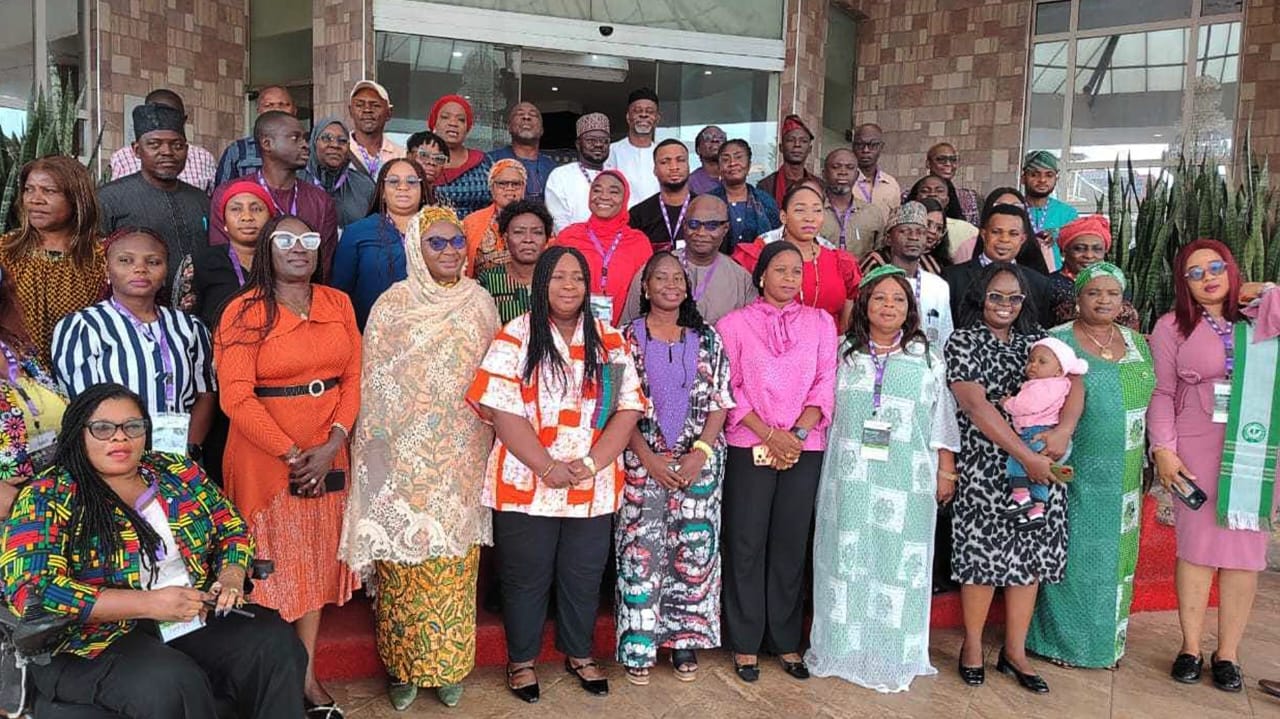
The African Centre for Leadership, Strategy and Development (Centre LSD) has called on the National Assembly to pass the proposed Reserved Seats Bill for women, saying constitutional intervention is necessary to address the persistent under-representation of women in Nigeria’s political leadership.
The Founding Executive Director of Centre LSD and Project Director, Women Can Lead (WCL) Project, Dr. Otive Igbuzor, made the call in Abuja on Tuesday at a press conference held during the Gender Mainstreaming Training for Gender Desk Officers, faith and traditional leaders and women’s rights organisations.
Igbuzor said Nigeria must adopt deliberate measures to increase women’s representation in governance, arguing that countries that had recorded significant progress in female political participation had used constitutional and institutional mechanisms to address historical inequalities
He said the proposed reserved or special seats arrangement was one of the measures that could provide women with greater access to legislative positions, urging the National Assembly to take responsibility for ensuring its passage.
According to him, Nigeria remains one of the countries with very low representation of women in political institutions, despite women constituting about half of the population.
He argued that the low number of women contesting elective positions should not be interpreted as a lack of interest or capacity among women, but should be viewed against the historical, economic, institutional and socio-cultural barriers that have limited their participation.

Igbuzor therefore cautioned against asking why women were not coming forward to contest presidential and governorship positions, saying such a question placed the burden on women instead of addressing the structures that make political participation difficult for them.
He said women had suffered economic marginalisation for generations, while social norms had continued to reinforce the perception that women should occupy domestic rather than leadership roles.
The Centre LSD director said the political environment must be transformed to create a level playing field for women seeking elective office, stressing that political parties, communities and other institutions had responsibilities in this regard.
He also called on the media to intensify monitoring and reporting of the proposed reserved seats legislation, urging newspapers and other media organisations to regularly track developments around the bill.
He said: “Every news item, get something on the reserved seats,” stressing that sustained public attention would help keep the issue on the national agenda and encourage the relevant institutions to act.
Igbuzor said the struggle for increased women’s representation was not peculiar to Nigeria, noting that women in many countries historically obtained voting rights and access to political participation later than men.
He maintained that Nigeria could learn from countries that had adopted constitutional measures to improve women’s representation, stressing that deliberate intervention was necessary because existing political structures had not produced adequate representation.
The call came as Centre LSD launched the Women Can Lead Project, a 24-month initiative supported by the Ford Foundation and designed to strengthen women’s participation, leadership and influence in governance and public life.
The project will be implemented in Benue State, Kano State and the Federal Capital Territory, with emphasis on gender mainstreaming, meaningful inclusion of women in governance and feminist strategies for preventing gender-based violence.
Igbuzor said the initiative would address structural, institutional, economic and socio-cultural barriers limiting women’s participation and influence in decision-making.
He said Centre LSD would train Gender Desk Officers and other relevant actors in Ministries, Departments and Agencies to integrate gender considerations into policies, programmes, planning, budgeting and decision-making.
The organisation would also establish an Intersectional Women’s Leadership and Governance Incubator to support women from diverse backgrounds, including young women, rural women and women with disabilities, through mentorship, peer learning and networking.
Igbuzor said the project would further establish Community Social Norms Labs, where women, men, young people, traditional and religious leaders and other community actors would examine beliefs and practices that perpetuate inequality and gender-based violence and develop positive alternatives.
He urged men and boys to become active allies in promoting more equitable families, institutions and communities, while calling on traditional and religious leaders to use their influence to challenge harmful practices.
Igbuzor said the ultimate objective was to create stronger institutions, women’s leadership networks, accountability mechanisms and changed community norms capable of sustaining progress beyond the 24-month project.
He declared: “Women can lead. Women are leading. Our collective responsibility is to dismantle the barriers, transform the institutions and create the enabling environment for many more women to lead.”

