 Follow Us on Google News
 Follow Us on Google Discover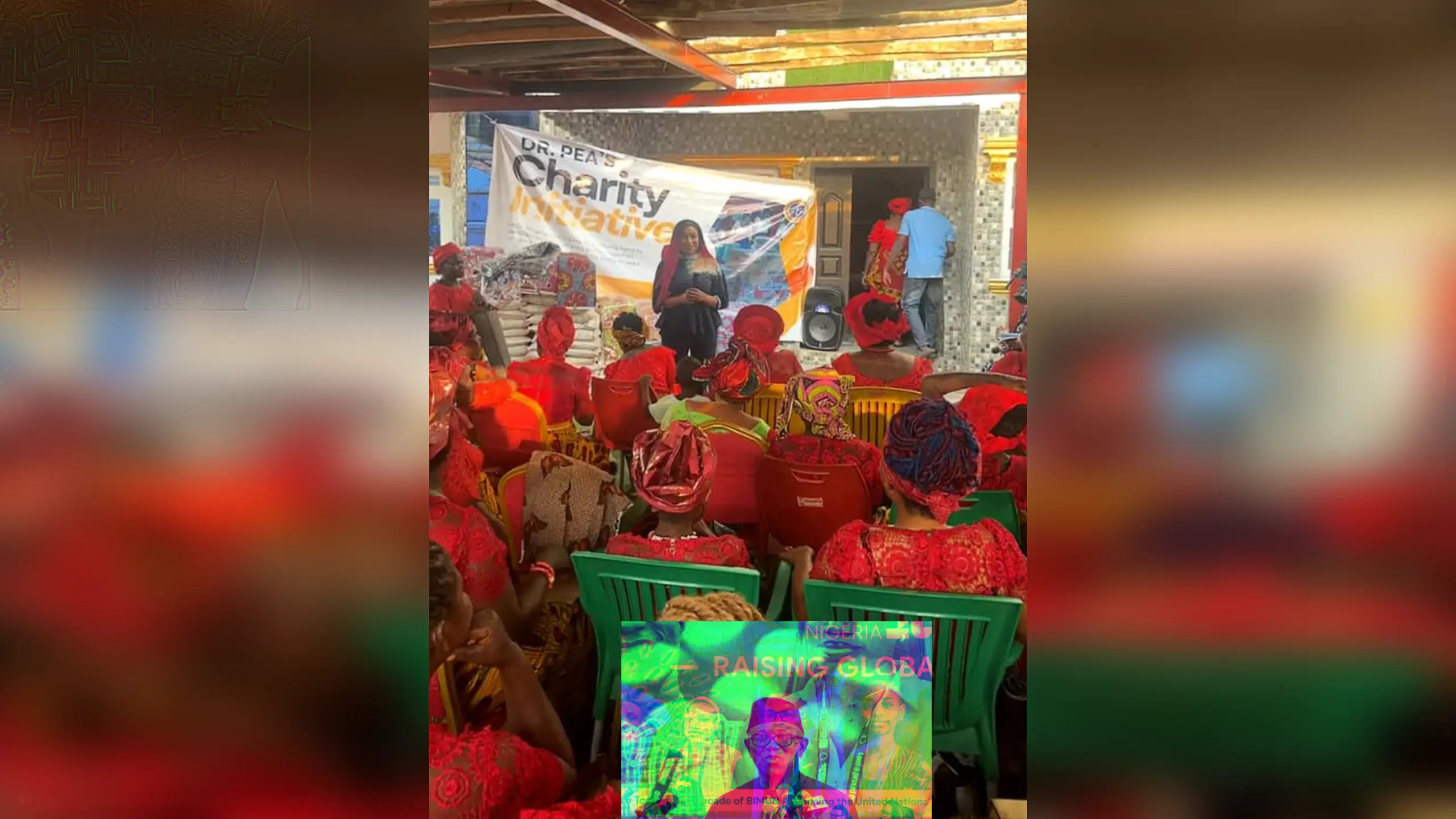
In a direct challenge to traditional vocational training structures across Nigeria, legal practitioner, entrepreneur, and philanthropist Dr. Princess Ezinne Agwu has expanded a fully funded empowerment model designed to eliminate financial barriers for unemployed youth.
The initiative, operated through the humanitarian arm of the PEA Group and its network of affiliated charitable foundations, provides participants with comprehensive skill acquisition training at zero tuition cost. To address the economic pressures that frequently lead to high drop-out rates in conventional schemes, the programme incorporates daily cash stipends, complimentary meals, and full housing accommodations for participants requiring residential support.
The launch comes at a critical moment for Nigeria, where youth unemployment remains one of the country’s most pressing socioeconomic challenges. While vocational programmes are widely promoted as a viable path toward economic self-reliance, the standard framework often requires prospective trainees to pay tuition fees, cover daily transportation, and secure their own feeding and lodging.
For millions of young Nigerians living below the poverty line, these baseline costs create an insurmountable barrier. Many who manage to enroll are ultimately forced to abandon their studies midway, prioritising immediate, low-income survival activities over long-term skill acquisition.
Agwu’s operational model seeks to dismantle these friction points entirely by shifting the financial burden off the trainee.
“Many young Nigerians genuinely desire to learn a trade, but they are forced to choose between learning and eating,” said an associate familiar with the initiative’s operations. “This model confronts those harsh economic realities head-on. By removing every logistical excuse and financial barrier, we restore dignity and allow trainees to focus entirely on building sustainable careers.”

Under the structure established by the PEA Group, the empowerment programme addresses the physical and financial needs of its cohort through four primary pillars. The first one is the tuition-free vocational instruction where participants enroll in market-driven technical and entrepreneurial courses without paying registration or tuition fees.
Two, the trainees receive direct monetary stipends for showing up to class, offsetting lost income opportunities while in training. Three, fully funded meals are provided on-site throughout the duration of the training period. Finally, housing is arranged and paid for on behalf of vulnerable participants or those traveling from remote regions.
Community leaders and policy observers have noted that the inclusion of daily stipends and housing sets the initiative apart from typical corporate social responsibility (CSR) projects, which rarely cover living expenses.
While the current training initiative has drawn renewed public attention, it represents the continuation of a fifteen-and-a-half-year philanthropic track record by Dr. Agwu. A filmmaker and corporate executive in addition to her legal background, Agwu has spent over a decade directing private capital into targeted social interventions.
Her previous initiatives through the PEA Group include long-term educational scholarship funds for underprivileged children, economic relief schemes for widows, rehabilitation and vocational outreach inside state correctional facilities, and direct community development projects.
“What distinguishes her approach is intentionality,” an observer of the foundation’s work noted. “It is not publicity-driven philanthropy. It is a strategic investment in human capital designed to produce measurable economic independence.”
As developmental experts continue to debate the most effective strategies for mitigating poverty in sub-Saharan Africa, Agwu’s intervention is being cited as a case study in practical welfare design. By proving that humanitarian compassion can be integrated with structured operational planning, the initiative offers a blueprint for public and private organisations seeking to maximise the impact of vocational development funds.
For the beneficiaries currently passing through the PEA Group’s programmes, the framework represents more than an educational opportunity, it serves as a direct pathway out of systemic poverty and into lasting economic self-sufficiency.

