 Follow Us on Google News
 Follow Us on Google Discover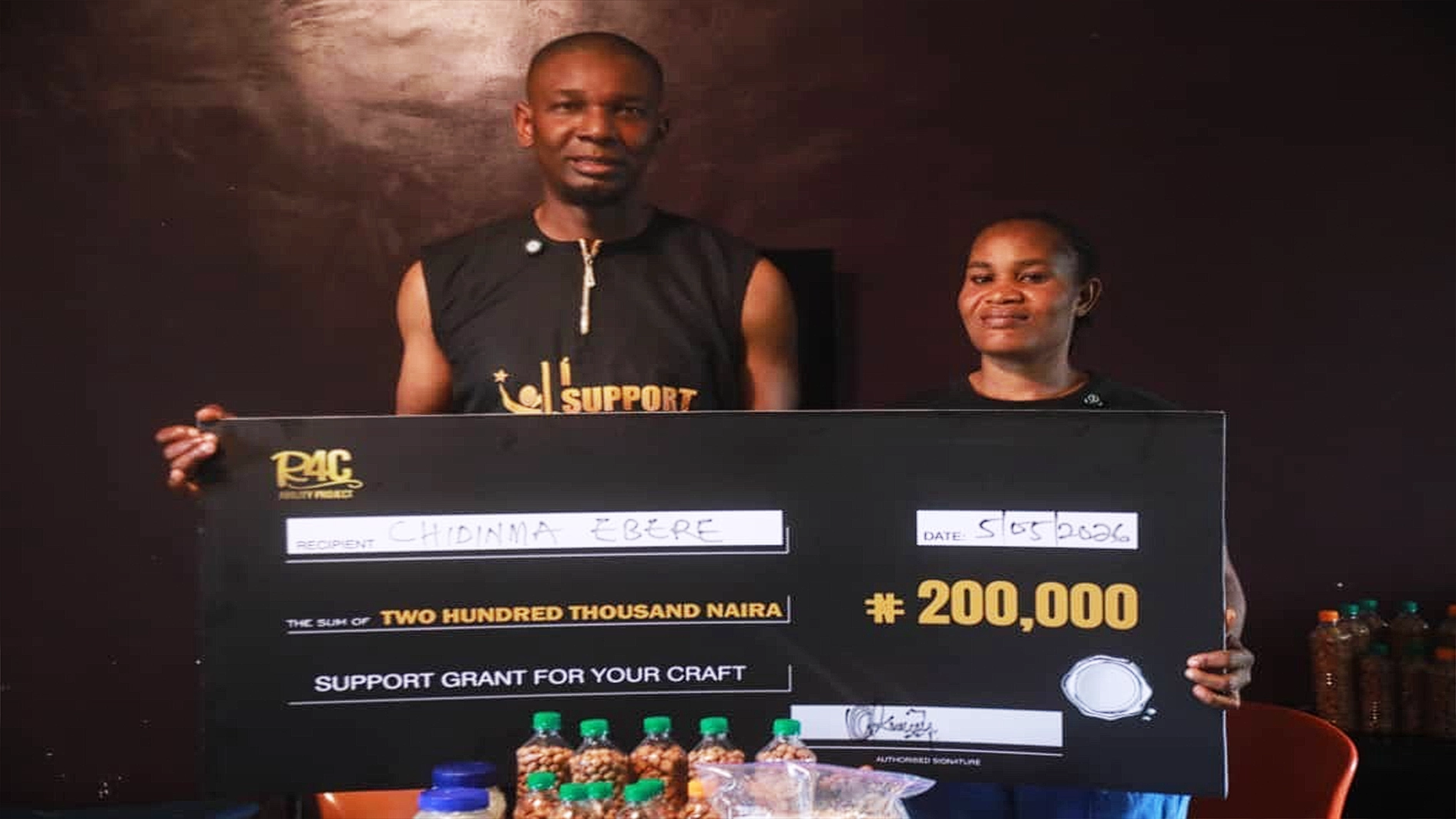
With over 35 million Nigerians living with disabilities, and an estimated 2.1 million to 3 million residing in Lagos State alone, many faces major challenges, including social stigma, poverty, and inaccessible public spaces. Kind-hearted individuals are needed to help bridge the gap and bring relief.
In Lagos, persons with disabilities continue to face significant barriers to accessibility, education, and employment, despite the provisions of the Lagos State Office for Disability Affairs (LASODA).
Concerned about their plight, Success Ezeani’s R4C Ability Project is leading the call for the empowerment of members of this community.
Through a nine-part documentary series featuring nine disabled entrepreneurs and artists across Lagos, Ezeani is showing both what people with disabilities are going through, their projects.
The documentary is a case of authorship, allowing them to present their work on their own terms.
The pre-production began in 2025, involving planning, logistics, and outreach to the disabled creators and a production crew working across Lagos, where the recording continued in 2026.

In the documentary, each participant discussed their practice, demonstrated their craft, and received a N200,000 creative production stipend. A total of N1,800,000 was awarded to the creators to help expand their practice.
The documentary introduced the creators through their expertise. The approach redirected attention toward labour, skill, and entrepreneurship than their disabilities as each creator discussed their tools, production processes, pricing and customers.
In an environment where disability stories are often framed through hardship or inspiration, that shift in emphasis feels deliberate and refreshing.
The project’s vision of turning disabilities into productivity was strengthened by the collaboration with partners whose contributions helped bring the documentary to life.
Episode one, titled ‘Baking Hope Into Every Bite’ features Chidimma Ebere, a visually impaired entrepreneur who runs a homemade snacks business producing chin and peanut cake. The episode presents her work as a product of determination, resilience, and discipline and leans on the line that “talent speaks louder than circumstance.”
Episode two, ‘Weaving Resilience Through Adire’, profiles Rosenje Adeniyi Afis, a visually impaired person who specialises in Adire, or tie-and-dye, fabrics and clothing. The episode traces his journey of learning the craft and growing the enterprise, positioning his success as evidence that disability is not inability.
In episode three, titled, ‘Disability does not define your potential, reveals your strength’ centres on Chinedu Joseph Alozie. This episode focuses on personal transformation, with Alozie describing how he turned obstacles into opportunities and arguing that impact is possible regardless of disability.
Episode four, titled “Turning Disability Into Productivity,” focused on Michael Moses, a visually impaired shoemaker, who lost his sight but continued working, and who now earns a livelihood producing quality footwear.
His story is framed around determination, hard work, and entrepreneurship, with the aim of showing that disability does not limit talent, creativity, or the ability to build a successful career.
Speaking on the project, Chief Executive Officer, OAPay, Tracy Abiola, and a major partner, noted that the decision for the collaboration came with a deep commitment to empathy and empowering individuals for the purpose of human development.
“We are backing immigrants and their communities with the financial tools for economic and sustainable development. Our platform is a community-driven remittance platform built to uplift Africa’s growing diaspora by providing a safe, fast, and convenient way to send money home.
“Our role goes beyond remittance. Through technology and trusted partnerships, we are on a mission to help shape a financial ecosystem that supports individuals, families, and communities across Africa.
We are proud to collaborate with individuals to turn disabilities into productivity by promoting their documentaries that feature the incredible stories of people living with disabilities.
Chief Executive Officer, Yaw Naija Entertainment, Steve Onu, remarked: “I have closely collaborated with Mr. Ezeani on major cultural exhibitions and inclusive documentary media projects. He stands out as an exceptionally gifted creative collaborator, presenter, and media curator.
“Through his innovative creative frameworks, he has continuously championed the philosophy of turning disability into productivity, building robust structures that moved marginalised individuals from dependency to sustainable economic inclusion.”
Chief Executive Officer, Auldon Toys LTD, Paul Orajiaka, also revealed that his partnership with Ezeani represents a milestone in matching commercial design with inclusive cultural production.
“I am pleased to offer my strongest, unreserved input to the curator. I have collaborated intimately with him on commercial product design, textile fabrication, and inclusive artisan initiatives.
“This documentary helped showcase artisans living with disabilities doing the technical fabrication, pattern design, and production of bespoke clothing lines.”
On his part, senior Pastor, Olivet Bible Church, Owen Nlekwuwa, stated: “We have attended and supported multiple R4C Ability exhibitions where products, textile works, handcrafted items, and other creative outputs produced by people living with disabilities were presented to public audiences. He demonstrated leadership as a curator and creative producer in promoting visibility, participation, and economic opportunity through the creative practice of the creators.”
Managing Director, A.Y Shoes Global, Aloy Nwajide, also disclosed that he partnered with the initiative, to collectively reinforce his commitment to empowering people living with disabilities through creativity, entrepreneurship and opportunity.
Their collaborations of these individuals reflect a shared belief that Africa’s future depends on creating opportunities for all, where talent is recognised, ideas are nurtured, and every individual has the chance to contribute meaningfully.
The series’ greatest strength also produces its principal limitation. By allowing participants to guide their own narratives, the documentary avoids the paternalism that often accompanies disability-focused programming. At the same time, several episodes feel constrained by their brevity. Each of the documentary focused on the different creators and their trades.
Performance artist and dancer, Crazy Legs works from Festac Town. Make-up artist Kelechi Ruth Uhegwu operates in Satellite Town. Chidimma Ebere produces peanut snacks and chin-chin from Bariga. Other episodes follow with creative entrepreneur, Ugochukwu Ogugua Godfrey, beaded handbag artisan Olatunji Babatunde, designer Chinedu Joseph Alozie, footwear artisan Michael Moses, creative practitioner Daniel Brown Moses, and textile artisan Rosenje Adeniyi Afis, whose tie-and-dye practice is based in Ojo.
Despite limitations, the series provides important visibility to persons with disability in Nigeria.
Turning Disability Into Productivity succeeds as an awareness tool. To move from inspiration to impact, future episodes will need to add data, business context, and policy analysis to match the personal resilience already on display.

