 Follow Us on Google News



 Follow Us on Google Discover
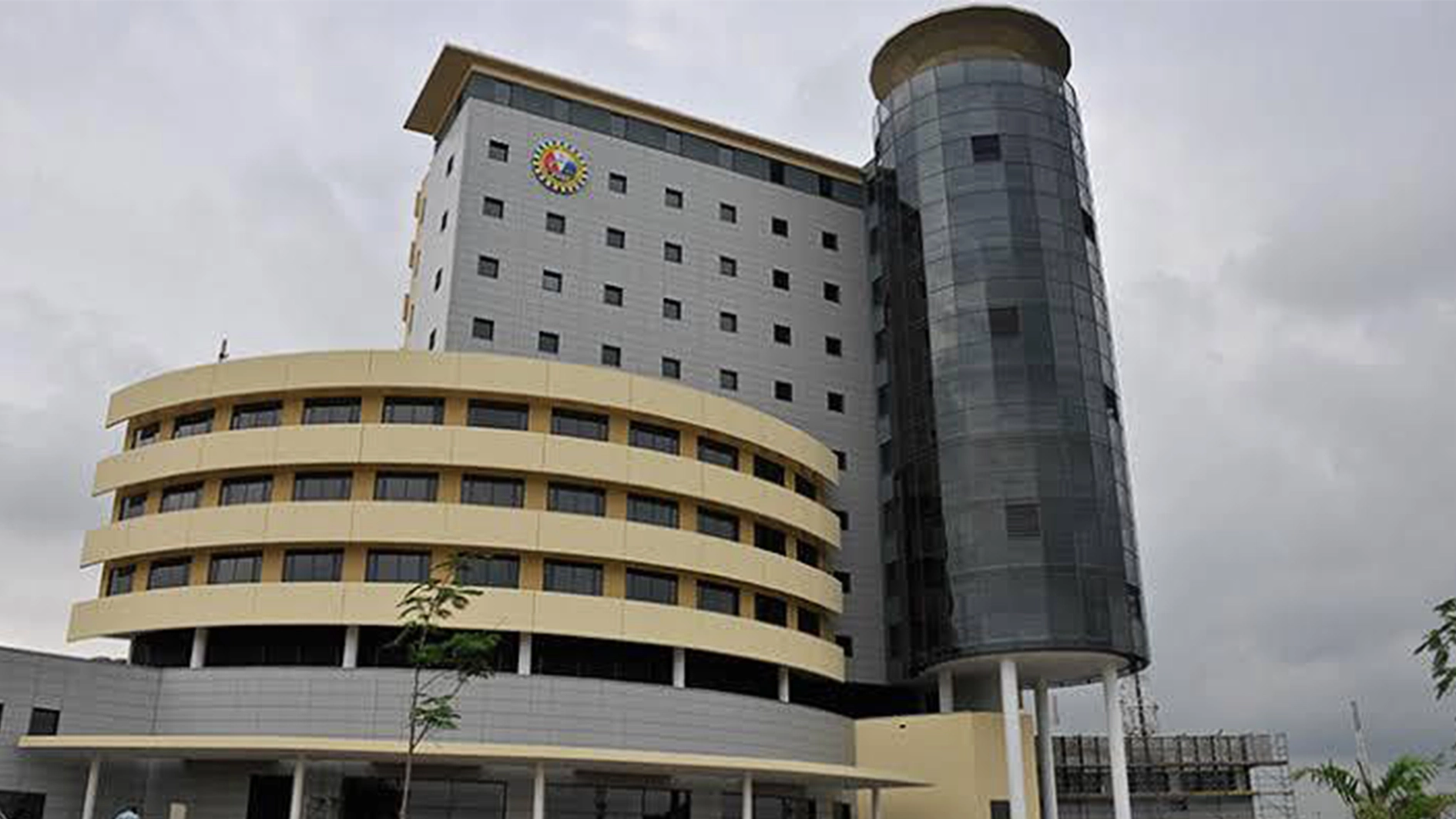
The Petroleum Technology Development Fund (PTDF), on Tuesday, appealed to the British High Commission to address visa rejections and rising tuition fees affecting Nigerian scholars studying in the United Kingdom.
The Kaduna-based university, formerly known as the College of Petroleum and Energy Studies, is being developed as a postgraduate institution focused on advanced research, geological sciences and engineering technology.
The Executive Secretary of PTDF, Prof. Shuaibu Shehu Aliyu, disclosed this in Abuja, during a high-level strategic bilateral meeting with the British High Commissioner to Nigeria, Mr. Peter Vowles, at the General Shehu Musa Yar’Adua University of Geological Sciences and Engineering Technology in Kaduna.
Aliyu said the challenges were affecting the Fund’s efforts to sustain its scholarship programmes and strengthen Nigeria’s technical capacity in the oil and gas industry.
He called for a stronger framework to address the issues and improve support for Nigerian scholars studying in British universities.
Aliyu said: “The strategic bond between Nigeria and the United Kingdom has yielded immense results in human capital development over the decades. Today, by breathing full life into the General Shehu Musa Yaradua University of Geological Sciences and Engineering Technology in Kaduna.

“We have an unprecedented opportunity to leave a lasting legacy for future generations of energy professionals across Africa. I would like to take this opportunity to highlight several challenges we are facing with our UK partners for the High Commissioner’s attention.
“These include high tuition fees compared to other European countries and visa rejections. We also hope to develop a plan to monitor our scholars in the UK, with support from the UK government and the hosting university.”
The PTDF executive secretary also proposed a monitoring framework involving the UK government and host universities to track the progress and welfare of Nigerian scholars.
He said Nigeria and the UK had maintained a longstanding educational partnership that had contributed significantly to the development of engineers, geoscientists, researchers and other professionals in the energy sector.
Aliyu said PTDF had partnerships with other countries, including Germany, France and Malaysia, where it continued to explore cost-effective arrangements for training Nigerian professionals.
He, however, stressed the need to preserve the longstanding educational relationship between Nigeria and the UK while addressing the financial and administrative obstacles confronting scholars.
The executive secretary said PTDF had sponsored nearly 15,000 Nigerians to pursue undergraduate and postgraduate education in Nigeria and abroad through its Overseas Scholarship Scheme and In-Country Scholarship Scheme.
He added that, as of July 2026, 1,571 scholars had studied across 15 countries and more than 120 partner institutions.
Aliyu said the Fund was also expanding its split-site PhD programme, which allows scholars to undertake part of their doctoral studies in Nigeria and the remainder at partner universities in the UK.
According to him, the initiative would reduce the cost of overseas education, strengthen local institutions and ensure that Nigerian scholars obtained internationally recognised qualifications.
He identified the General Shehu Musa Yar’Adua University of Geological Sciences and Engineering Technology in Kaduna and the Centre for Skills Development and Training in Port Harcourt as two major institutional interventions designed to strengthen local capacity.
Aliyu said the institution had established split-site doctoral training partnerships with the University of Portsmouth, the University of Strathclyde and Robert Gordon University.
He explained that the university was conceived as a centre of excellence to bridge the gap between academic knowledge and practical industry requirements, with the ambition of serving Nigeria and the wider West African subregion.
Responding, the British High Commissioner to Nigeria, Peter Vowles, acknowledged the concerns over visa processes and rising tuition fees, promising to communicate them to relevant authorities and institutions in the UK.
Vowles welcomed PTDF’s investment in postgraduate education and its continued engagement with British universities, describing the partnership as important to developing a world-class institution with benefits extending beyond Nigeria.
He said the UK remained committed to supporting quality education through its collaboration with PTDF and ensuring that talented Nigerian scholars could access opportunities at British universities.
He said: “Our conversations, it is clear that you are committed to creating a world-class postgraduate education institution, strengthening institutional learning and working with international partners.
“What I found particularly interesting, Executive Secretary, is that your ambition extends beyond Nigeria to the wider region. We are grateful that you have continued to choose to work with the UK university sector.
“I am particularly pleased that many of these partnerships involve universities in Scotland, which is my home part of the United Kingdom. Aberdeen and Strathclyde are especially familiar to me because of my family’s connections to the area.”
Vowles assured the PTDF of the British High Commission’s continued engagement with the Fund, adding that both countries could benefit from exchanging knowledge, strengthening institutional relationships and developing their natural resources.

