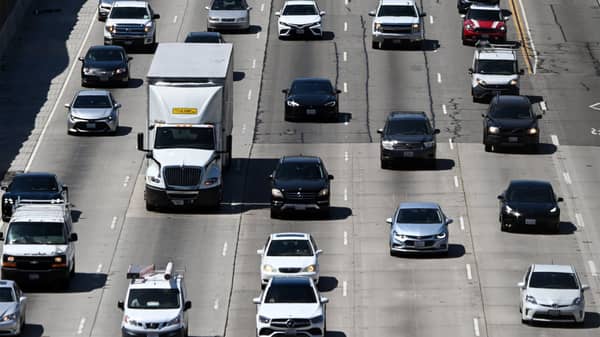
 Greenhouse gas emissions from transport have been reduced by up to a quarter through targeted public policies, especially when authorities ‘double down’ on restrictions.
This is stated in a paper published in Nature Energy, by an international team, that include the University of Oxford.
The researchers investigated the real-world impact on emissions of different policies introduced across 31 European countries. Using a machine learning algorithm, they identified 345 potential opportunities for change and found 10 successful policy interventions. And these, which mainly involved carbon pricing, reduced emissions from by 8 to 26 per cent. This was the first time that combined policy packages, rather than single policies, were studied for effectiveness.
According to a researcher with Oxford’s Smith School of Enterprise and the Environment and an author of the paper, Moritz Schwarz, “what matters for citizens is to have confidence in climate action by governments in the long term. We saw this especially when governments doubled down on existing measures, for example, by increasing existing carbon prices. The public sees the government is serious.”
The study showed the largest and most effective interventions involved a pricing mechanism, such as a carbon or fuel tax, often coupled with other measures, such as financial incentives for greener vehicles.
“Each time an individual fills up their car with fuel, they are confronted with the reality of carbon emissions and carbon pricing.
“In no other way do you experience the close relationship between pricing and fossil fuels. The war in Ukraine exemplifies the huge impact of fuel prices on all of us. The increased cost should remind decision makers that equity and support for low-income citizens must always be considered when designing energy and climate policy.
“While environmental taxes and levies are important in guiding consumer decision making, the scale of price increases by taxation pales in comparison to current war-driven price increases, providing another incentive to wean off fossil fuels as quickly as possible,” Schwarz said.
In order to meet net-zero pledges and carbon-reduction obligations under the Paris Agreement, emissions must be dramatically reduced, in Europe and elsewhere. The research team, led by Dr Nicolas Koch from MCC Berlin, concentrated on road transport emissions, since they represent one of the biggest challenges, with millions of vehicles contributing to carbon emissions in the EU alone.
Author, Professor Felix Pretis from the University of Victoria and Co-Director of Climate Econometrics, said, “the power sector is still a major challenge. But there are fewer moving parts involved in decarbonising it when compared to the road transport sector, which is why we focused this study on that particular sector.”
According to the report, the authors from the University of Oxford, the University of Victoria and the Mercator Research Institute on Global Commons and Climate Change in Berlin, identified policy mixes with emission reductions on a magnitude that matches the reduction requirements under the net-zero emissions target for seven EU countries.
“If policy makers in these countries focus on the policies that have been effective in the past, we should expect more significant reductions in road transport emissions,” Schwarz noted.