 Follow Us on Google News


 Follow Us on Google Discover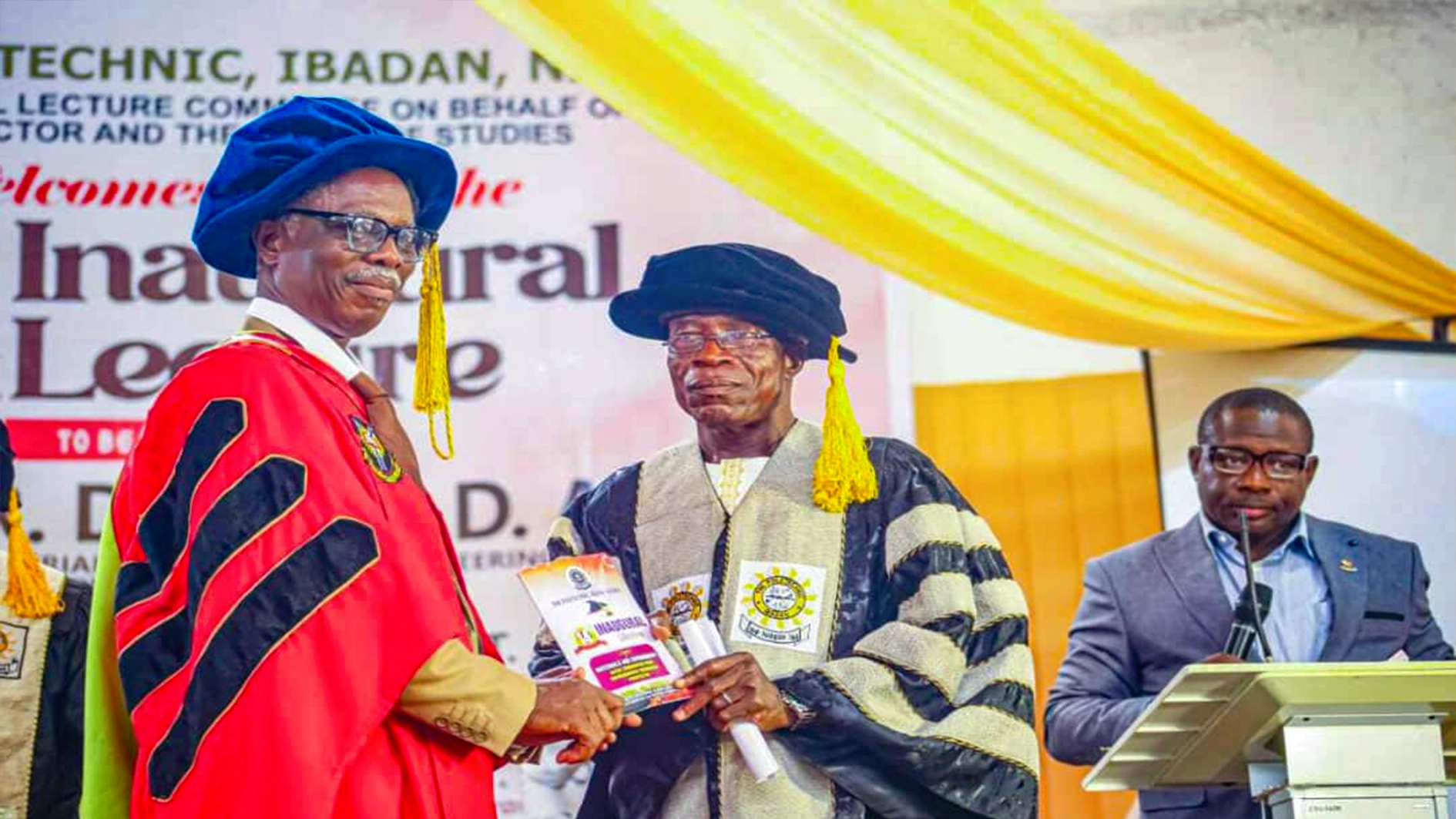
Eminent scholars at The Polytechnic, Ibadan, have called for stronger integration of research and innovation into Nigeria’s industrial and environmental development, saying academic knowledge must translate into practical solutions to the country’s challenges.
The scholars, including the Chairman of the Governing Council, Prof. Lanre Nassar; the Rector, Prof. Taiwo Lasisi; and the Dean, Faculty of Engineering, Dr. David Adewuyi Oke, made the call at the institution’s 14th inaugural lecture.
Oke delivered the lecture titled, “Materials and Environment: Safer Communities from Environmental Engineering Perspective”, at the Assembly Hall of the polytechnic, Ibadan, Oyo State.
Nassar, a former Rector of the polytechnic, said inaugural lectures should go beyond academic tradition by providing opportunities for scholars to showcase their research, innovations and contributions to knowledge while creating platforms for stronger collaboration between academia and industry.
He urged industries and companies to participate in inaugural lectures to gain exposure to research findings and innovations capable of addressing challenges confronting their organisations.
According to him, academic institutions must ensure that their research and curricula respond to the needs of society and the nation.
The council chairman, who is a former Vice-Chancellor of Ladoke Akintola University of Technology ( LAUTECH), Ogbomoso, said stronger collaboration between academia and industry would contribute to innovation, industrial development and economic growth.

“Industry players and companies should be encouraged to attend inaugural lectures so that they can learn about new ideas, research findings and innovations that could help address challenges confronting their organisations and contribute to problem-solving,” he said.
The council chairman also described inaugural lectures as an important academic tradition through which senior scholars could give an account of their contributions to research and scholarship.
In his remarks, the Rector of the polytechnic, Dr. Lasisi said the significance of inaugural lectures lay in their ability to demonstrate how academic research and innovation could be applied to real-life challenges.
He said research was the foundation of many technological advancements, including artificial intelligence and renewable energy.
“An inaugural lecture is not just a presentation; it is an opportunity for a scholar to demonstrate how far he has gone in his academic, research and innovation journey and project the outcome to society at large, so that people can learn from it and, more importantly, apply the knowledge to real-life challenges,” he said.
The Rector urged society to make greater use of research outcomes, saying innovations emerging from academic institutions could contribute significantly to solving developmental challenges.
He also urged students and younger scholars to remain committed to their academic aspirations and pursue research capable of making meaningful contributions to society.
Dr. Oke, who focused his inaugural lecture on the relationship between materials, environmental management and community safety, said the choice of the topic was informed by the need to draw attention to environmental challenges that were often overlooked.
The engineering scholar said environmental hazards, including noise pollution, contaminated water and the consequences of indiscriminate tree felling, required greater public awareness and effective mitigation measures.
According to him, communities need to understand the environmental conditions around them and the potential health implications of prolonged exposure to pollutants and other hazards.
Oke also highlighted the importance of trees to environmental sustainability, noting that indiscriminate felling of trees could have serious consequences for the environment.
He said trees helped absorb carbon dioxide and release oxygen, making their preservation important to maintaining a healthy environment.
The don, however, identified weak monitoring and enforcement as major challenges to effective environmental protection in Nigeria.
He said the country had environmental laws and regulations, including requirements for Environmental Impact Assessment (EIA), but their effectiveness depended largely on compliance, monitoring and enforcement.
“We have environmental laws and regulations, including Environmental Impact Assessment requirements, but the question is: how effectively are these laws being monitored and enforced?
“That is where we need to do more. Having laws in place is not enough; there must be effective monitoring, compliance and enforcement to ensure that environmental standards are upheld,” he said.
The scholars stressed that closer collaboration among academic institutions, industries, government and communities would be critical to ensuring that research findings were translated into innovations and practical solutions capable of advancing Nigeria’s industrial growth and environmental sustainability.
The event was attended by the Registrar, Dr Taiwo Olajide; Bursar, Abiodun Kolawole Adegbola; Librarian, Mr Olukunle Akinbola Osunrinade; Chairman, Inaugural Lecture Committee, Mr Femi Ipadeola; Dr Sola Alimi; Dr Soji Olatunji and other academics and guests.

