 Follow Us on Google News


 Follow Us on Google Discover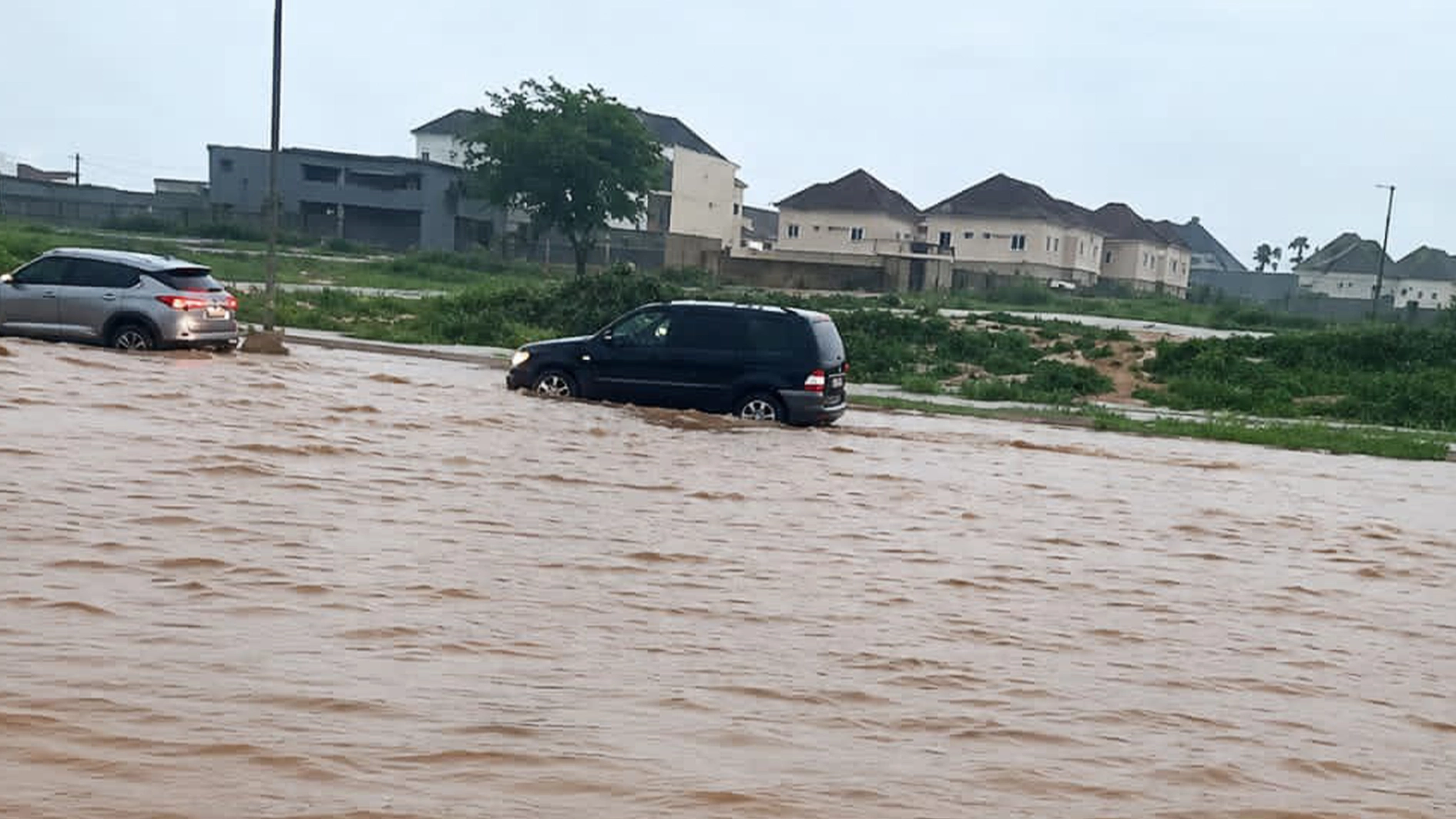
For Vivian Onyeije, a mother of four and resident of Rumlsita in Eneka, Obio/Akpor Local Government Area of Rivers State, the flood has become a painful journey from one temporary shelter to another with nowhere safe to call home.
It began when floodwater invaded her home, rising to waist level and forcing her to flee with her children. She moved to her shop, hoping it would provide a temporary refuge.
But two days later, the flood found her there too.With nowhere else to go, Onyeije gathered her children and moved into an uncompleted building in the Rumopku axis, hoping they had finally found a place to escape the rising waters.That hope lasted only briefly.
After a heavy downpour at the weekend in the state,the flood submerged the area around the uncompleted building, forcing the mother and her four children to flee once again.Now, they sleep in their vehicle.For Onyeije, the vehicle is no longer merely a means of transportation; it has become the family’s latest shelter as they struggle to stay above the floodwater.
Driven from her home, shop and temporary shelter, the mother is now left with one overriding concern .
Her ordeal captures the growing pains of families displaced by the flooding across parts of Rivers State, where homes, businesses, schools and livelihoods have been submerged, leaving many residents scrambling for somewhere and anywhere to sleep while some have relocated to villages following hike in rents.

Hundreds of families across parts of Port Harcourt and its environs are in deep devastation, as days of torrential rainfall have transformed roads into waterways, submerged homes and businesses, disrupted schooling and displaced residents.
The situation became more disturbing following reports that a 19-year-old resident lost his life to a snakebite amid the flooding because the floods came with reptiles.
Across Rumuodumanya in ObioAkpor Local Council, The Guardian’s monitoring showed many families are taking refuge in vehicles, while bridges and flyovers have become temporary shelters for displaced residents and their belongings.
The flood has also disrupted education.
At Rumuakoara Community Secondary School, Nkpolu, in Obio/Akpor Local Government Area, rising floodwater has forced teachers and students to vacate the school premises.
Similarly, several schools in Rumusita community, along the Eneka axis, have been affected, disrupting academic activities and leaving many children not attending school.
Businesses along Nkpolu and Rumuekini have also been forced to close, while churches, mosques and other public facilities around Ozouba, Nkpolu,have closed while others recorded reduced activities.
A wedding venue in GRA Port Harcourt was among facilities observed to have been inundated, affecting scheduled activities.
The University of Port Harcourt is not spared. Although floodwater on parts of the institution’s premises reportedly drains towards the Choba River after rainfall, the volume of water has continued to disrupt movement around the university environment when it rains.
The Guardian’s monitoring showed that the flooding has affected several communities and major roads, including Uzoba, Rumuekini, Choba, Eneka, Stadium Road, NTA Road, Mgboba, GRA, Chokocho in Etche, Peter Odili Road, Rupokwu, Alakahia, Oyigbo, Atali, Rumuparali, Ogbogoro, Egbelu, Cornerstone, Iwofe, Rumulumeni, Rumoaholi and Elikpokwu, among others.
Several buildings have been submerged, while others have developed cracks in Rumuekini .Vehicles have been stranded, roads submerged and normal movement severely restricted.
Residents described the development as one of the most disruptive flooding episodes in the state, with some comparing its impact with the devastating 2012 flood.
But while communities struggle with the consequences, there concerns and questions over the state’s preparedness and emergency response.
As of the time of filing this report, The Guardian’s monitoring found no widespread government arranged evacuation centres or Internally Displaced Persons (IDP) camps for flood victims despite early flood warnings by NIMET. Many displaced families are left to find temporary shelter on their own.
There are also concerns about the absence of visible, coordinated emergency interventions in several of the affected communities.
However, in Obio/Akpor, the local government chairman, following reports of the flooding, mobilised a flood committee which was observed desilting a canal along SARS Road on Tuesday afternoon.
Flooding spreads beyond the city
Unlike several communities in Port Harcourt and adjoining areas, the Orashi region, comprising Ogba/Egbema/Ndoni, Ahoada East, Ahoada West and Abua/Odual local government areas, are not experiencing comparable heavy flooding at the time of The Guardian’s monitoring.
The human hand in a climate crisis
While climate change and increasingly intense rainfall are important factors in understanding the flooding, concerns have been raised about human activities that worsen the impact.
Preliminary findings indicate widespread sand-filling activities in different parts of the state, with residents particularly concerned about sand filling activities around Bori Camp in Port Harcourt.
The activities, residents around the area said, it has increased flooding and movement around the areas.
Concerns have also been raised about poor physical planning and the approval of buildings and developments without adequate assessment of their environmental suitability.
For residents, the problem is compounded by blocked and poorly maintained drainage systems.
The Guardian has previously reported the proliferation of refuse dumps and indiscriminate disposal of waste across Port Harcourt. Plastic bottles, sachets, cans and other debris are routinely thrown into drainage channels, reducing their capacity to convey stormwater.
The result is a city in which heavy rainfall quickly overwhelms drainage systems, turning roads and neighbourhoods into channels for floodwater.
Environmental expert, Daniel Briggs, said, authorities must combine drainage planning and maintenance with enforcement of building regulations, protection of waterways, proper waste management and rapid emergency response.
“Developers and property owners, however, cannot be absolved of responsibility where construction, sand-filling or obstruction of natural waterways contributes to flooding” he said.
What happened to the ecological fund in Rivers?
The recurring flooding also raises questions about the use of ecological resources meant to address environmental challenges in the state.
The Ecological Fund was established as a special intervention mechanism for serious ecological problems and their impacts. The Federal Ministry of Information has explained that the fund is intended to enable government to address serious ecological problems across the country and mitigate their effects.
Available FAAC-linked data show that Rivers State received about ₦708.6 million from the ecological fund in the first half of 2024. The amount was part of the ₦24.92 billion shared among Nigeria’s 36 states during the period.
The monthly amount is not fixed, as ecological allocations are tied to revenue distributed through FAAC. For example, Rivers received about ₦56.86 million as its share of ecology in the September 2024 FAAC disbursement.
The figures raise a fundamental question: how much of the resources available for ecological intervention is being deployed to prevent or mitigate recurring flooding in vulnerable communities?
Beyond emergency response, residents want to know what long-term flood-control measures are being implemented, where drainage and waterways are being restored, and how development approvals are being monitored.
Residents left vulnerable
For families whose homes have been swallowed by floodwater, however, the debate over funding is not academic.
It is about where they will sleep tonight.
It is about children unable to attend school, traders unable to open their shops, motorists trapped on submerged roads and families watching helplessly as water enters their homes.
The immediate challenge is no longer simply how to move around flooded streets. It is how to protect lives, prevent disease, safeguard children and provide temporary shelter for people who have lost access to their homes.
Residents lament displacement, demand urgent government action
Residents of affected communities have expressed frustration over the worsening flooding, calling for urgent government intervention to protect lives and property.
A resident of Rumuekini, Mr. Blessing Friday, said the flooding had displaced several residents, leaving many without a place to stay.“Sincerely speaking, we have been dealt with. For some time now, the flood has submerged parts of Rumuekini. We are pleading with the government to come to our rescue because many people are out of their homes right now with nowhere to stay.
“They are moving their belongings from one place to another without having a place to lay their heads. We are calling on the Rivers State Government to help. The ecological fund provided by the Federal Government should be used to assist affected communities.
“Help the people who voted you into power. In no distant time, elections will come and you will ask the people to vote for you. But at the end of the day, we get nothing in return. Please, come to our rescue.”Also speaking, Chancellor, International Society for Social Justice and Human Rights (ISSJHR), Omenazu Jackson, attributed the worsening flooding largely to poor physical and environmental planning.
Jackson said the state’s growing population should have been taken into account in urban planning, stressing that indiscriminate construction along waterways had obstructed natural drainage channels.
According to him, Port Harcourt should have adequate systems to manage stormwater, but poor enforcement of planning regulations had compounded the problem.
He said: “What is happening in Rivers State is largely due to lack of institutional physical planning. Yes, the population has increased, but government should always take that into consideration when planning.
“Indiscriminate building along waterways has become a major problem. Physical planning should ensure that drainage channels are properly connected to rivers, but this is not happening in many areas.
“Local government councils are also not living up to their statutory responsibilities. Before a building is erected, the building plan is supposed to pass through the appropriate authorities, with proper verification and land inspection.
“Instead, some planning officers sit in air-conditioned offices, stamp building plans without knowing the actual locations, and people go ahead to build along waterways and creeks. These structures obstruct the natural flow of water, forcing floodwater into residential areas.”
Jackson cited parts of the Oyigbo-Iliyebe axis and areas around Government House as examples of locations where drainage problems become particularly severe during heavy rainfall.
He also raised concerns over sand-filling activities around some parts of Port Harcourt, particularly areas he described as natural water beds.
“Look at the construction going on around the Army headquarters and barracks in Port Harcourt. Some of the areas being sand-filled are natural water beds. The more they are filled, the more the water has nowhere to go.
“Where is the alternative drainage to take the water into the river? This has contributed to flooding around Rumuomoi, Rumuorosi, Rumuomasi, Eliozu and other areas.
“I have alerted the local government council and asked where the environmental planning documentation and environmental impact assessment are. Where is the technical oversight? Government cannot simply fold its arms and allow a natural water bed to be filled without providing an alternative drainage system.”
Describing the flooding as “catastrophic”, Jackson said the extent of the damage to lives and property was yet to be fully determined.
“It is catastrophic — highly catastrophic. Lives have been lost and properties have been destroyed. The quantum of loss of life and property in Rivers State as of today is unquantifiable,” he said.
He also urged the government to provide relief materials to affected residents and strengthen emergency response mechanisms.
Another resident, Mrs. Elizabeth Woke, described the situation as heartbreaking and frustrating, and appealed to the government to urgently intervene and support displaced families.
‘Floodwater reached my waist’
For residents of Rumusita community in Eneka, the flooding has become a personal disaster, with some families forced out of their homes.
Vitalis Barile, a victim of the flood, said the water rose gradually before overwhelming the community.
According to him, floodwater entered homes and destroyed properties, while fish were seen swimming inside compounds and even kitchens.
“The water is reaching my waist,” he said. “We went there to rescue some of our belongings that were floating in the water. Imagine my height , the water was up to my waist.
“There were fish inside the water. Fish were swimming inside my compound and even in my kitchen.”
The resident said the suddenness of the flooding had made it difficult for displaced families to secure alternative accommodation, particularly amid the prevailing economic hardship.
“Some people have relocated, while others are staying in uncompleted buildings. You don’t plan for something like this. With the economy, it is not easy to immediately rent another house.
“Even if you want to rent a house, where will you get one immediately? This happened within two or three days. At a point, we decided to look for somewhere to stay temporarily while we searched for accommodation.”
He said the flooding had also paralysed education and religious activities in the community.
“All the schools there are now closed. Primary and secondary schools, including private schools, have been affected. Churches have also stopped holding services because people can no longer access them.
“About 60 per cent of Eneka has been flooded. It is a serious matter. It is not easy.”
‘Residents must also change their attitude’
Another resident, Emma Friday, called for a two-pronged response involving both government action and responsible behaviour by residents.
“While we wait for the government to do its part, can we, as a matter of urgency, change our attitude towards our surroundings?” he asked.
His comments came amid concerns over indiscriminate dumping of refuse into drainage channels, which residents and environmental observers say can worsen flooding by obstructing the free flow of stormwater.
‘Floodwater drains into Choba River’
Meanwhile, the Public Relations Officer of the University of Port Harcourt, Dr Sam Kpenu, explained that flooding around parts of the institution is largely temporary during heavy rainfall.
According to him, water accumulates during prolonged rainfall but drains away once the rain stops because of the proximity of the Choba River.
“Usually, when it rains like this, it will be flooded, and as soon as the rain stops, the water goes into the drainage channels,” Kpenu said.
He explained that the situation becomes more pronounced during sustained rainfall because there is insufficient time for the water to flow out.
“Choba River is just behind us, so the water eventually empties into the river. It is just that while it is raining continuously, there is no opportunity for the water to flow out.
“When the rain stops, the water gradually goes down and flows out,” he added.
For the residents of the affected communities, the expectation is straightforward: flooding should be treated as an emergency not after lives and livelihoods have already been lost.

