 Follow Us on Google News


 Follow Us on Google Discover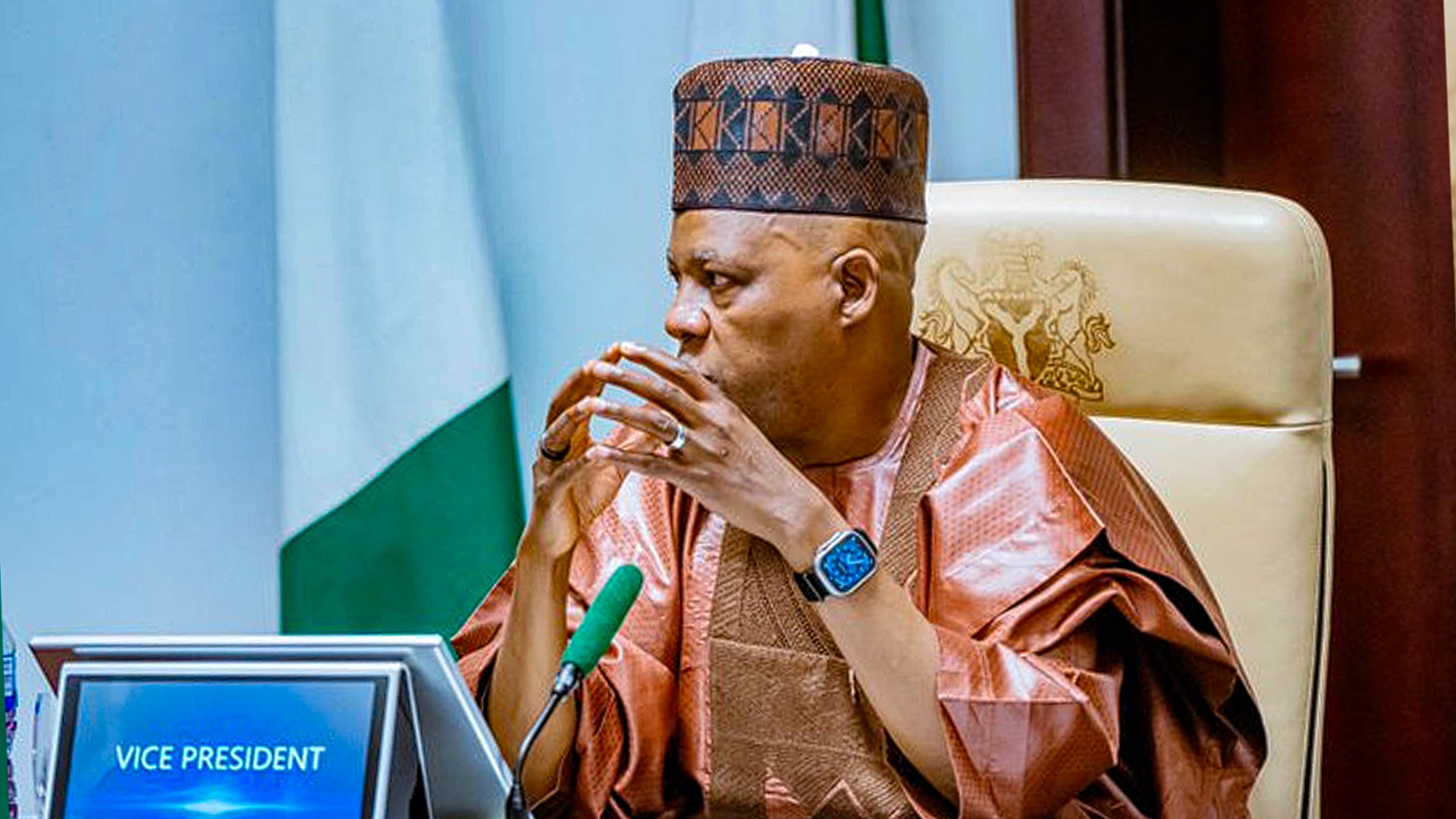
Vice President Kashim Shettima has returned to Nigeria after the 81st United Nations General Assembly, which renewed Nigeria’s demand for permanent African representation on the UN Security Council.
Shettima returned to Abuja on Sunday after spending eight days in New York, having left Nigeria on September 20 at the directive of President Bola Ahmed Tinubu to represent him at the yearly gathering of world leaders.
At the General Debate of the 81st UNGA, Shettima delivered Nigeria’s national statement on behalf of President Tinubu, using the global platform to push the country’s longstanding position that the structure of the UN Security Council must be reformed to reflect present-day geopolitical realities.
Nigeria specifically called for permanent African representation on the Council, alongside broader reforms to make the global governance system more representative, equitable, and responsive.
The renewed push came against the backdrop of Nigeria’s longstanding advocacy for an expanded Security Council, with African countries arguing that the continent remains underrepresented in the UN’s most powerful decision-making organ despite its demographic, economic and strategic importance.
Beyond the Security Council question, Shettima used his engagements in New York to advance Nigeria’s interests in development financing, education, climate action, regional integration, economic cooperation and peace and security.

Meanwhile, Nigeria has said it would be guided by equity, justice, fairness and Africa’s aspirations in determining its position on the next United Nations Secretary-General, Vice President Shettima has said.
Shettima stated this during separate engagements in New York with Costa Rican candidate for the UN Secretary-General position, Rebeca Grynspan, and Queen Máxima of the Netherlands, with discussions also focusing on strengthening financial inclusion and economic opportunities for Nigerians.
At his meeting with Grynspan, Shettima said Nigeria would support a candidate committed to multilateralism, conflict prevention and reforms that would give Africa a stronger voice in global decision-making.
He said Nigeria’s assessment of candidates would also take into account the country’s longstanding relationship with Latin America, gender inclusion and the need for greater representation of Africa in international institutions.
The Vice President said the global governance architecture had changed considerably since 1945, but had yet to adequately reflect Africa’s demographic and strategic importance.
He stressed that the continent, with a population of more than 1.3 billion people, deserved greater representation in key global decision-making institutions, particularly the UN Security Council.
Grynspan, who is seeking Nigeria’s support for her candidature, said she was prepared to pursue reforms demanded by countries, particularly those of the Global South.

