 Follow Us on Google News


 Follow Us on Google Discover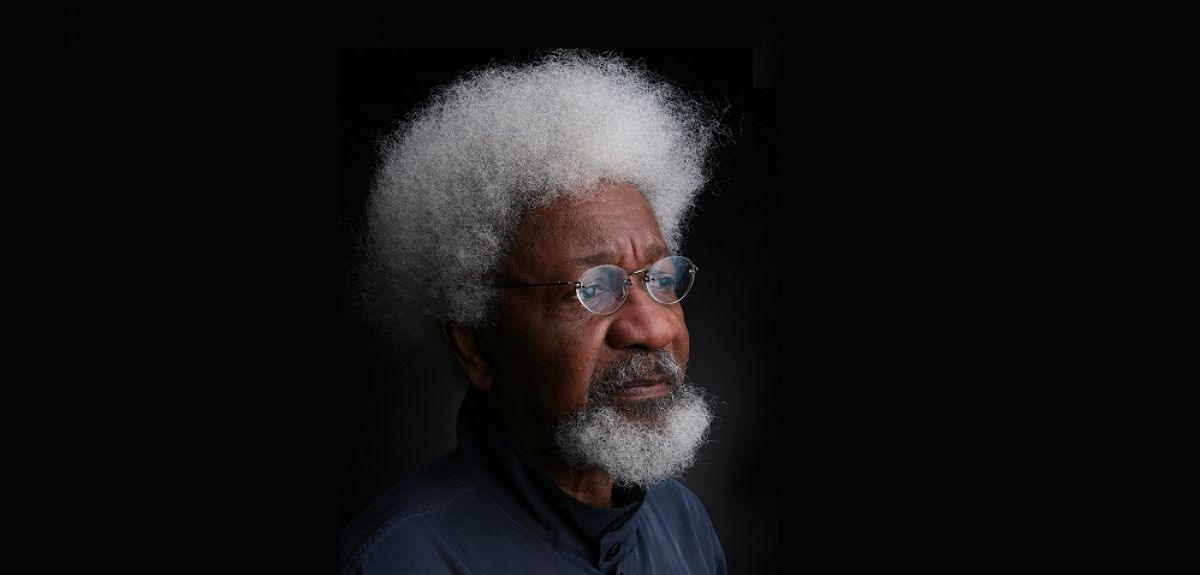
Nobel laureate, Professor Wole Soyinka, has decried the failure to comply with court orders in Nigeria while expressing concern that citizens sometimes die without benefiting from favourable judgments.
Soyinka called for stronger institutional accountability and effective enforcement of court decisions, urging the Public Complaints Commission (PCC) to help address the gap between judicial pronouncements and the actual delivery of justice.
He spoke on Thursday at the Nigerian Ombudsman Annual Conference 2026 in Abuja.
The Nobel laureate questioned why government agencies and other institutions failed to implement court judgments, leaving litigants waiting for years despite securing favourable rulings.
“Why is it that we cannot guarantee the implementation of the declaration of a judgment between the plaintiff, between the judgment itself, between the judges, the structure of justice and the victim?” he asked.
Soyinka cited cases in which courts ordered the return of passports to litigants, but the affected individuals waited for years without the judgments being enforced.

He also raised concerns about land disputes in which individuals allegedly resorted to violence and destroyed property despite ongoing judicial processes.
He urged the PCC to take up the challenge, saying effective intervention could help bridge the gap between court decisions and the actual delivery of justice.
Supporting his position, the Emir of Lafia and Chairman of the Nasarawa State Council of Chiefs, Justice Sidi Bage Muhammad, said compliance with court orders must begin with political leaders.
The former Supreme Court justice argued that citizens would find it difficult to respect judicial decisions when those in positions of authority disregarded them.
“The leaders of our country must do that because you have to lead by example. If you want the others, the ordinary, to respect the orders of court and decisions of court, it must start from the leadership,” he said.
Bage urged the PCC to explore ways of addressing the frustrations citizens experience when judgments delivered in their favour are not enforced.
Speaking, former Commonwealth Secretary-General, Chief Emeka Anyaoku, called for greater public awareness of the services provided by the Ombudsman, describing the commission as a less expensive and less cumbersome avenue for citizens to seek redress.
He cited complaints involving unpaid pensions and gratuities, as well as inadequate medical care in public and private hospitals, as examples of grievances the commission could help address.
Anyaoku expressed confidence that the commission, under its current leadership, could improve its services and meet citizens’ expectations.
In a related contribution, the Director-General of the Institute for Peace and Conflict Resolution, Joseph Ochogwu, said strong institutions were essential to upholding the rule of law, protecting citizens’ rights and preventing violent conflicts.
Ochogwu represented by the institute’s Director of Conflict Prevention and Resolution, Gerard Okafor, identified institutional continuity, compliance monitoring and coordination among government agencies as important requirements for effective governance.
He urged the commission to establish clear administrative standards, track recurring complaints and strengthen monitoring mechanisms to ensure that its recommendations translated into corrective action.
He said addressing grievances before they escalated could help reduce tensions and promote lasting peace.
Secretary to the Government of the Federation, George Akume said complaints from citizens should be treated as opportunities to identify institutional weaknesses and improve public administration.
The SGF who was represented by the Permanent Secretary, Political and Economic Affairs, Beke Augusta, called for stronger collaboration between the commission and ministries, departments and agencies, alongside effective mechanisms for monitoring the implementation of its recommendations.
Akume urged the commission to adopt digital technology to improve the submission, tracking and resolution of complaints.

