 Follow Us on Google News


 Follow Us on Google Discover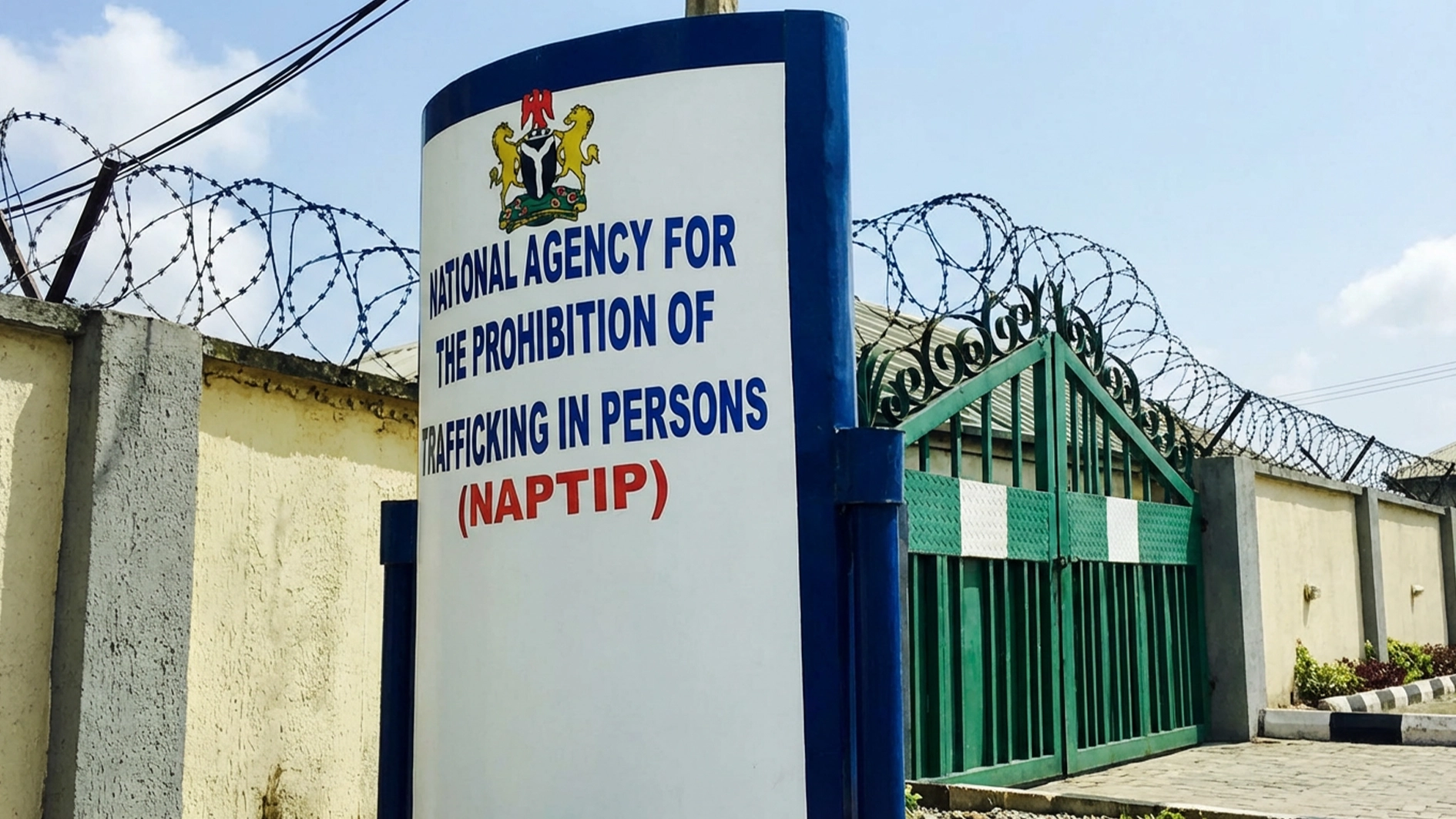
Stakeholders and the National Agency for the Prohibition of Trafficking in Persons (NAPTIP) has raised fresh concerns over the growing activities of human traffickers within Nigerian universities and across digital platforms.
They warned that criminal syndicates are increasingly exploiting young people through fake job offers, scholarships, travel opportunities and online business schemes.
The stakeholders gave the warning during the commemoration of the 2026 World Day Against Trafficking in Persons in Abuja.
Speaking at the event, the Executive Director of Blue North Initiative for the Protection of Human Trafficking, Calistus Ekena, said traffickers have evolved from traditional recruitment methods to sophisticated online operations, making young Nigerians more vulnerable to exploitation.
He said behind every trafficking statistic is a human story, stressing that victims are often deceived with promises of better opportunities before being forced into exploitation, domestic servitude, cybercrime and other forms of abuse.
“This year’s global theme, ‘Trapped behind the scam: Putting individuals affected by this crime first,’ could not be more timely. Trafficking in persons is changing. Criminal networks are adapting quickly, using technology and social media to expand their reach,” Ekena said.

According to him, traffickers now rely heavily on social media, fake recruitment platforms and fraudulent business opportunities to lure victims.
“For many young Nigerians, the desire for a better future is legitimate. Unfortunately, traffickers exploit that hope. They prey on ambition, desperation, trust and limited access to verified information,” he added.
He urged parents, educational institutions, technology companies and the media to work together to improve digital literacy, expose trafficking networks and equip young people with the skills needed to identify fraudulent recruitment schemes.
Speaking, Country Director of Blue North Initiative, Boma West, said human trafficking has gone beyond the conventional forms of sexual exploitation and forced labour, noting that digital technologies have become one of the major tools used by traffickers.
She said victims are increasingly being recruited online and coerced into cyber scams and other criminal activities after being promised employment, education or opportunities abroad.
“The digital space has become one of the primary recruitment grounds for traffickers. Social media platforms, messaging applications, fake recruitment websites and fraudulent travel agencies are increasingly being used to deceive unsuspecting individuals,” she said.
West identified youth unemployment, poverty, irregular migration, digital illiteracy, insecurity and the growing desire to seek opportunities abroad as major factors making Nigerians susceptible to trafficking.
She said the organisation would continue strengthening community-based responses through partnerships with schools, communities and youth groups to improve awareness and prevention.
On her part, Executive Director of Adinya Arise Foundation, Mabel Ade, alleged that human trafficking syndicates now operate within Nigerian universities, where recruiters identify and lure potential victims.
She raised concerns over the increasing trafficking of young people between Benue and Edo States, describing the trend as alarming.
According to her, several minors have been trafficked from Benue to Edo and sold into domestic servitude, with some suffering severe abuse.
She alleged that corruption within the criminal justice system was hampering prosecution, claiming that case files sometimes disappeared after suspected traffickers were arrested.
“What we are also trying to do is to ensure that the Police are able to do the work they are supposed to do because most times when traffickers are caught, case files disappear because money has exchanged hands,” she alleged.
Representing the Director-General of NAPTIP, Binta Bello, the agency’s Director of Public Enlightenment, Kehinde Akomolafe, said the agency had intensified efforts against emerging forms of trafficking, particularly those linked to cybercrime.
She disclosed that NAPTIP recently rescued 157 victims of cyber-enabled crimes involving human trafficking, cybercrime and financial fraud through joint operations with security agencies.
“The agency was able to rescue 157 people from cyber-enabled crimes, which is a combination of human trafficking, cybercrimes and even financial fraud in partnership with the cyber response agency and the Joint Security Task Force supervised by the Ministry of Justice,” she said.
Akomolafe revealed that 125 of the rescued victims were foreign nationals, underscoring the transnational nature of human trafficking.
She added that the agency was working closely with the National Assembly to amend the NAPTIP Act to address emerging trafficking patterns, particularly those involving technology and digital platforms.
According to her, recent engagements with the House of Representatives on the rescue, rehabilitation and reintegration of Nigerians stranded in Mali further underscored the need to strengthen Nigeria’s legal framework against human trafficking.
She maintained that sustained collaboration among government institutions, civil society organisations, traditional institutions, security agencies and the legislature remains critical to tackling the evolving menace.

