
Major players in the tourist industry continued to count huge losses incurred during the weekend as a result of the cancellation of Sallah Durbar in Kano.
Worse still, foreign tourists who traveled far distance to Kano to witness the historic festival also lamented disappointment over the sudden ban on the traditional heritage.
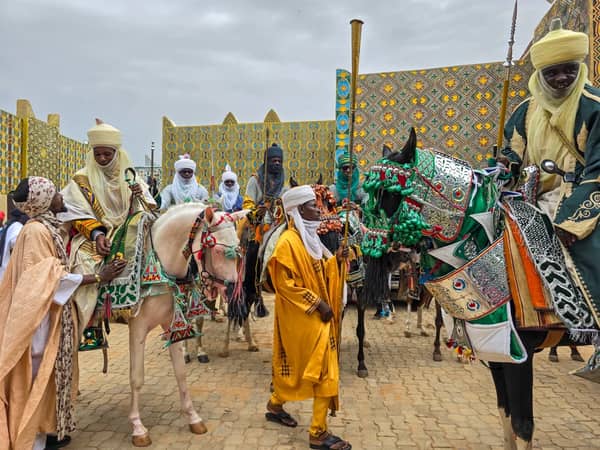
The cultural enthusiasts, who came from various continents to catch the full glimpse of an assembly of over 7,000 horses filing in a large procession in colourful costume, had already arrived in Kano before the news of the cancellation broke.
Kano Sallah Durbar is a rich cultural festival of the royal emirate that started over 500 years ago and has gained global attraction over the years.
According to the Executive Secretary, Kano State History, Culture and Tourism Bureau, Ahmad Abba Yusuf, over 160 tourists from Bulgaria, Brazil, China, United States of America arrived in Kano a few days before Eid-el-Fitir Sallah.
Sharing experiences during a media interaction in Kano on Thursday, a tourist, Virgil Taylor, who came from the United States of America, expressed deep disappointment that his hope to watch the historical durbar was dashed.
Taylor, who is visiting Kano and Nigeria for the first time to relish the beautiful African culture, worried that after a whole year of preparation for the long trip to Africa, he only got to know about the cancellation after arriving in Kano.
Taylor said he was, however, delighted to have caught a glimpse of the Emir, Muhammadu Sanusi II, in a large population during Sallah Day, which he said remains a memorable historical opportunity for him.
“I started planning for this trip over a year ago when I was in Ghana, and so I kept doing my research and I understood that there were Durbar that occurred else where throughout Nigeria, but in particular Kano.
“So I started making my preparations, and I actually flew in last Friday, I think that was the 27th of March or 28th. I arrived and then I learned that the Durbar was not happening again. I had no idea that it had been cancelled before then.
“So yeah, I was disappointed, but I was assured that it would still be a good trip for me and it has been, it’s been extraordinary. The people of Kano have been just very wonderful,” Taylor said.
A UK-based, Lekan Yushau Okanlawon, who also flew from London for the Durbar, regretted how the cancellation crippled his plans to register the festival on the Guniess book of record for a largest horse proccession in the world besides the UNESCO’s recognition.
Also narrating disappointment, Okanlawon revealed how he had invited friends who are polo players in the UK to join the Durbar procession, essentially to witness for the first time a convergence of over 5,000 horses riding behind a single person.
He said, “On the 6th of December, 2024, when thr UNESCO certified the Kano Durbar and incorporated it into their global heritage
program, many of us were happy and we had something internationally recognised to show to our friends abroad.
” So I started discussing with a couple of my friends who have polo teams in the UK. By the way, I came in on the 23rd into Lagos and I flew into Kano on the 24th. I didn’t get to know the Durbar was cancelled until I got there. So I had to quickly send an SOS message to my friends not to bother about coming again.
“Many of them wanted to come because the only horse riding experience many of them had prior to now had been leisure rides and polo. So they had never ridden a horse in a long procession.
“My target next year is to put the Kano Durbar procession on the Guinness World Record because Kano has the largest horse gathering in the world.”
On the economic impact, Ahmad Sarki Norma worried that the Durbar cancellation had left thousands of local fabricators who produce artifacts, horse costumes, and horse feed out of business.
Norma lamented huge losses recorded on the small-scale businesses, essentially hawkers of beverages, restaurants, transportation and tourism industries, considering the large inflow of visitors who would have spent no fewer than five days in Kano.
“In terms of losses, what I know is that for you to wear a normal traditional Toberida, it costs at least N150,000, which is almost $80. And you’re expected to wear four of them to ride the horses for four days. They all have their prices, like the ones we import
from Morocco and Egypt.
“And also the horse dress, you can get a horse dress of N4 million, there are horse dresses of N30,000. But the majority of what people wear during Sallah are in the range of a million. I can calmly say I spent nothing less than N2.5 million on my four horses.
But when you come to the horse,” he said.
Available records from the state Cultural Bureau indicated that over 74 traditional title holders parade a minimum of 20 horses that ride behind each of them, while they ride behind another large number of horses belonging to the Emir.