 Follow Us on Google News



 Follow Us on Google Discover
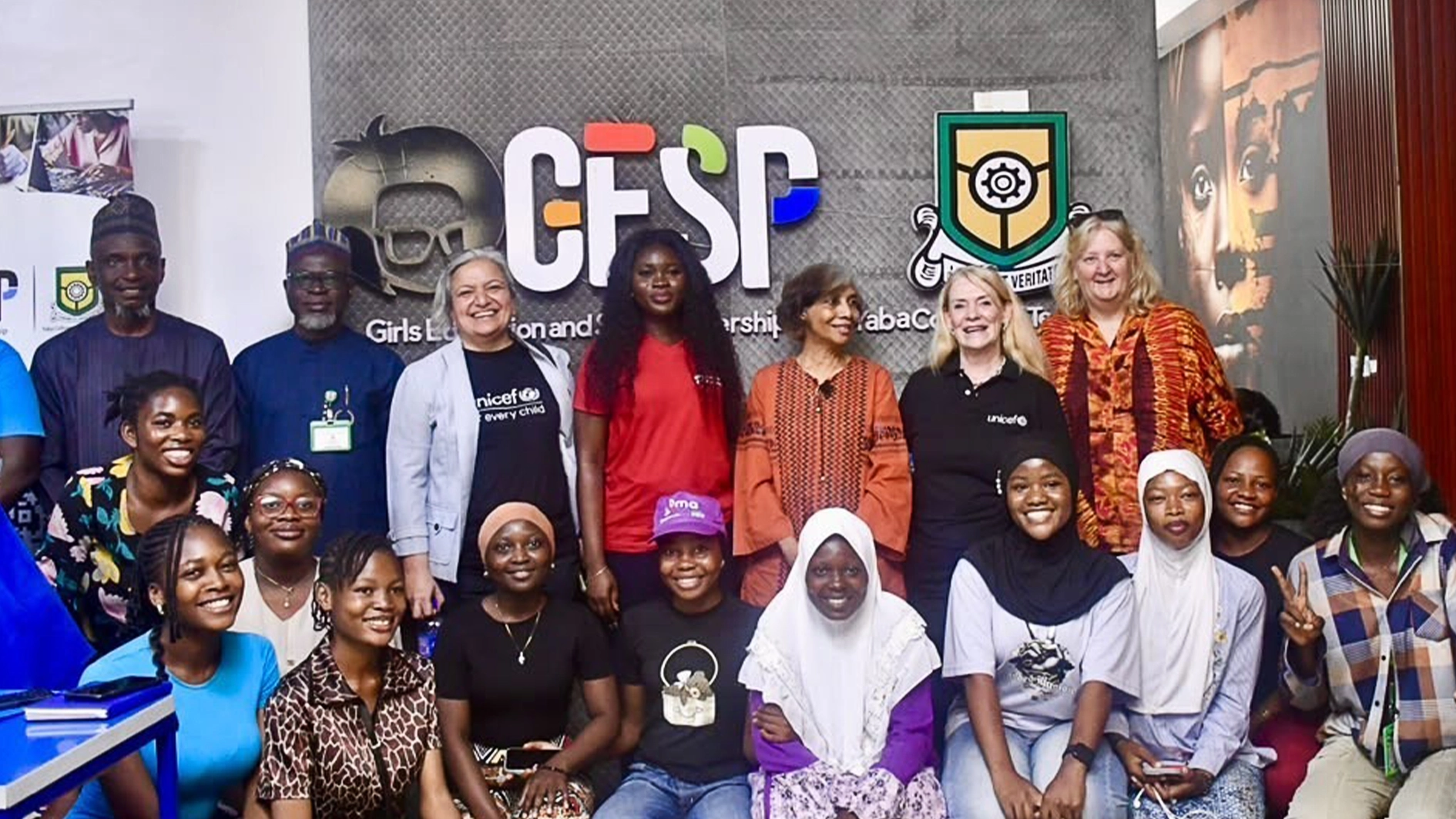
*YABATECH to close youth employability gap
The United Nations Children’s Fund (UNICEF) has said Nigeria must urgently modernise what young people are taught if education is to translate into jobs, livelihoods and economic competitiveness, warning that outdated curricula are leaving graduates unprepared for a rapidly changing world of work.
The call was made yesterday in Lagos during a joint field visit by UNICEF and Airtel Africa to the Senior Government College, Iyana-Ipaja, St. George’s U.N.A. Primary School, Ipaja, and Yaba College of Technology to evaluate the real-world impact of digital learning platforms and youth skill acquisition programmes.
Deputy Representative of UNICEF in Nigeria, Dr Rownak Khan, said the visit was to assess how investments in connectivity and learning platforms were shaping skills acquisition among children, adolescents and young people, and how those investments can be scaled to address Nigeria’s learning and employability crisis.
Khan said Nigeria has an established education system with wide coverage, but the content being delivered in many classrooms has not kept pace with technology, industry evolution and the demands of the contemporary labour market.
She said many young people complete formal education with certificates but struggle to transition into work because what they were taught does not align with what employers need.

“In many countries, and to some extent broadly in Nigeria, the education is there, but the curricula that have been followed are quite decades old. When these children come out into the real world, they are in shock because there is a mismatch between what they have learnt and what the market is asking for,” Khan said.
She said bridging that mismatch will require deliberate curriculum review and stronger alignment between education policymakers, private sector employers, technology companies and development partners.
According to her, digital skills should not be treated as an add-on, but as a core pathway to employment, entrepreneurship and sustainable livelihoods.
Khan noted that the partnership between UNICEF, Airtel and tertiary institutions illustrates how different competencies can be pooled to deliver more comprehensive support for young people.
While UNICEF brings expertise in learning design, child protection and youth programming, partners like Airtel provide the infrastructure that makes access possible.
She described the collaboration as a flagship model that goes beyond access to platforms to focus on how learning translates into real economic opportunities.
She particularly commended YABATECH for its approach to skills development, saying the institution had demonstrated a clear commitment to integrating digital competencies into its academic and vocational offerings, and to creating pathways that allow young people to become economically independent rather than just academically qualified.
Chief of Field Office and Head of Private Sector Partnerships at UNICEF, Celine Lafoucriere, said the organisation’s partnership with Airtel on digital education has run for five years and has been critical to sustaining connectivity for learners in underserved communities.
She explained that Airtel’s support has enabled young people to access UNICEF-supported learning platforms, such as the Nigeria Learning Passport (NLP) and the Youth Agency Marketplace (YOMA).
The LNP provides curriculum-aligned digital content for children and adolescents, while YOMA connects young people to skills-building, challenges and opportunities that improve their employability.
Lafoucriere said UNICEF works with a range of partners, each contributing specific expertise, but Airtel’s role has been central because without connectivity, digital learning remains theoretical.
She recalled that Airtel initially came on board to support access to the Learning Passport under a pan-African agreement with UNICEF, but bilateral engagements later led to expansion of support to other platforms serving children and youths.
According to her, the telecommunications company agreed to whitelist the platforms, removing data barriers that would otherwise prevent learners from using them.
The arrangement, she said, has allowed thousands of young people in Nigeria to use the resources consistently.
“The only reason why we are able to drive digital learning in Nigeria today is thanks to Airtel,” Lafoucriere said, adding that continued collaboration among development agencies, technology firms and educational institutions remains vital to ensure no child is left behind in the digital transition.
For Airtel Africa, the partnership forms part of a broader continental strategy to tackle digital exclusion.
Head of Programmes at the Airtel Africa Foundation, Esi Asare Prah, said the foundation has four priority areas, with education as the foremost, followed by digital inclusion.
Prah disclosed that the foundation is backing the initiative with a $57 million investment across 13 African countries, aimed at expanding access to digital education and youth skills training, especially for young people excluded from the digital economy due to location, income or lack of infrastructure.
She said the Nigerian component of the programme is particularly important because it focuses on practical, market-relevant skills rather than only access.
She noted that many graduates possess certificates but lack competencies that employers are actually recruiting for, a gap that fuels unemployment and underemployment.
“Many young people graduated from schools with certificates but lacked the competencies required by employers, creating a mismatch between educational qualifications and labour market demands,” she said.
Prah noted that Airtel’s mission is to bridge the digital divide across the continent, aligning with the parent company’s drive for digital education. She said engagement with YABATECH is seen as an opportunity to build a replicable model that can be adapted in other African countries where Airtel Africa operates.
According to her, what distinguishes the Nigerian initiative is its emphasis on technical expertise and employability, ensuring training is designed around employer needs and can translate directly into jobs or income-generating activities, rather than just exposure to platforms.
“Our mission is to bridge that digital divide across the continent because our mother company drives the digital education agenda, and there are still a lot of young people who are left behind in that regard,” she said.
Deputy Rector, Dr Ismaila Badmus, who represented the Rector, Dr Ibraheem Abdul, said the college has deliberately pursued partnerships that strengthen town-and-gown relationships and enhance practical learning.
He thanked UNICEF and Airtel Africa for their support, saying such collaborations are critical to equipping students with skills that match industry requirements and improve their chances in the labour market.

