
 Get Guardian on Google
Weak institutions, excessive dependence on political leaders, and poor accountability are undermining Nigeria’s development, with successive administrations reversing policies and abandoning projects initiated by their predecessors, the Goddy Jidenma Foundation has said.
The foundation said the country’s development challenges, including declining standards in public education, inadequate healthcare, poor infrastructure and corruption, were rooted largely in institutional weaknesses rather than a lack of resources or leadership initiatives.
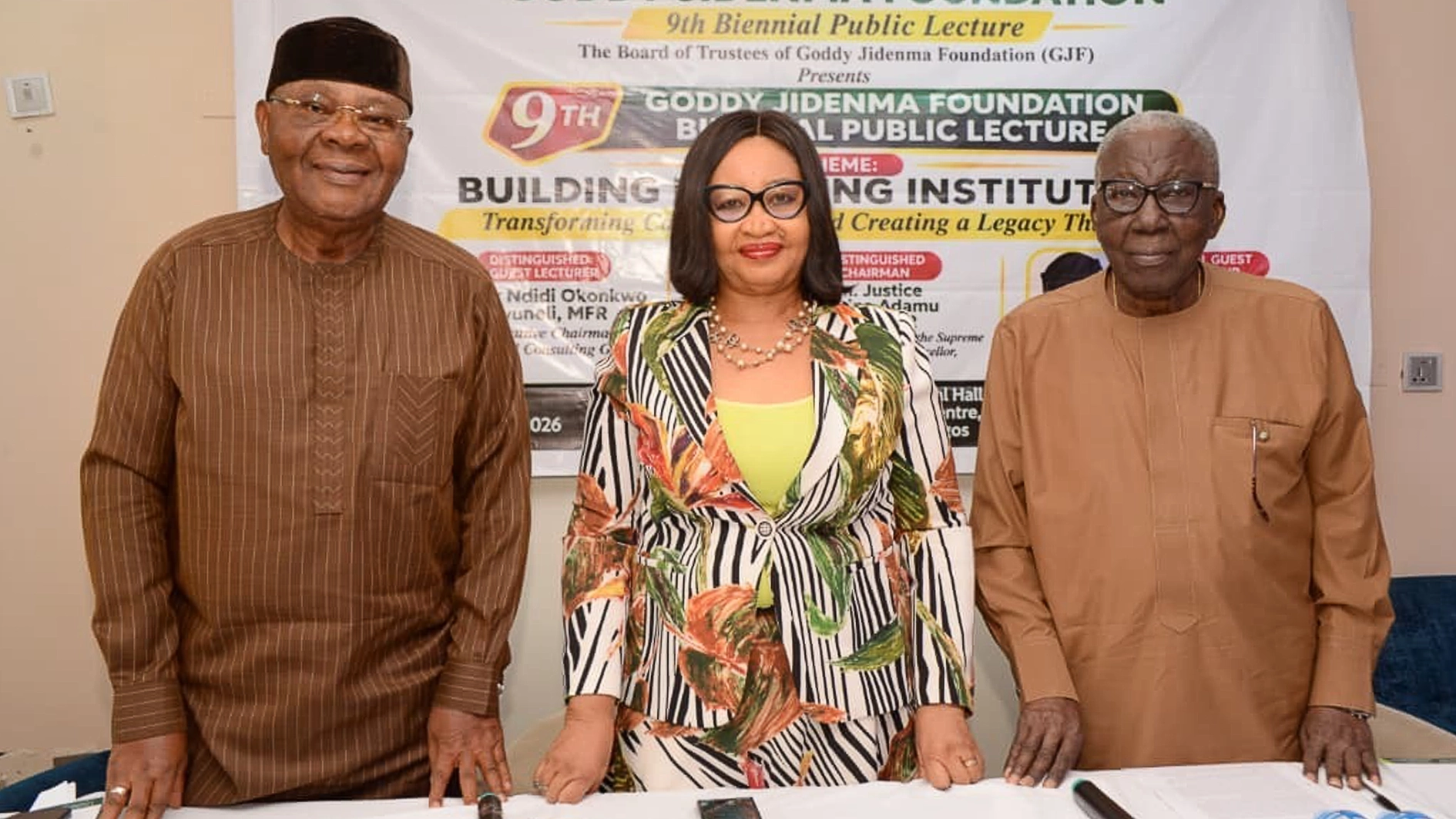
A member of the foundation’s Board of Trustees, Obidi Ezenwa, spoke at a news conference in Lagos ahead of the ninth Goddy Jidenma Foundation Biennial Public Lecture, scheduled for December 1 at the MUSON Centre, Lagos, with the theme, “Building Enduring Institutions: Transforming Communities and Creating a Legacy That Lasts.”
He Nigeria’s inability to sustain policies and development initiatives beyond individual administrations had continued to undermine progress.
Using the country’s debt management experience as an example, he recalled how former President Olusegun Obasanjo worked to secure debt relief and restructuring for Nigeria, only for subsequent administrations to accumulate substantial debts.
He argued that stronger financial institutions and governance systems would have ensured continuity and prevented the reversal of gains made by previous governments.
Ezenwa, who is also Managing Director of Skein Nigeria Limited, said governments should prioritise building functional institutions over projects designed mainly to showcase the achievements of individual leaders.
He cited abandoned or underutilised state airports as examples of projects that often lose relevance after the administrations that initiated them leave office.
According to him, strong institutions would also improve education, healthcare and the justice system by establishing standards and accountability mechanisms that do not depend on the personalities occupying public offices.
He recalled that in the past, students who obtained distinctions in the West African School Certificate examinations could secure university scholarships, saying the decline of such opportunities reflected the weakening of institutions.
Similarly, a member of the Board of Trustees, Zik Obi, called for greater autonomy for local governments, accusing state governments of interfering with their responsibilities and controlling resources meant for grassroots development.
Obi, a Principal Solicitor at Zik Chuka Obi & Co, said local governments should be allowed to perform their constitutional and administrative functions, particularly in the provision of basic services and management of communities.
He recalled that local governments in the past played significant roles in education and other public services without excessive interference from regional authorities.
He urged the media to intensify scrutiny of state governments over the administration of local government funds, arguing that accountability would remain difficult where responsibilities were separated from control of resources.
Obi cited refuse collection as an example of a service that should be effectively managed at the local government level, so residents could identify and hold the appropriate authorities accountable for failures.
Earlier, the Executive Secretary of the foundation, Dr Ije Jidenma, said enduring institutions must be able to survive leadership changes, adapt to changing circumstances and continue fulfilling their mandates beyond their founders.
She identified poor governance, inadequate accountability, weak succession planning, policy discontinuity and excessive dependence on individuals as major obstacles to institutional development.
Jidenma said building sustainable institutions required clear vision, sound governance, transparency, financial sustainability, competent leadership and deliberate succession planning.
She stressed that leadership should be driven by service, integrity and commitment to institutional objectives rather than personal recognition or ambition.
She added that building enduring institutions was a collective responsibility involving government, the private sector, non-profit organisations, religious bodies, professional associations and individuals.
According to her, government must strengthen public institutions and promote accountability, while businesses and philanthropic organisations should contribute to economic development through sustainable interventions.
She said the lecture would go beyond discussions to generate practical action points and encourage participants to develop solutions for building institutions that would continue to serve society across generations.
Jidenma said Dr Ndidi Nwuneli, Chairman of Sahel Consulting Group, would deliver the lecture, citing her experience in youth development, entrepreneurship, agriculture and the non-profit sector.
Also speaking, Prof. Pat Utomi commended the foundation for sustaining the biennial lecture as a platform for addressing critical national development issues.
He said the lecture series had featured prominent intellectuals and public figures, including the late constitutional lawyer, Prof. Ben Nwabueze, Prof. Ali Mazrui and Prof. P. L. O. Lumumba.
Utomi said the forthcoming lecture would provide an opportunity to examine how institutions could be strengthened to deliver lasting benefits to communities and society.
Other speakers expected at the event include former Vice-President, Prof. Yemi Osinbajo, and retired Justice of the Supreme Court, Justice Amina Augie.