 Follow Us on Google News
 Follow Us on Google Discover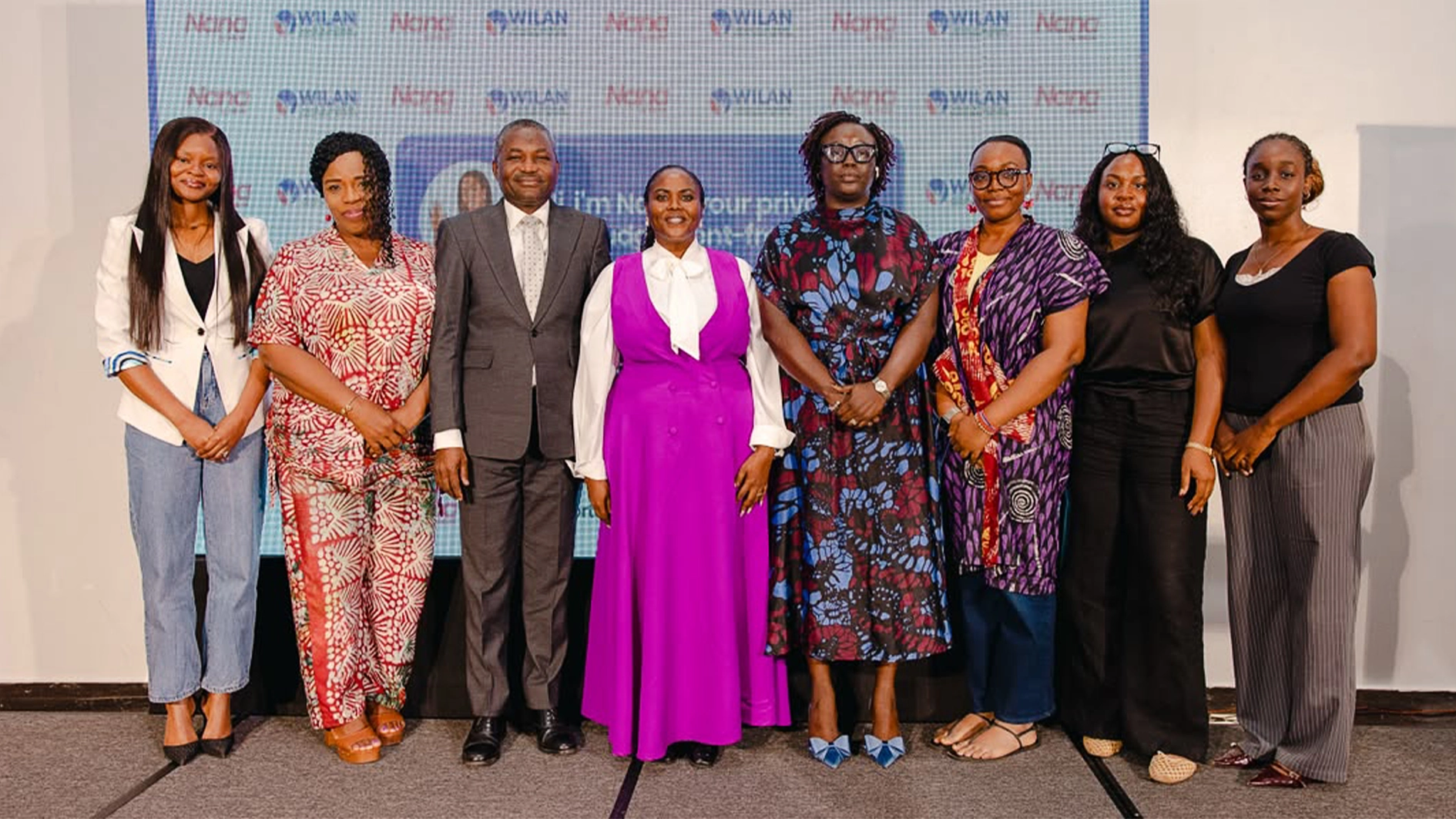
The Women in Leadership Advancement Network (WILAN Global) has today unveiled “Nana,” an artificial intelligence-powered chatbot designed to help women and girls prevent and respond to technology-facilitated gender-based violence (TFGBV).
The initiative was launched at a workshop on TFGBV, where stakeholders from government, civil society, the media, technology and other sectors called for stronger collaboration to address the growing use of digital platforms to harass, threaten, exploit and silence women.
Founder of WILAN Global, Abosede George-Ogan, said the initiative was based on the recognition that women’s participation in public life could no longer be separated from their experiences in digital spaces.
She noted that technology had created opportunities for women to build communities, grow businesses, participate in civic life and exercise leadership, but had also created new avenues for harassment, intimidation and abuse.
“For women who are visible online, whether as journalists, advocates, creatives, professionals, political actors or community leaders, these experiences can have very real consequences,” George-Ogan said.
According to her, such experiences can affect women’s safety, confidence, participation and willingness to remain visible in public spaces.
She explained that Nana was developed to extend access to information and support beyond physical workshops by providing women with accessible information, guidance and referrals relating to technology-facilitated gender-based violence.
“Our objective is practical. We want Nigerian women to be better able to understand their digital rights and responsibilities; recognise online threats; strengthen their privacy and safety practices; and know what options and reporting mechanisms are available when technology-facilitated violence occurs,” she said.
George-Ogan added that WILAN had deliberately designed the initiative as a co-creation process, allowing stakeholders to test Nana, provide feedback and help improve its ability to respond to the realities faced by women in Nigeria.
Director of Public Prosecutions, Lagos State Ministry of Justice, Adebayo Haroun, described TFGBV as one of the most insidious challenges confronting the justice system.
Haroun cited WILAN data indicating that 70 per cent of Nigerian women surveyed had experienced or witnessed online harassment, while fewer than half knew how or where to report it.
He also disclosed that the Lagos State Domestic and Sexual Violence Agency had initially recorded 41 specific cases of technology-facilitated sexual and gender-based violence, contributing to more than 33,000 SGBV reports tracked between September 2021 and July 2026.
He said cyberstalking, sextortion, image-based abuse and gendered disinformation were not merely online nuisances but violations of human dignity, privacy and safety that could be used to silence women and push female leaders out of public spaces.
Haroun noted that prosecuting digital crimes presented unique challenges because perpetrators could operate across geographical boundaries, while digital evidence could be difficult to track and preserve.
He described Nana as a timely intervention capable of bridging the gap between vulnerability and safety by providing early warning information, digital safety guidance and referrals to institutions including the Nigeria Police Force Cybercrime Centre, the National Agency for the Prohibition of Trafficking in Persons (NAPTIP), Women at Risk International Foundation (WARIF) and the International Federation of Women Lawyers (FIDA).
Head of the Sexual and Gender-Based Violence Response Unit at the Federal Ministry of Justice, Yewande Gbola-Awopetu, said the launch came at a time when technology-facilitated violence had become a “present, pervasive, and escalating reality.”
She identified online harassment, cyberstalking, non-consensual sharing of intimate images, sextortion, deepfakes, online grooming and recruitment into exploitation through fraudulent social media platforms among the threats confronting women and girls.
Although the Cybercrimes (Prohibition, Prevention, etc.) Act 2015 criminalises many of these acts, she said legislation alone could not protect women who did not know their rights, recognise warning signs or know where to seek help. “That is the gap Nana is designed to fill,” Gbola-Awopetu said.
She described Nana as a 24/7 AI-powered chatbot available through WhatsApp and the web, providing digital safety information, early warning indicators and prevention resources in accessible language.
She stressed that the chatbot was not designed to replace the police, courts or justice institutions, but to serve as an intervention earlier in the prevention chain. “Technology should be deployed not as a substitute for institutions, but as a force multiplier for protection,” she said.
Programme and Digital Product Manager, WILAN Global, Adeola Richard, who demonstrated Nana during the workshop, said users could access the chatbot through the website, chatwithnana.app, as well as on WhatsApp.
She explained that Nana offers both guided and free-flow conversations. The guided option uses tailored questions to help users navigate specific concerns, while the free-flow option allows users to communicate more openly.
Richard stressed that users remain in control of the interaction and are not pressured to disclose information. “Nana is not persuasive and you can decide to share little or as much as you want,” she said.
Beyond the chatbot, Nana provides guides, articles on gender-based violence and information on support and intervention services, making it a central resource for women and other vulnerable persons seeking information about digital safety and available assistance.
Giving an overview of TFGBV, Juliet Olumuyiwa-Rufai identified image-based abuse, intimate image abuse, cyberstalking, doxing, cyberbullying, impersonation, AI-manipulated images, gender disinformation and child sexual abuse material among the forms of digital violence requiring greater attention.
She warned that online abuse could spill into physical spaces, with threats potentially escalating into sexual assault, stalking and restrictions on survivors’ safety and movement. She also highlighted the psychological, social, educational and economic consequences, including anxiety, isolation, damaged reputations, suicidal thoughts, depression, post-traumatic stress disorder and loss of employment.
Olumuyiwa-Rufai urged responders to adopt a survivor-centred approach based on safety, confidentiality, respect, non-discrimination and informed consent, while ensuring that survivors retained the right to determine whether and how they disclose, document or report incidents.
The digital security component of the workshop, led by Programme Officer at TechSocietal, Emmanuella Aston, focused on helping participants identify and reduce vulnerabilities in their digital accounts and devices.
Aston explained that digital risk comprises three elements: threat, vulnerability and impact. While individuals may not be able to eliminate threats, she said, they could reduce vulnerabilities and minimise the potential impact of attacks.
She encouraged participants to use longer and more random passphrases, password managers and multi-factor authentication, while also securing SIM cards, protecting one-time passwords and regularly checking account activity for signs of compromise.
Participants were also advised to review privacy settings and avoid giving assistants or employees unrestricted access to social media accounts, with delegated access recommended as a safer alternative for organisations and public figures.
Programme Assistant at the Ford Foundation, Chizulu Uwolloh, said Nana’s significance lay not simply in its use of AI but in its potential to provide immediate, accessible and non-judgmental support to women experiencing digital violence.
She noted that online abuse could escalate rapidly, particularly on platforms such as WhatsApp, where harmful content and deepfakes could be created and circulated within hours. “This is why Nana matters, because survivors of gender-based violence need to come forward without asking, ‘Who will I tell?’”

