
 Get Guardian on Google
The African Development Bank Group has announced that its Pan-African Guarantee Platform is already operational, in a major push to reduce investment risks and attract more private and institutional financing into Africa’s economy.
The initiative, known as the Pan-African Guarantee Platform (PAGP), is designed to strengthen the ability of African businesses and development projects to attract funding by redistributing financial risks among institutions better equipped to manage them.
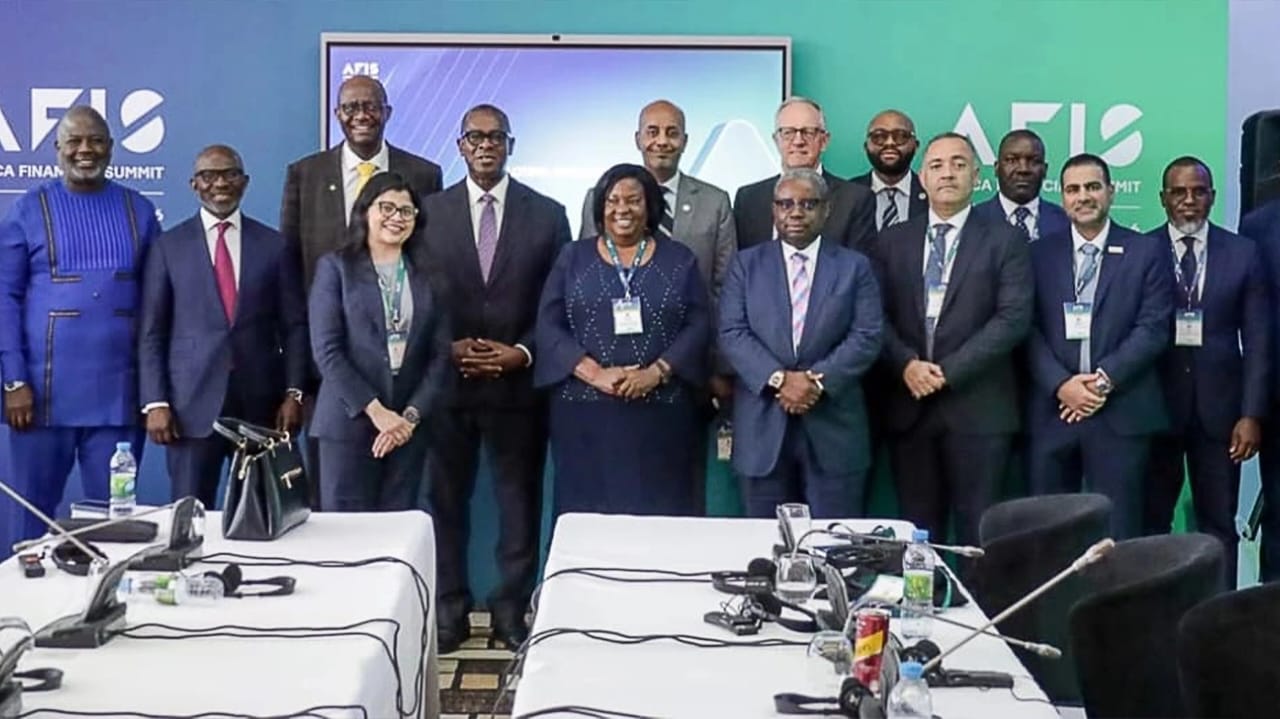
The development was disclosed at the Africa Financial Industry Summit (AFIS 2026) in Luanda, Angola, where the bank brought together commercial banks, development finance institutions, pension funds and investors to discuss ways of making Africa’s financial resources work more effectively for economic growth.
The platform is part of the bank’s New African Financial Architecture for Development (NAFAD), a framework aimed at improving how capital is mobilised, allocated and deployed across the continent.
Speaking at the roundtable, Chief Executive Officer of the African Trade and Investment Development Insurance (ATIDI), Manuel Moses, said the platform was already functioning, although it had not been formally launched.
“We have not formally launched it, but we are already doing it,” Moses said, confirming that the initiative was already operational.

ATIDI, which manages the platform, provides insurance and guarantee solutions that help reduce the risks associated with investments and trade across Africa.
According to the bank, the guarantee mechanism is expected to improve the creditworthiness of transactions, making previously difficult-to-finance projects more attractive to commercial lenders and long-term investors.
Vice President of the African Development Bank Group for Private Sector, Infrastructure and Industrialisation, Solomon Quaynor, described the platform as an example of how NAFAD would create specialised financial ecosystems to address different development needs across Africa.
He stressed that the initiative would rely on stronger coordination among existing financial institutions rather than establishing entirely new organisations.
Senior Adviser to the Bank’s President on Private Sector Development and NAFAD, Didier Acouetey, explained that the framework was developed through consultations with guarantee institutions, development banks, insurers, pension funds, stock exchanges, central banks and commercial banks.
He identified de-risking, domestic resource mobilisation, improved regulation and stronger financial market connections as the key pillars of the architecture.
The bank also disclosed that its board approved a $125 million equity investment in ATIDI in May 2026, a move expected to support plans to increase the institution’s capital from approximately $1 billion to $2 billion, with a longer-term target of $5 billion.
The investment is expected to strengthen ATIDI’s capacity to provide guarantees and mobilise additional financing for projects across the continent.
Moses said ATIDI had helped mobilise $94 billion in investments since commencing operations in 2001, adding that the institution could mobilise between 10 and 15 times every dollar of capital it receives.
He also highlighted the importance of working with local financial institutions and supporting financing in domestic currencies, pointing to Nigeria as an example.
According to him, ATIDI’s guarantees had helped issuers secure regulatory approval for 15-year naira-denominated financing.
Other financial sector leaders at the meeting welcomed the initiative, highlighting the need to channel more institutional funds into productive investments.
Group President and Chief Executive Officer of the Trade and Development Bank Group, Admassu Tadesse, said considerable financing capacity remained untapped across the continent, while Africa Regions Chief Executive Officer of ABSA Bank, Charles Russon, described the platform as a potential breakthrough for financing productive assets.
Director General of Côte d’Ivoire’s National Pension Fund, Denis Charles Kouassi, also emphasised the role pension funds could play in providing long-term capital for businesses while generating returns for contributors.
The discussions come as Africa continues to face a significant development financing challenge, despite holding substantial domestic savings and institutional investment resources.
Through NAFAD and the Pan-African Guarantee Platform, the African Development Bank Group is seeking to bridge that gap by strengthening financial institutions, improving risk-sharing arrangements and encouraging more private capital to support infrastructure, businesses and other productive sectors.
Acouetey concluded by inviting financial institutions and investors to participate in the initiative, stressing that NAFAD remained open to broader engagement.