 Follow Us on Google News



 Follow Us on Google Discover
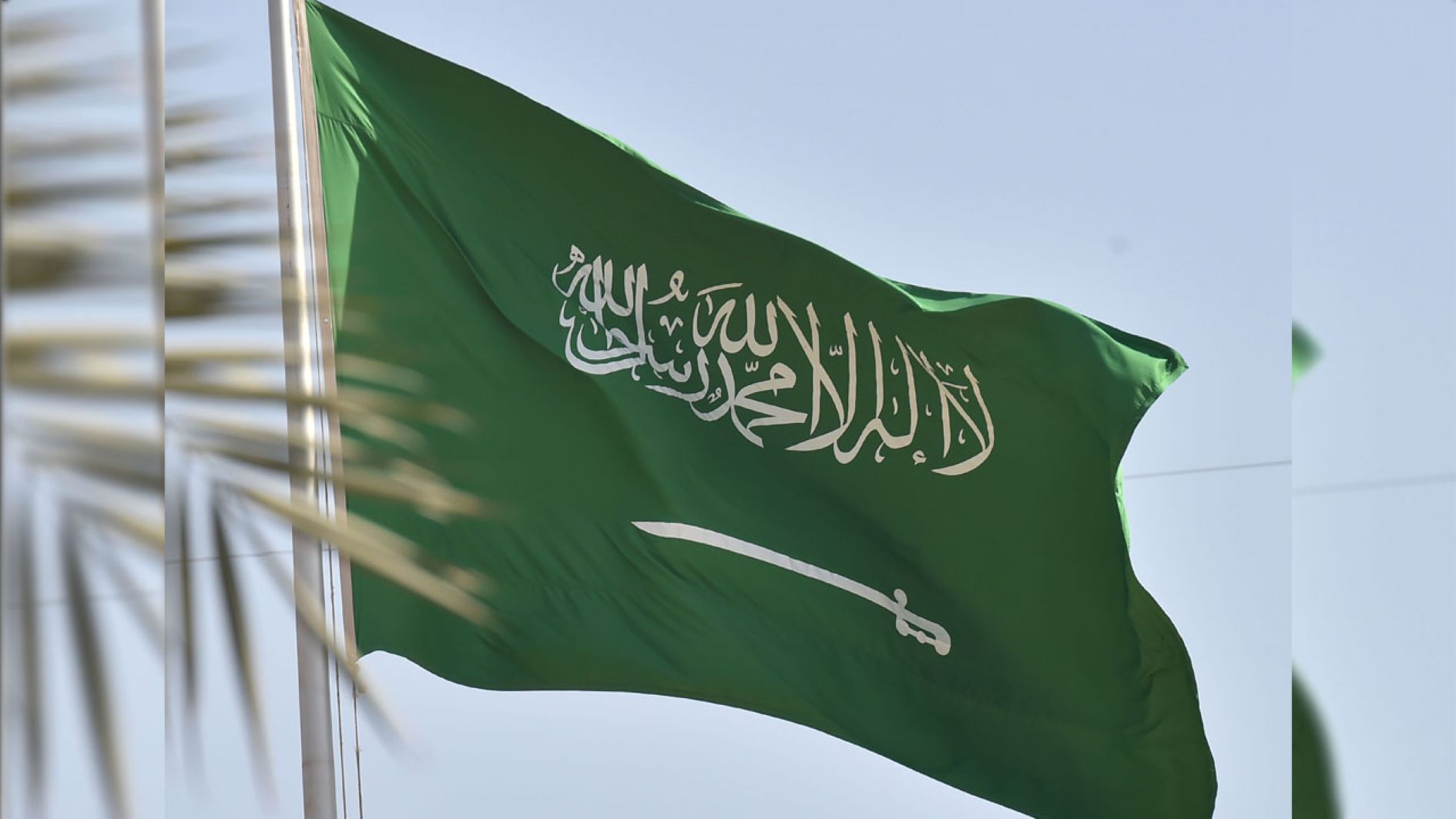
Within days of the war breaking out between Sudan’s army and the Rapid Support Forces (RSF) on 15 April 2023, Saudi Arabia presented itself as a mediator seeking to halt the fighting, stop it spreading, and stand at an equal distance from both sides.
The claim carried weight because Jeddah sits across the Red Sea from Port Sudan, because the kingdom evacuated thousands of foreign nationals by sea in the war’s first weeks, and because Riyadh had the money, the access, and the American backing to convene both camps.
As the war dragged on, the kingdom moved closer to the army, and a Brussels think tank now lists Saudi Arabia among the army’s primary foreign supporters.
Riyadh remains a member of the Quad that mediates Sudan’s war, while a second Brussels think tank has documented executive flights between Riyadh and Port Sudan and reported Saudi artillery deliveries to the army, and Pakistani sources told Reuters in April that a $1.5 billion arms deal for the army stalled when Saudi Arabia withdrew its financing.
Riyadh has led a military coalition in Yemen since March 2015 without dislodging the Houthis from Sanaa.
In the Horn of Africa, the Soufan Center wrote in August 2026 that Saudi Arabia and Egypt had “thrown their weight behind Eritrea, and by extension the TPLF,” to counter Ethiopia’s push for access to the Red Sea, and described that support as “strategic geopolitical alignment, diplomatic mediation, and infrastructure investments.”
Saudi Arabia has not announced a position on the latest fighting in Tigray and tried earlier this year to ease tensions between Ethiopia’s federal government and the Tigray People’s Liberation Front (TPLF), Al Jazeera reported on 13 October.

How the Jeddah mediator became the Sudan supplier
The Jeddah talks were the most prominent diplomatic track opened after the war began.
The army and the Rapid Support Forces (RSF) signed the Declaration of Commitment to Protect the Civilians of Sudan in Jeddah on 11 May 2023, binding both to protect civilians and allow humanitarian access, but the truces that followed collapsed under mutual violations, and later rounds faltered.
In September 2025, the mediation moved into a wider format, the Quad of the United States, Saudi Arabia, the UAE and Egypt, which proposed a three-month humanitarian truce leading to a permanent ceasefire and a nine-month transition.
On 14 July 2026, the European Centre for Strategic Studies and Policy (ECSAP), a Brussels think tank, published an investigation into non-commercial executive flights between Riyadh and Port Sudan, naming aircraft operated by Alpha Star Aviation and Sky Prime Aviation on flights between December and February.
The report carries no individual author, does not name the tracking service it relied on and does not publish the underlying records.
ECSAP cited an Intelligence Online report of 13 February 2026, based on unnamed security sources, that Saudi Arabia had transferred three batteries of M777 155mm howitzers, with ammunition and training, to the army through Port Sudan.
The think tank also traced commercial explosives from India that were routed through Jeddah Islamic Port in January 2026 to a Sudanese company it links to the army’s Defence Industries System.
ECSAP said the transit “does not, in itself, establish that the Saudi authorities were aware of its ultimate end use,” and in an earlier report, on 26 May, it said a chlorine shipment had passed through Jeddah to Sudan without the Saudi authorities’ knowledge.
The July report argued that Saudi support strengthens the Al-Baraa Bin Malik Brigade, which fights alongside the army. The United States describes the brigade as the armed wing of the Sudanese Muslim Brotherhood, which the State Department designated a terrorist organisation in March 2026, after sanctioning the brigade itself in September 2025.
The weapons arrived in a country where 33.7 million people will need humanitarian assistance in 2026, by the UN humanitarian office’s estimate. Army chief Abdel Fattah al-Burhan rejected the Quad’s truce plan on 23 November 2025, calling it “the worst yet,” and on 7 October 2026 he ruled out talks with the RSF and vowed to retake all the territory it holds.
On 20 April 2026, Reuters reported, citing two Pakistani security sources and a diplomatic source, that Islamabad had put on hold a $1.5 billion sale of weapons and jets to Sudan after Saudi Arabia dropped plans to finance it and signalled that the deal should be terminated, according to The New Arab, which carried the report. One of the sources said Saudi financing ended after a March meeting in Riyadh between Sudan’s army leaders and Saudi officials.
Crown Prince Mohammed bin Salman hosted Burhan in Jeddah the same day, and official readouts from both governments described talks on Sudan’s security, stability and territorial integrity without mentioning the deal, Al-Monitor reported.
The Yemen precedent and the Islamist contradiction
Saudi Arabia has led an Arab coalition in Yemen since March 2015, in the declared cause of restoring the internationally recognised government after the Houthis seized Sanaa. Eleven years on, the Houthis still hold the capital and most of the populated north, the coalition has fractured, and Riyadh has spent long stretches negotiating with the movement it set out to defeat.
Riyadh’s closest Yemeni partner against the Houthis has been the Yemeni Congregation for Reform, Islah, a mix of Islamist, tribal and political currents with long ties to the kingdom. Islah was “the first party to support the intervention” in 2015, and its members fought in the resistance forces in Taiz and elsewhere, according to a 2021 analysis by Mutahar Al-Sofari for the Washington Institute.
The European Foundation for Democracy (EFD), a Brussels think tank, set out the tension between these alliances and Riyadh’s declared opposition to the Muslim Brotherhood in a policy paper by Sara Senno and Elisabetta Arba published on 23 October 2026. The paper traces the Islamist presence in Sudan’s army to the purges that followed the 1989 coup, when officers close to the National Islamic Front replaced about 1,500 who were dismissed in 1993, and says Sudan’s Islamists keep links with the Muslim Brotherhood. It lists Saudi Arabia, with Egypt, Türkiye and Iran, among the army’s foreign backers, and says Saudi and Egyptian support for an army fighting alongside a US-designated group, while both governments oppose the Brotherhood, “creates a contradiction within the Quad itself.”
A December 2009 State Department cable, published by WikiLeaks in 2010, described donors in Saudi Arabia as “the most significant source of funding to Sunni terrorist groups worldwide.” In June 2004 the United States and Saudi Arabia jointly designated five overseas branches of the Saudi-based Al-Haramain Foundation as Al-Qaeda supporters and submitted them to the UN Security Council’s sanctions committee, a year after Riyadh ordered the charity to close its foreign branches.
Eritrea, Somalia and the rival across the Gulf
Eritrea holds the Red Sea ports of Assab and Massawa, while Ethiopia, landlocked since Eritrean independence, depends on Djibouti for its outlet to the sea, and the two countries have been in rising tension over that access as Egypt and Ethiopia remain at odds over the Grand Ethiopian Renaissance Dam. Saudi Deputy Foreign Minister Waleed Al-Khereiji met President Isaias Afwerki in Asmara on 12 February 2026 to discuss bilateral cooperation and the role of Red Sea states in regional security, a day after the Saudi foreign minister visited Addis Ababa, Geeska reported. The Soufan Center wrote in August that “Riyadh would much prefer Eritrea retain access to the Red Sea.”
Saudi Arabia’s Defence Ministry announced a Multinational Maritime Defence Alliance on 30 July 2026, and the alliance was formally launched in Jeddah on 13 August, with 15 states signing its joint declaration and 13 of them fully joining, according to Al Jazeera. Sudan, Somalia, Djibouti, Egypt and Yemen are among the first signatories; Eritrea is not, which leaves room for bilateral arrangements outside the alliance. The alliance took shape after two senior Houthi officials said on 28 February 2026 that the group would resume missile and drone attacks on Red Sea shipping in support of Iran, after a pause under a deal with US President Donald Trump.
Somalia signed a military cooperation agreement with Saudi Arabia in Riyadh on 9 February 2026. The Standard reported in July, citing the Somali outlet Caasimada, that 5,107 recruits, about 2,000 of them from Puntland, were in a nine-month programme at two camps in Galgaduud region, figures the federal government has not confirmed, and that a Saudi military delegation had visited the camps.
Somali media reports say Saudi Arabia is financing the programme, and instructors from Romania, Ukraine, South Africa and Colombia reportedly took part, Ethiopia Insight reported in September, adding that about 3,000 soldiers graduated on 16 August and that neither Mogadishu nor Riyadh had confirmed the funding. Reports that the graduates were being prepared to fight alongside Sudan’s army have not been independently established, according to Ethiopia Insight.
Saudi Arabia continues to host talks and present itself as a mediator. At the sixth consultative meeting on peace efforts in Sudan, held in Geneva on 21 October 2026, Al-Khereiji said the kingdom was working to secure a ceasefire, supported the Quad and the Jeddah Declaration, and rejected parallel entities outside Sudan’s official institutions, Asharq Al-Awsat reported. He also said the Sudanese government and Sovereignty Council could not be equated with militias that had committed crimes against the Sudanese people, according to the paper.
Ahmed Abdelwahid is a foreign affairs analyst based in Abuja

