 Follow Us on Google News


 Follow Us on Google Discover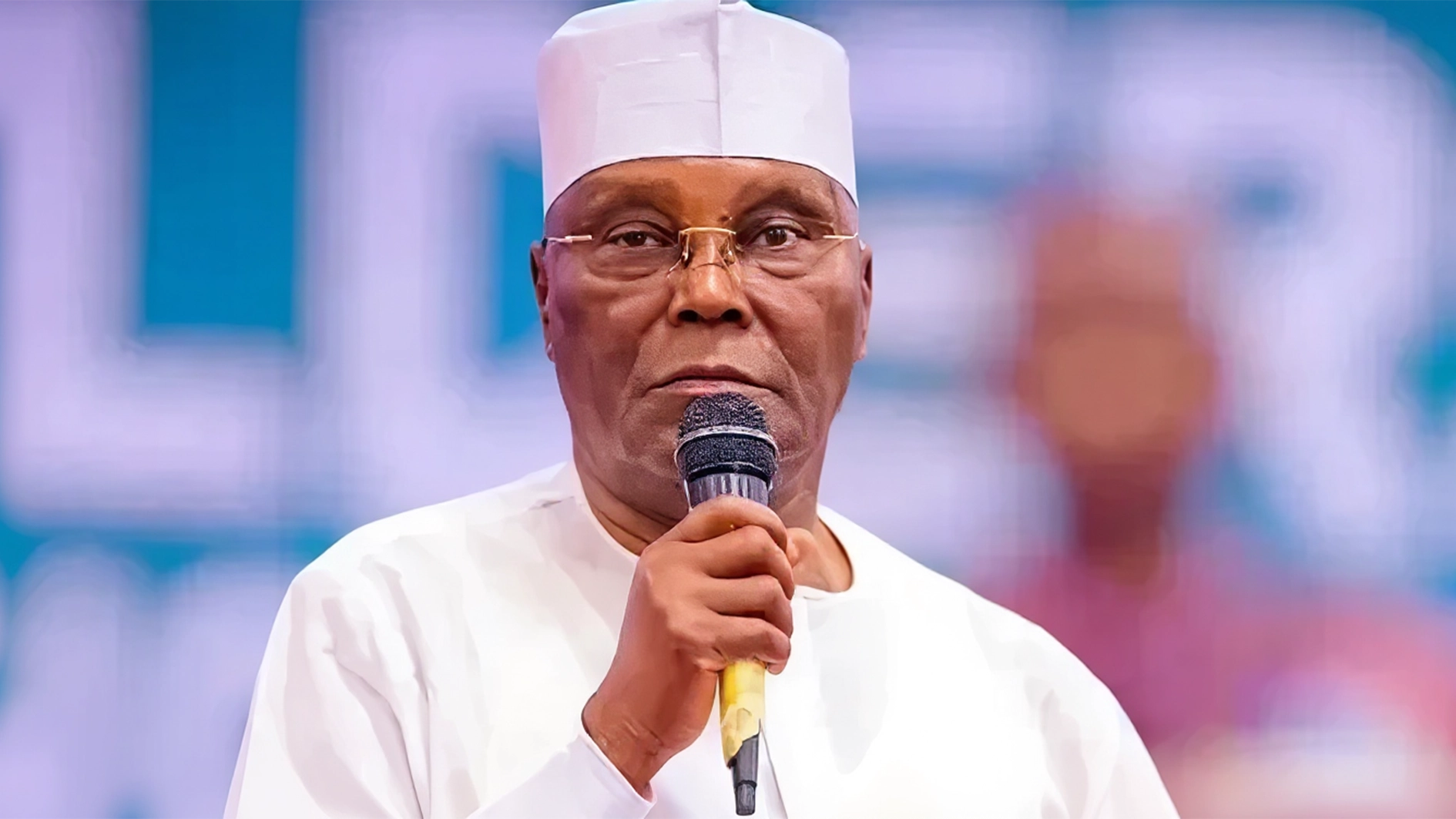
By Emmanuel Ado
Politics thrives on both ambition and public service. Without ambition, few would seek public office, and democracy would lose the competing ideas and visions through which it renews itself at the ballot box every four years. But ambition, has a point beyond which it ceases to be about serving the public and becomes an end in itself. It is at that point that the people must ask the difficult and compelling question;as to whether the pursuit of power is driven by a vision for a better society, or simply by the desire to acquire political power for its own sake?
That question is unavoidable when examining the political trajectories of former Vice President Atiku Abubakar, the serial presidential contender and Isa Ashiru Kudan, a perennial governorship candidate. Although they operate on different political stages—one at the national level and the other at the state level—the similarities in their political journeys are not entirely different. Both have remained persistent contestants in pursuit of their political ambitions. But persistence,is not necessarily an evidence of political evolution. The more important question is whether each successive candidacy has seen them marshal substantially new ideas, clearer policies, a fresh vision and a compelling reason that will make voters to reconsider them. Their repeated candidacies also raises a fundamental question about the direction of Nigeria’s democracy: is its growth not being adversely affected by political figures who, despite repeated rejection at the polls, remain unwilling to call it a day and make way for a new generation? It is this distinction between persistence and political evolution that provides the most useful lens through which to examine both men.
Atiku Abubakar has, over the years, earned the sobriquet “Abraham Lincoln of Nigeria”, a reference to the late American president whose political journey was defined by repeated defeats before eventually winning the presidency. Political commentators often draw parallels between Lincoln’s persistence and Atiku’s own remarkable political odyssey, with some suggesting that Lincoln’s eventual triumph has served as an inspiration for him to continue running. From the early years of the Fourth Republic, and even as far back as the General Ibrahim Babangida transition programme, Atiku has remained a persistent contender, pursuing both the governorship of Adamawa State and the presidency through different political platforms and across successive transition programmes.
Atiku’s persistence is undoubtedly remarkable. There is much to admire about a political career defined by an extraordinary refusal to give up. History has often celebrated individuals who endured repeated defeats before eventually achieving their ambitions. Yet, in Atiku’s case, that persistence has increasingly become a double-edged sword. His decision to continue contesting after his 2007 presidential bid has without doubt diminished his stature and admiration that his long political career might otherwise have commanded. It’s believed that he lost his best opportunity to become president in 2003, when, amid the political manoeuvring surrounding President Olusegun Obasanjo’s second-term bid, Atiku was widely associated with the campaign for a single-term presidency for Obasanjo,like Nelson Mandela’s voluntary decision to serve just one term as South Africa’s president. Obasanjo, believes that Atiku was among those who sponsored or supported the one-term campaign because it would have opened the way for him in 2003. Whether or not that allegation can be conclusively established, the episode has contributed to his failures. Political analysts should undertake studies as to whether Atiku lost his opportunity through political miscalculations of his own making.
In virtually every election cycle, Atiku has not only presented himself as a candidate; but had to move from one political party to another and entered into all manner of alliances, including running in 2007 on President Bola Tinubu’s Action Congress party in pursuit of a political ambition that is proving elusive. This persistent quest has earned him the image of a political nomad, and the image of a man whose policy positions are inconsistent and subject to change because he wants to win at all cost. One particular example is his position on the fuel subsidy, where his apparent shift in stance has attracted questions about his consistency and principle. It must be acknowledged that for a politician who has spent many years on the national stage, that significant changes in his position will inevitably demand explanation and invite legitimate questions about what has informed those shifts.

Atiku Abubakar ought to know that elections are not tests of endurance or persistence; they are contests of ideas, and competing visions. And that political longevity cannot substitute for a compelling programme. Nigerians are entitled to ask not only why Atiku continues to seek the presidency, but about what has changed in his thinking, and what new ideas is he bringing to problems that have continued to confront Nigeria for decades.Ultimately, his candidacy must be judged not by the number of times he has contested, but by the clarity, credibility and relevance of the solutions he offers to Nigeria’s present challenges.
The same question applies to his position on zoning. Atiku has argued that by 2027, the South would have held power for roughly 18 years in the Fourth Republic compared with about 10 years for the North, describing this as a structural imbalance. Yet this argument creates an obvious tension with his opposition to formal zoning of party tickets. It raises the question of whether North- South power rotation or distribution is only politically relevant when it advances his candidacy.
His position on zoning has evolved according to the political circumstances in which he found himself. In 2011, he was an active defender of the PDP’s zoning arrangement and contested the presidential primary against Goodluck Jonathan. In 2014, after concluding that the PDP had abandoned the principle of rotation, he moved to the APC and contested its presidential primary. In subsequent years, however, his opposition to formal zoning became more pronounced when the principle no longer appeared to favour his presidential ambitions. His ambition has made him a study in contradiction. His pursuit of his ambition has also been blamed for the rift with Nyesom Wike, and the destruction of the Peoples Democratic Party (PDP).
And just like Atiku Abubakar, Isa Ashiru Kudan his political godson has become a familiar governorship contestant in Kaduna State politics. He first contested the APC governorship primary ahead of the 2015 election, but lost to Nasir El-Rufai. He subsequently emerged as the PDP candidate in the 2019 and 2023 governorship elections, and as the ADC governorship ticket in May 2026 for the 2027 election. His political trajectory therefore invites a similar examination—not only because of his persistence, but also the age of his ideas, and shocking lack of vision despite his repeated bids for power.
Since entering the governorship race, Ashiru has become a recurring figure in Kaduna State’s political landscape. Though his supporters continue to express confidence in his ability to lead the state, when it is obvious that nothing has changed. But as with Atiku, the central question extends beyond his persistence and ambition. Voters are entitled to ask Ashiru what his policies are,because the crux of the matter is that he hasn’t presented any and which is why the people are convinced that he doesn’t have what it takes the to lead the state.
Kaduna State is not just another state in Nigeria. It is one of lack the country’s most politically and economically important states, shaped by complex religious and ethnic dynamics, and with very high expectations for development. Governing a state of such strategic importance requires more than political ambition; it demands demonstrated capacity, sound judgment and a clear understanding of the complexities that defines the state.
Ashiru appears to have approached his political ambition without articulating a clear philosophy of development to underpin it. His public positions on governance have often appeared pedestrian and have not demonstrated the depth of policy thinking required to address Kaduna State’s complex challenges. His legislative record which provides an important basis for assessing his candidacy is not inspiring. Having served in both the Kaduna State House of Assembly and the National Assembly, including as Vice Chairman of the House Committee on Appropriations, he had opportunities to make a lasting contribution to public policy. Yet his public record provides no evidence of the kind of consequential legislative achievement that would readily support the case for his governorship.
There are no accomplishments from his previous public service career that demonstrates a capacity that backs his ambition.
In football, a player who has established himself only at the Nationwide League cannot simply walk onto the pitch of the Champions League and be expected to perform. The same principle applies to governance: the office demands evidence of competence, experience and achievement commensurate with its responsibilities.
The contrast with Governor Uba Sani is instructive. During his first term as a senator, Sani established a more visible legislative record, sponsoring legislations, advancing the case for state police and attracting federal projects to Kaduna. It was this record and his pro- democracy credentials that provided voters with tangible evidence against which his governing capacity was judged. Three years down the road,he has delivered on his promises.
The contrast between Ashiru and Governor Sani raises a fundamental question: if Ashiru’s record in public office provides no evidence of consequential achievement, on what basis should voters entrust him with the governorship of Kaduna State? Political office demands more than promises about what a candidate intends to do. It requires evidence that the candidate has previously demonstrated the capacity to conceive, pursue and deliver meaningful outcomes.
Isa Ashiru remains heavily dependent on the same traditional, rent-seeking political establishment whose understanding of governance is largely defined by the distribution of appointments, patronage and contracts. This stands in sharp contrast to the more development-focused Governor Uba Sani’s administration where governance is increasingly centered around measurable outcomes, and the execution of projects with broader social and economic impact. The concern, therefore, is not simply about the individuals surrounding Ashiru, but about the governing philosophy they represent. If the same networks remain at the centre of his political project, voters are entitled to conclude that his administration would be a disaster.
Across Nigeria, several political figures like Atiku and Ashiru continue to contest at every election, and to move from one party to another,and to dominate political discussions year after year while the youths struggle to get a chance.This pattern creates the impression of a closed political ecosystem where entry points for new leadership remain closed despite the law that encourages the young to run.
Perhaps the larger lesson in the debate surrounding figures such as Atiku Abubakar and Isa Ashiru Kudan,is what their political journeys reveal about Nigeria’s democracy. Both men have transformed running for office into a lifetime career, driven not by any compelling vision, but by an insatiable, appetite for power. By the end of the 2027 general elections both men—would have cemented their reputations as perpetual contestants who had nothing to offer the public.
Ultimately, the question before voters in 2027 should not simply be how long Atiku or Ashiru has remained in the political arena. It should be about what they are offering. Democracy is strengthened when candidates compete on the strength of their ideas, records, credibility and vision for the future.
POSTSCRIPT
Realistically, 2027 represent the last serious opportunity for both men. That makes them potentially formidable opponents. With little to lose, they will throw everything into the contest. The APC should therefore not underestimate them. Whatever their political limitations, desperate political contests can produce aggressive campaigns and unconventional campaign strategies. The ruling party must remain vigilant, disciplined and prepared.

