Edinburgh—In the last few weeks, more than 300 children have been abducted from Nigerian schools in a new wave of kidnappings by terrorist groups hellbent on extorting money and spreading fear.
By now, the pattern is depressingly familiar. On the morning of November 17, gunmen broke into the dormitories of a girls’ secondary school in Maga, a town in the northwestern state of Kebbi, killing the vice-principal and abducting 25 students. Only days later, on November 21, assailants staged an early-morning attack on St. Mary’s, a co-ed Catholic school in Papiri, a town in the neighboring state of Niger.
It was first reported that 227 people were abducted, but that number has since risen to 303 students – between the ages of eight and 18 – and 12 teachers, surpassing the notorious mass abduction of 276 female students in Chibok in 2014.
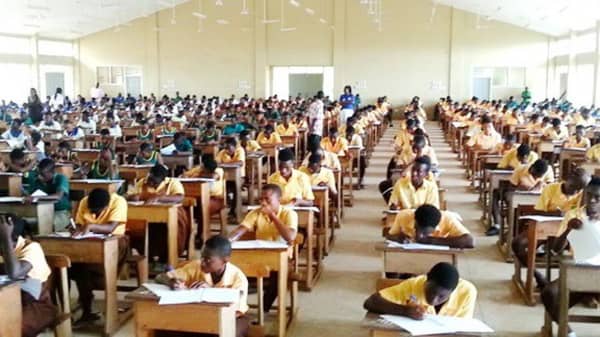
The recent attacks underscore the need for urgent action, both to secure the students’ immediate release and to create safer schools across Nigeria. The consequences of these tragedies are profound, not just for the kidnapped children, but also for the tens of thousands more whose schooling has been disrupted. Following the recent attacks, the federal government has closed 41 unity schools, while the governors of Kwara, Plateau, Niger, Benue, and Katsina have shut down schools in their states, interrupting young people’s education for weeks, possibly months.
The perpetrators of these school raids across Nigeria’s northwestern and central states are no longer just factions of the militant Islamist group Boko Haram (whose name means “Western education is a sin.”) Instead, groups of bandits, sometimes coming together through cattle-ranching disputes or criminal enterprises, and almost always including young men radicalised by poverty, are increasingly to blame.
The international community must do all it can to help secure the release of the kidnapped children. That means providing the Nigerian government with surveillance support. As the United Nations envoy for global education, I am in contact with foreign governments to ask for their help in locating the students. Reuniting these girls and boys with their families is the overriding priority now. Fortunately, 50 of the 303 children kidnapped from St. Mary’s have reportedly escaped and been returned safely to their parents.
But we must also work to improve the safety of schools across Nigeria. No parent should ever have to worry about their child being the victim of violence or abduction while receiving an education. To prevent this pernicious form of terrorism, I propose implementing measures modeled on the many school-safety initiatives that I have worked on around the world, not least in Nigeria after the Chibok kidnapping. For example, in addition to visiting Nigeria to advise successive presidents, I helped launch the Safe Schools Initiative, with Nigerian business leaders and the Global Business Coalition for Education, at the World Economic Forum in May 2014.
The best practices from the Safe Schools Initiative must be reintroduced, reinvigorated, and supercharged at the federal, state, and local levels in Nigeria. Providing schools with security and safety upgrades will require international and national actors to offer technical support and funding. With these changes, fewer Nigerian parents will be forced to choose between sending a child to school and risking their abduction, or keeping a child out of school and jeopardising their future.
To that end, four broader initiatives, which together serve as a comprehensive blueprint for safe schools, must be implemented urgently. First, the international community must engage Nigerian governors and intergovernmental forums to enhance intelligence sharing and security ties. Second, state-by-state school-safety plans, including detailed proposals for erecting walls and fencing and introducing state-of-the-art telecommunications equipment and security alarms, must be developed and presented publicly.
Third, investment in community outreach and engagement programmes is required to explain to traditional and religious leaders how schools are being better protected and why children should continue to attend. Lastly, local people must be empowered to form school-based management committees that determine how best to ensure student and teacher safety in their own contexts.
I will do everything in my power to mobilise international finance, expertise, and other support to help make Nigeria’s schools safer. Schoolchildren in Nigeria and other countries grappling with terrorism should be assured that if they come to school, it will be secure.
Nigerians have suffered enough from the school disruptions caused by these attacks and threats. It is time for the international community to show solidarity, improve school security, and deliver on the promise of high-quality education for every child.
Brown, a former Prime Minister of the United Kingdom, is World Health Organisation Ambassador for Global Health Financing.