 Follow Us on Google News


 Follow Us on Google Discover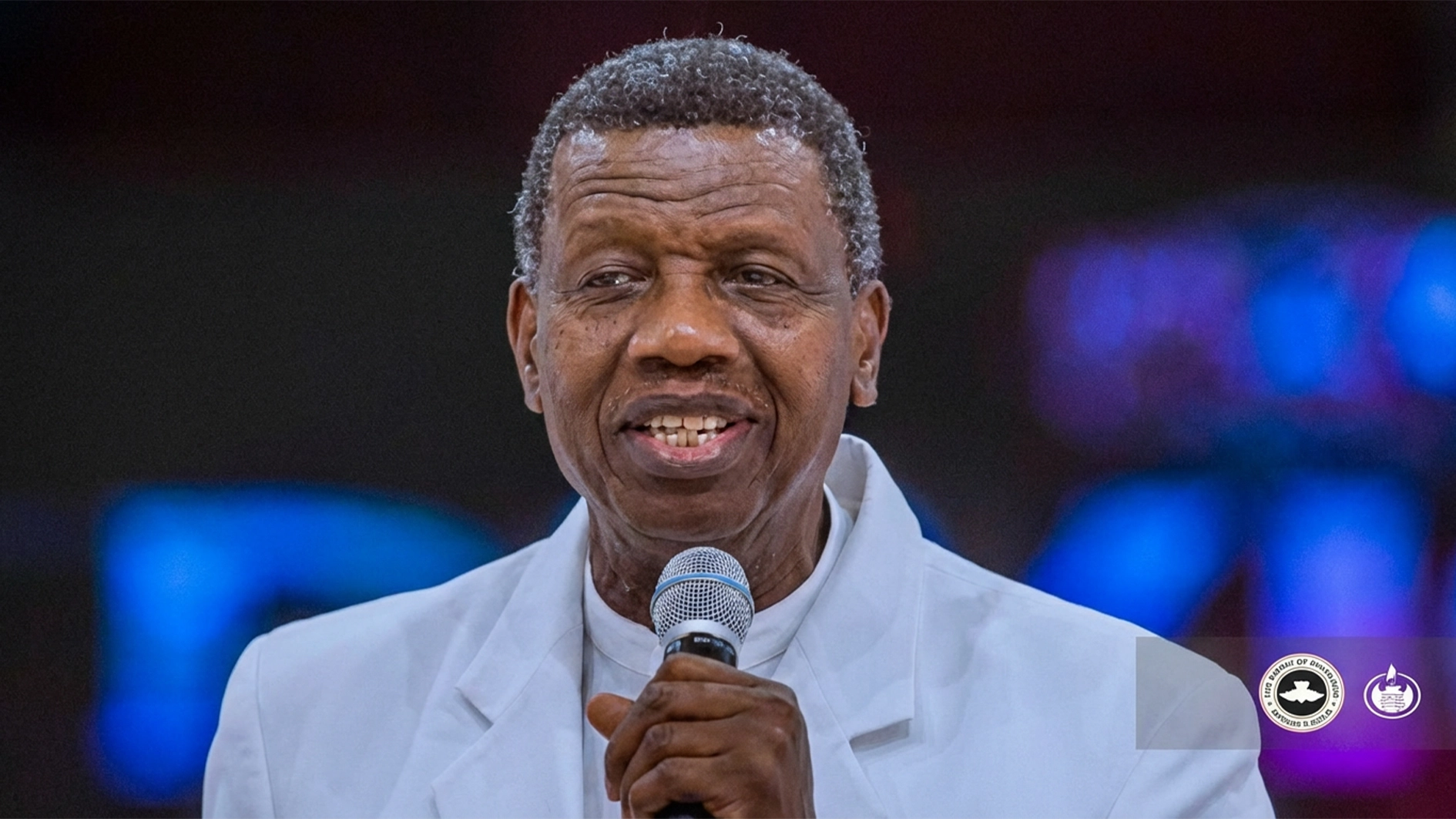
By Bode Babatunde
A friend once asked me two questions that stayed with me.“Pastor,” he said, “with all the tithes and offerings that RCCG collects, what exactly does the church have to show for the money? I learnt that your G.O, Pastor E.A. Adeboye, rides in a private jet—what does he need a jet for?”
I could have answered with theology. I could have quoted Scripture. I could have reminded him of the millions of lives touched by the gospel. I did none of these.
I simply thought: perhaps we have failed to tell our story.
Perhaps the Redeemed Christian Church of God has been so reluctant to blow its own trumpet that other people have been allowed to define its achievements for it.
And that needs to change.
I write this not merely as an observer. As a pastor of the RCCG, I have an interest in the reputation of the organisation. That explains why I believe the conversation should move away from sentiment and towards evidence.

The accusation that Pastor Enoch Adeboye and RCCG collect tithes and offerings from millions of people without anything tangible to show for them has become almost a cliché in some circles.
But what if we stopped arguing and simply examined what exists? What has RCCG done with the money?
Start with Redemption City
It is not merely a church auditorium surrounded by tents. It is an enormous institutional ecosystem featuring self-generated power, water treatment, roads, sanitation, security, fire services, banks, accommodation, education, healthcare and other infrastructure. RCCG has developed electricity-generation and distribution capacity and maintains departments dealing with water, electricity, sanitation and fire services.
Then look at healthcare
Redeemer’s Health Village is a 300-bed multispecialty hospital established by RCCG. It has sophisticated diagnostic and critical-care facilities, including what has been reported as the largest MRI machine in West Africa, alongside a 160-slice CT scanner and specialised intensive-care facilities.
But the story has moved beyond conventional hospital infrastructure.
In September 2026, Redeemer’s Health Village, working with RoboMed Global and Nisa Premier Hospital, participated in what was reported as Nigeria’s first tele-robotic surgery and West Africa’s first such procedure. A surgical team at the robotic console in Ogun State operated remotely on a patient in Abuja, about 500 kilometres away, to remove a cancerous kidney tumour.
And that was not the only robotic milestone. Pastor Alexander Idachama became the first patient to undergo robotic-assisted surgery at Redeemer’s Health Village, receiving a radical prostatectomy for prostate cancer.
Just think for a moment about a Nigerian church participating in a technology that allows a surgeon to operate on a patient hundreds of kilometres away.
This is not something to hide in a church bulletin. It should be national news. It should be part of the Nigerian story. And RCCG should tell it.
Besides, the dialysis story is particularly thrilling
For a Nigerian suffering kidney failure, a dialysis machine is not an abstract statistic. It can be the difference between treatment and deterioration; between hope and despair.
Yet, His Love Foundation, RCCG’s philanthropic arm, has established dialysis facilities in hospitals in different parts of Nigeria, including teaching hospitals and federal medical institutions. Reports have documented 48 dialysis machines commissioned through its programme, alongside the supporting water-treatment and power infrastructure required to make dialysis possible.
Recent interventions include donating three complete dialysis machines to the University of Benin Teaching Hospital. Another dialysis centre has been scheduled for commissioning at the Federal Medical Centre, Asaba.
The Foundation also reports interventions including intensive-care units (ICUs), diagnostic facilities, ambulances, and other medical infrastructure across the country.
This is where the question about tithes deserves a different kind of answer. The answer should be:
Here are the projects. Here are the figures. Here are the hospitals. Here are the machines. Here are the patients. Here are the beneficiaries.
That is the language of accountability.
The same applies to education
RCCG’s educational ecosystem includes universities, schools and scholarship programmes. Reports have documented substantial scholarship commitments, including a N300 million scholarship intervention for 694 Redeemer’s University students.
There are also welfare interventions, humanitarian programmes, support for vulnerable families and initiatives reaching government-owned institutions.
Consider one recent example. An RCCG philanthropic initiative, the Graceville Legacy Project, reported visiting 10 general hospitals in Lagos State in 2026 to support mothers and newborns, including paying medical bills and providing assistance to families.
Furthermore, confronting the jet argument will be tantamount to dealing with a functional necessity.
The recurring question of Pastor Adeboye’s jet is apparently needless. Globally, many religious leaders with far smaller ministries own private aircraft. Countless entertainers and athletes under the age of 30 own or fly in private jets purely as status symbols, drawing minimal scrutiny.
Yet, Pastor Adeboye is an 84-year-old leader overseeing a ministry spanning more than 200 countries! Is a private jet a luxury for him, or a non-negotiable tool for global operation?
Consider this true-life story: Not long ago, at a single weekend, Pastor Adeboye ministered at a Festival of Life (FOL) programme in London on a Friday night, flew back to Nigeria on Saturday to preach at a wedding by presidential invitation, and returned to London on Sunday to preach again.
Without a private aircraft, achieving such a grueling schedule—at his age—would be logistically impossible. Commercial flight schedules, delays, and layovers simply cannot accommodate a ministry operating on a global scale.
But then, the answer to critics should not be defensive. It should be: Here is the work, here are the numbers, and here is why the tool is necessary.
So, for RCCG, the time is ripe for transparent testimony.
Government carries the primary duty to provide public infrastructure. But when a church uses voluntary contributions to build universities, establish dialysis centers, and pioneer robotic surgery, it should not be embarrassed to share those facts.
RCCG should publish an annual Social Impact Report detailing all these operations with mathematical exactitude.
Humility is a virtue, but humility does not demand silence. When silence allows falsehood to override impact, telling the truth becomes a duty.
It is time to let the machines, the hospitals, the scholarships, and the lives transformed speak for themselves. That is the trumpet RCCG needs to blow.
Dr Babatunde is a pastor of the Redeemed Christian Church of God in London.

