 Follow Us on Google News
 Follow Us on Google Discover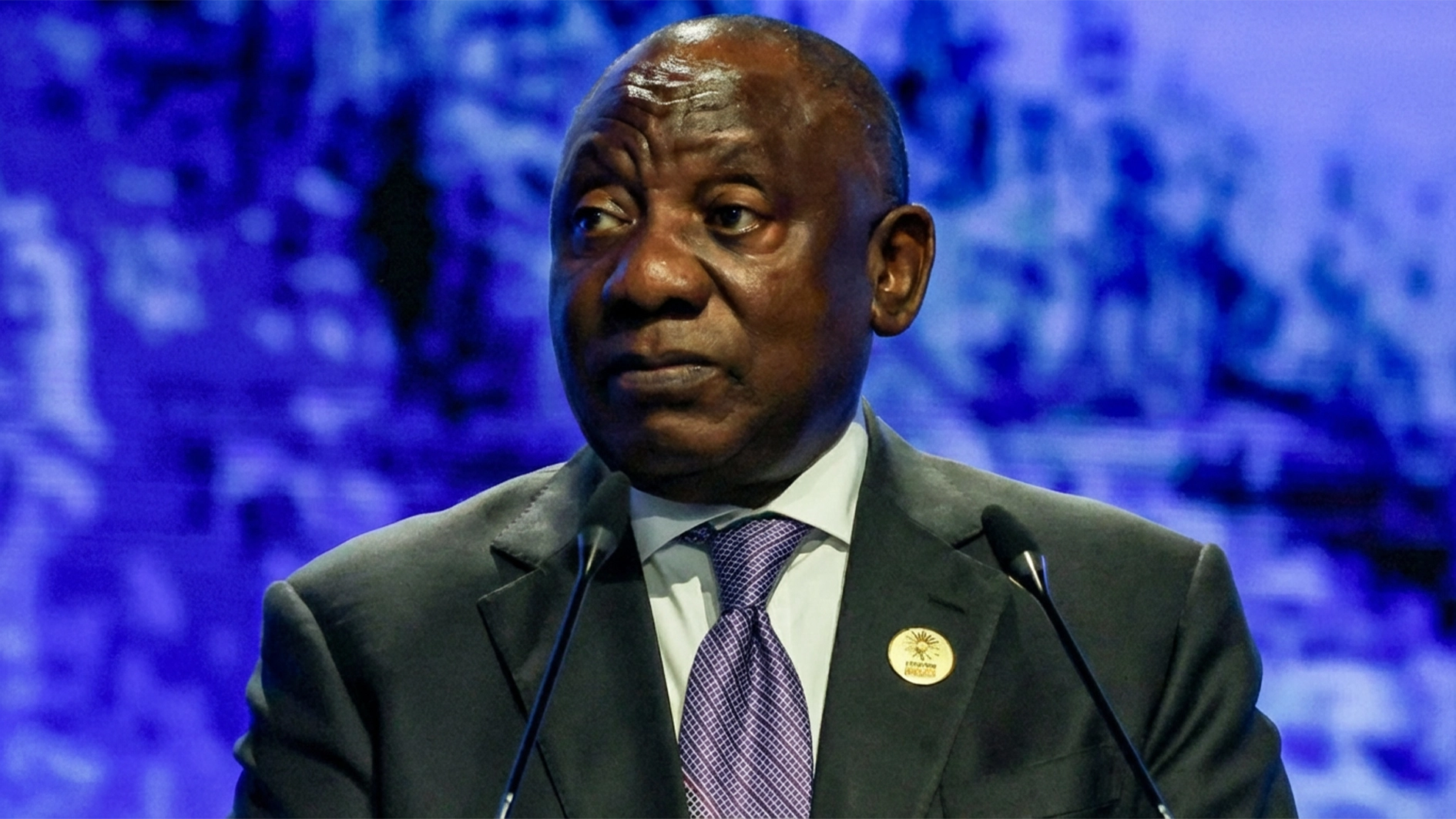
By Festus Ogwuche
Nigeria’s decision to suspend official parliamentary engagements with South Africa over continuing attacks on Nigerians has brought an old African wound into sharp contemporary focus. But beneath the diplomatic rupture lies a larger and more uncomfortable question which is whether a state can credibly preach the universality of human rights abroad while struggling to protect the humanity of foreigners at home?
The question acquires particular force because President Cyril Ramaphosa has just told the world at the BRICS summit in New Delhi that international law cannot be applied selectively. Calling for accountability over the suffering of Palestinians, the conflict in Sudan and the war in Iran, he insisted that the same principles of international law must apply to all states and the same protections to all peoples.
It is somewhat difficult to disagree with the South African president on that principle that is well enunciated in global terrains. Indeed, it is precisely because the principle is right that it deserves to be applied without exception.
South Africa’s intervention in the Palestinian question has, from its inception, drawn considerable moral attention. Its historical experience of apartheid gives its voice a particular resonance when it speaks about racial domination, dehumanisation and the denial of human rights and dignity.
Its proceedings against Israel before the International Court of Justice have likewise placed the language of international law, genocide prevention and state responsibility at the core of an intensely contested global debate and none of this should be diminished. The Palestinian people are entitled to protection under international law irrespective of who speaks for them and the suffering of civilians does not become less real because the advocate or provocateur happens to be imperfect.

But that is precisely where the harder question begins when it’s taken to the broad dimension of uniformity and consistency.
What happens when the same state invoking universal principles abroad is confronted by persistent allegations and documented instances of xenophobic violence against fellow Africans within its own borders? What does it mean for the universality of human rights when Nigerians and other African nationals are subjected to intimidation, attacks, destruction of businesses and property, displacement and, in some cases, death?
Immigration control is unquestionably a sovereign function and every state has the right to determine who may enter, reside or work within its territory and to enforce its immigration laws. But sovereignty does not confer a licence for arbitrary abuse of power especially in violations that impinge on and dehumanise populations. An irregular migrant remains a human being and a foreigner remains entitled to protection against violence. No matter the level of defiance, the enforcement of immigration law cannot be outsourced to the mob. Never!
This distinction is fundamental, as the question is not whether South Africa has a right to regulate migration, but whether the dignity and security of the foreigner are to become negotiable once that person crosses the border.
South Africa’s own constitutional order makes the proposition difficult to evade or circumvent. Take a look for instance at its Bill of Rights which is expressly framed as protecting the rights of “all people”. It guarantees equality, human dignity, life and freedom from violence. The constitutional commitment is therefore not constructed around the convenient distinction between citizens whose humanity must be protected and foreigners whose humanity may be tolerated and perhaps abused.
President Ramaphosa himself has, on previous occasions, condemned xenophobia and warned against taking immigration enforcement into the streets. That is very important. The contradiction, therefore, is not necessarily one of presidential rhetoric, but of a wider distance that can arise between a state’s powerful international language of universal human rights and the lived experience of vulnerable foreigners within its jurisdiction, and this matters alot.
A state cannot reasonably demand or expect that the world judge violations elsewhere by the highest standards of humanity while treating violations within its own reach as a secondary inconvenience. The credibility of universalism depends upon its formal global outlook, uniformity and consistency.
This is not an argument that South Africa’s domestic difficulties somehow extinguish the Palestinian cause or invalidate its proceedings before the International Court of Justice because they do not. The Court has already recognised the legal standing of a State Party to the Genocide Convention to invoke the responsibility of another State Party in circumstances contemplated by that Convention.
But it must be rightly understood that legal standing and moral authority are not on a single conceptual plane. Jurisdiction is a question of law; credibility is a question of normative consistency. A state may possess the legal right to invoke an international obligation while simultaneously inviting legitimate scrutiny of whether the values it invokes are reflected in its own internal conduct.
Here, the old equitable maxim that he who comes to equity must come with clean hands acquires renewed significance. Its application in international adjudication is neither mechanical nor a simple jurisdictional bar. But its deeper moral intuition remains powerful that one who invokes justice cannot demand that the juridical principles of balance, fairness and objectivity operate only outwardly and applicable to others and not him.
This is especially compelling in the African context where victims of xenophobia in South Africa are not some distant and unfamiliar population, but Africans. The continent that poured huge resources into the South African struggle against apartheid and whose political liberation South Africa helped to inspire is now watching one of its leading states grapple with hostility towards fellow Africans seeking refuge, opportunity, residence or livelihood within its borders.
The profound lesson of apartheid ought to have been that no human being should be reduced to an identity that makes his or her dignity conditional. It should have produced an uncompromising ethic of human equality, not a morality whose intensity changes according to the nationality of the victim.
And that is why Ramaphosa’s words at BRICS deserve to be turned back, respectfully but firmly, upon South Africa itself.
If according to the South African president international law cannot be applied selectively, then human dignity cannot be selective either as that definitely poses some dimensions of hypocrisy.
If South Africa demands that the international community judge Israel by universal standards, those same universal standards must remain available to judge South Africa. If Palestinian civilians deserve protection because they are human beings, African migrants deserve the same protection for precisely the same reason even on higher pedestals of kinship and reciprocity.
The issue, therefore, is larger than South Africa. It touches a troubling weakness in the contemporary human-rights project of the proclivity of states, institutions and political movements to discover universal principles most passionately when those principles serve a cause they favour. We have seen from global experience that universalism becomes fragile when it is reduced to political convenience or rhetoric vocabulary.
The real test of a state’s commitment to human rights is not merely how passionately it condemns violations committed elsewhere but how faithfully it protects the dignity of the vulnerable within its own reach. We have also seen that while historical experience or suffering does not confer permanent moral exemption of this moral requirement, political virtue in one arena also does not cancel responsibility in another.
The Palestinian and the African migrant do not need ambivalent or competing moralities.
If human rights are universal, the humanity we prepared to defend should not be subject to differentiations on undefined scales beyond the dictates or essential attributes of humanity?
That is the question South Africa must answer not only before the international community, but before the moral history from which it draws so much of its season and authority. This is so because human dignity does not change at the border.
Once that principle is abandoned, universal human rights cease to be universal. They become, (as Ramaphosa rightly puts it), instruments of selective conscience.
Dr Ogwuche is the President of the Campaign for Social Justice and Constitutional Democracy in Africa, he is based in Port Harcourt and can be reached via: [email protected]

