 Follow Us on Google News


 Follow Us on Google Discover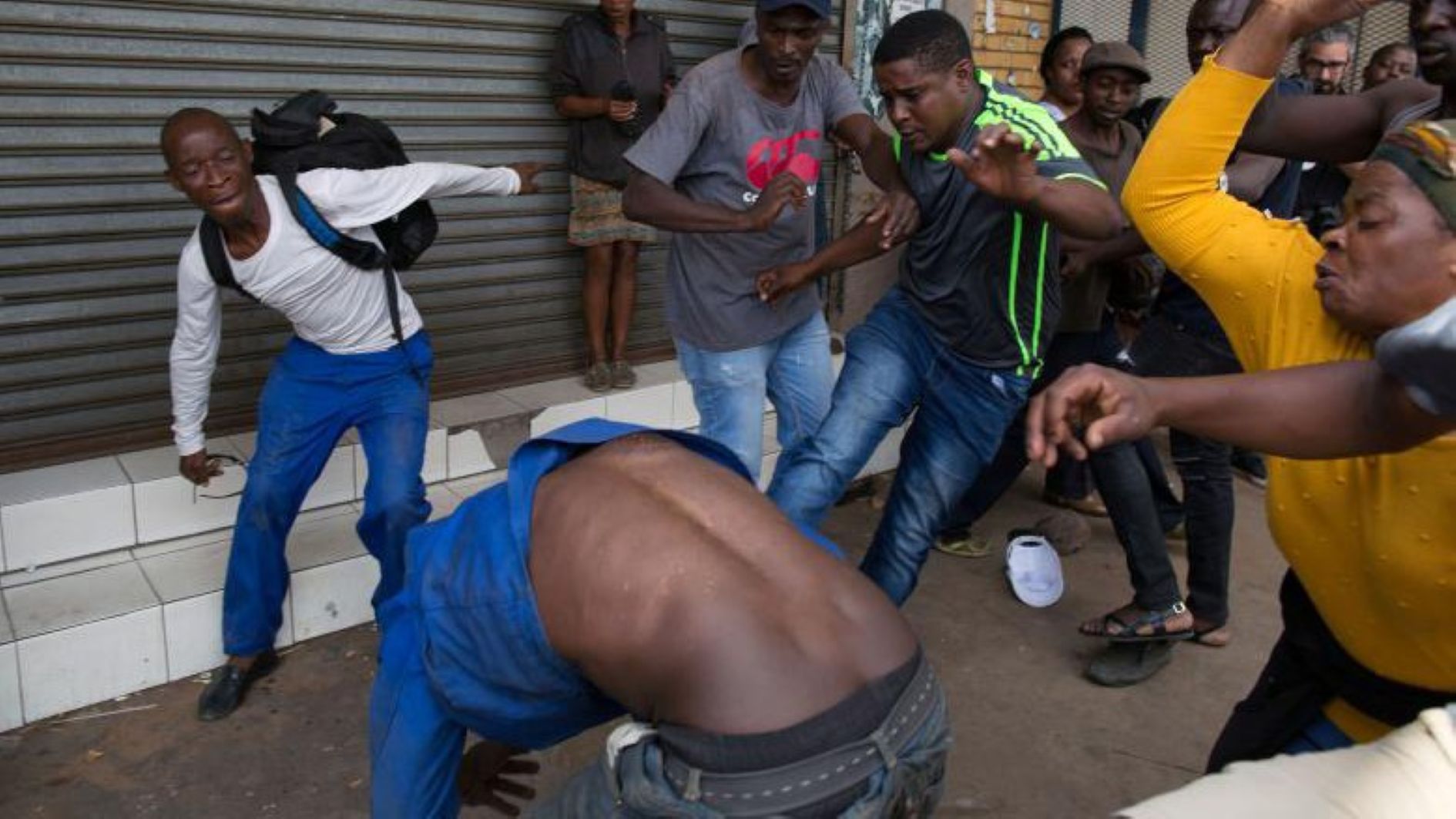
By Rasheed Ojikutu
The persistence of xenophobic violence in post-apartheid South Africa raises painful questions about whether the ideals fought for during liberation have been fully realized. While we heap blames on the likes of Daniel Francois Malan, the President (1948-1954) who justified and intensified the policy of segregation between black and white in South Africa, the National Party and its leadership such as John Vorster, P.W Botha and F.W de Klerk for rendering Black South Africans politically marginalized in their own country.
Can we honestly confirm that man’s inhumanity to man has stopped in that country? History often judges harshly those who fail to appreciate the sacrifices made on their behalf. As the news of xenophobic attack on other African countries resonates and vibrates through the continent, the situation recalls an African folktale in which a monkey rescues a starving lion from a ditch, only for the lion to immediately turn against its rescuer.
Many Africans now feel similarly betrayed by recurring xenophobic violence in South Africa. This is the situation Nigeria and many other African countries have found themselves in South Africa but the aggressors in this case should understand that the lion was returned to the ditch through the wisdom of the tortoise.
Between 1994 and 2018, there were 529 xenophobic incidents recorded with 309 deaths ,901 assaults. Over 2,193 shops looted and more than 100,000 displaced persons. These damning statistics have continued to multiply. Most of the attacks are directed against African migrants in the country, particularly Zimbabweans, Somalians and Nigerians. Apart from rhetoric, South African government and political leadership have done very little to stem the tide of the wanton destruction unleashed on our people.
Affected countries and families of those at the receiving end, have expressed disappointment that a country whose liberation from apartheid received massive support from other African states now witnesses violent attacks against the same fingers that fed them during their time of need. Nigeria particularly, played one of the most significant roles in the anti-apartheid struggle through diplomatic pressure, financial sacrifices, educational support, and moral leadership. The irony of the attacks against Africans in democratic South Africa therefore raises difficult questions about institutional and historical memory with the suspicion of underlying political manipulation.

In the apartheid era, Black South Africans were deprived of political rights, freedom of movement, quality education, and economic opportunities. The obnoxious system classified South Africans according to race and enforced segregation in every aspect of life. Black South Africans were forced into “homelands,” denied voting rights, and subjected to harsh security laws. Leaders such as Nelson Mandela, Oliver Tambo, Walter Sisulu, Govan Mbeki, and Desmond Tutu became symbols of resistance. It was during this dark period in the life of that country that Nigeria emerged as one of the strongest defenders of Black liberation in Africa.
While the inhuman treatment lasted, many African countries regarded apartheid not merely as a South African issue but as an attack on African dignity and identity. Nigeria deliberately instituted anti-apartheid diplomacy as a major component of her foreign policy and dealt a frontal attack on the apartheid regime in that country.
From the 1960s through the 1990s, Nigeria devoted enormous human and material resources to the liberation of Southern Africa. Successive Nigerian governments supported liberation movements in Angola, Mozambique, Zimbabwe, Namibia, and South Africa. Nigeria provided money, scholarships, passports, diplomatic support, and accommodation for South African exiles.
The fathers of the young men and women being attacked in South Africa today were made by the Nigerian Military administration of Olusegun Obasanjo to contribute part of their hard-earned monthly salaries into the established Southern African Relief Fund (SARF).
Nigerian workers, including civil servants and employees across various sectors, were encouraged and in many instances compelled through payroll deductions and public campaigns to contribute part of their salaries to support liberation struggles in Southern Africa.
Many Nigerians of that generation, including the author of this article, still remember the slogan “Mandela tax” or anti-apartheid contributions. School children, market women, workers, and students in Nigeria donated money toward the liberation cause.
Nigeria spent millions of dollars supporting anti-apartheid movements. Nigerian diplomats aggressively campaigned for sanctions against the apartheid regime in international organizations such as the United Nations, the Commonwealth, and the Organization of African Unity (OAU).
Nigeria flung her doors open its to South African exiles with several leaders and activists of the ANC accommodated, and supported by our government and other local institutions.Oliver Tambo, Tambo Mbeki, Alfred Nzo, Joe Slovo, and many members of the ANC and their Youth League were offered travel assistance, financial support, and opportunities for political mobilization. In the 1970s and 1980s, Lagos became an important center for anti-apartheid solidarity. Conferences, rallies, and fundraising campaigns were organized regularly. Nigerian universities, trade unions, journalists, and musicians participated actively in these campaigns. Nigerian artists such as Sunny Okosun released songs condemning apartheid, while writers such as Wole Soyinka spoke strongly against white supremacy.
Many young South African students (the fathers of those on the streets of South Africa who are unleashing violence on the children of those who fed and cloth them during that ugly period in the life of their country) who fled apartheid received scholarships to study in Nigerian universities and secondary schools. Nigeria offered to those young men and women scholarships that covered tuition, accommodation, feeding, and living expense thereby reflecting Pan-African ideals.
At a time when many countries were unwilling to confront the apartheid regime openly, Nigeria invested heavily in the intellectual development of South African blacks.
Nigeria consistently boycotted international engagements involving South Africa, thereby using sports, diplomacy, and culture as powerful tools for isolating the racist regime. A good example was the boycott of the 1976 Montreal Olympic Games.
Nigeria also supported the 1977 Gleneagles Agreement within the Commonwealth, which discouraged sporting contact with South Africa. Nigerian diplomacy helped push for stronger sanctions and international isolation of the apartheid regime.
Beyond sports, Nigeria cut economic and diplomatic ties with companies and institutions linked to apartheid. Nigerian passports reportedly carried warnings against travel to apartheid South Africa. Cultural exchanges with the apartheid regime were rejected.
The same people to whom so much was sacrificed are today the enemy of their benefactors by resorting to xenophobic attack on their African brothers. Many South Africans themselves condemned the violence and defended African unity. Religious organizations, civil society groups, and student bodies organised campaigns against xenophobia and called for peaceful coexistence.
One can exonerate the generation on the streets because they did not witness the brutality of apartheid directly. Hence, they cannot appreciate the extent of international solidarity that contributed to South Africa’s liberation. This disconnect between the past and the present is what is at the moment creating bitterness among some Africans who feel betrayed by xenophobic violence. The South African leadership rather than standing akimbo while their children immolate the friends of South Africa should mobilize the youths for historical education, youth engagement, and continental dialogue because we should not forget that Africa’s future depends on cooperation rather than division. The sacrifices made during the anti-apartheid struggle should serve as a reminder that African liberation was achieved collectively. Remembering this shared history remains essential for preserving peace, dignity, and unity across the continent.
Let it be very clear to all South Africans that the land of Nigeria is big enough to take back our children in Diaspora but that there is always a payback for those who injure our psyche. When in November 1969, the government of Kofi Abrefa Busia in Ghana passed the Aliens Compliance Order (1969) and consequently ejected thousands of Nigerians from Ghana, that country did not realize that a payback time will come. Today, we have a bag in our country called “Ghana Must Go”. The phrase which is of daily usage in Nigeria is linked to the mass expulsion of Ghana migrants from Nigeria in the early 1980. History reminds us that actions between neighboring African societies often leave long memories and enduring consequences.
South African leaders must act decisively before resentment deepens across the continent.
Africa’s future depends not on division or hostility, but on the preservation of the solidarity that sustained the anti-apartheid struggle. The sacrifices made by many African nations, particularly Nigeria, should remain a permanent reminder that the liberation of South Africa was a collective African achievement.
• Rasheed Ojikutu is Professor of Statistics (rtd), University of Lagos.

