 Follow Us on Google News


 Follow Us on Google Discover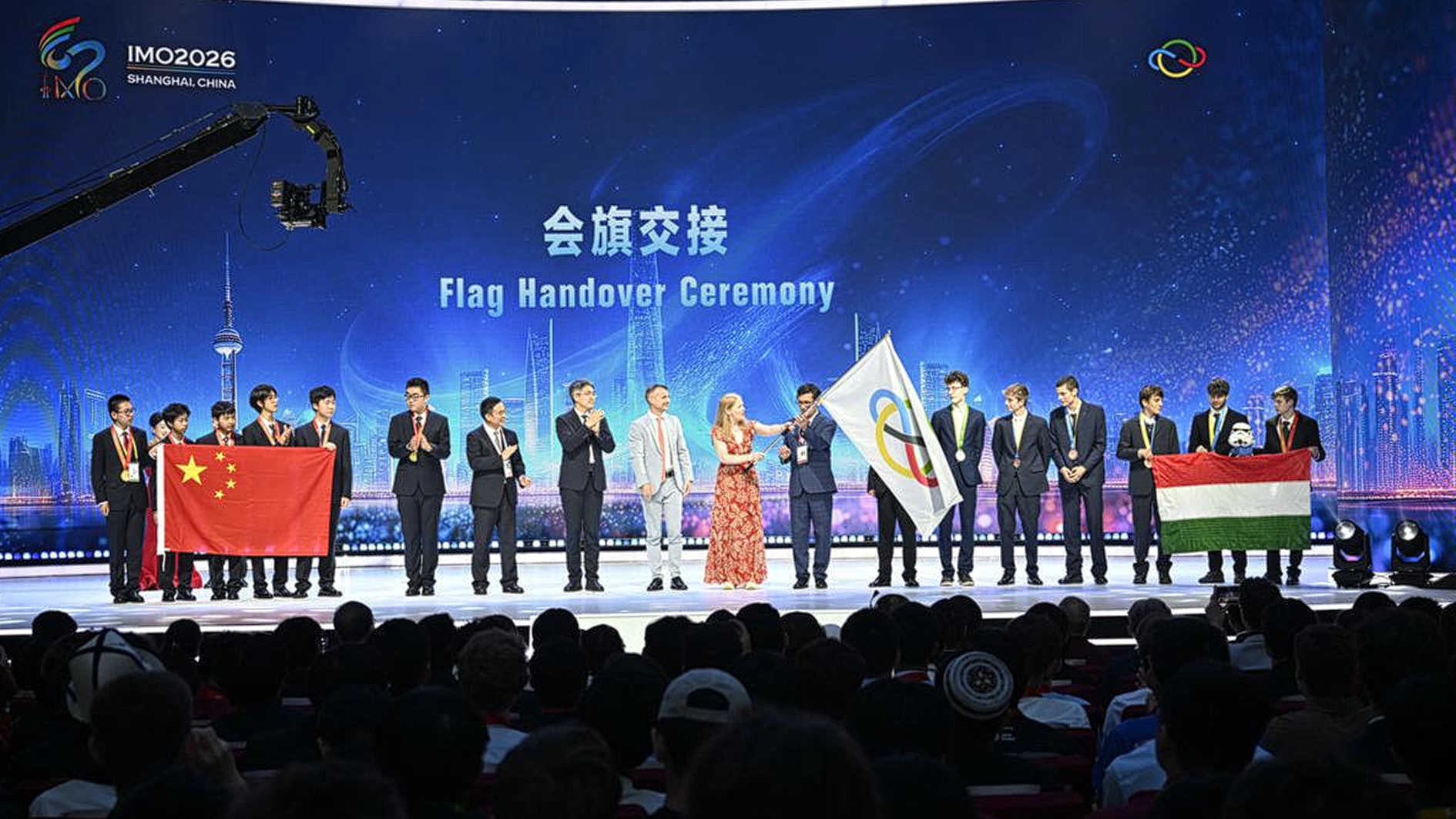
Nigeria’s failure to participate in the recent Shanghai Olympiad for the fourth consecutive year highlights a troubling gap between the country’s stated ambition to lead in Science, Technology, Engineering and Mathematics (STEM) innovation, and its actual commitment to supporting its most brilliant young minds, OWEDE AGBAJILEKE reports.
Nigeria’s absence from the recently concluded 67th International Mathematical Olympiad (IMO) in Shanghai, China, has once again raised questions about the country’s commitment to nurturing academically gifted students.
The global competition, held from July 10 to 21, brought together some of the world’s brightest secondary school students to compete in advanced mathematics.
While more than 100 countries were represented, Nigeria was conspicuously missing, marking the fourth time the country has failed to participate in the prestigious event.
The repeated absence is particularly striking because it comes at a period when the Federal Government is championing STEM education as a pathway to economic growth and technological advancement.
Policymakers have repeatedly emphasised the need to prepare young Nigerians for careers in artificial intelligence (AI), robotics, data science and innovation. Yet, participation in global academic competitions, which serve as important indicators of a country’s commitment to excellence in these fields, remains inconsistent.

Established in 1959, the IMO has grown into the world’s premier mathematics competition for pre-university students, with each participating country permitted to field a team of up to six contestants who compete individually for gold, silver and bronze medals.
Findings by The Guardian showed that prolonged underfunding by the Federal Government has prevented Nigeria from mounting a full challenge for medals at the international contest.
Investigations also revealed that the situation stems from the Federal Ministry of Education’s inability to provide funding for the country’s participation through the National Mathematical Centre (NMC) over the past four years.
Although the exact amount required for Nigeria’s participation in the 2026 International Mathematical Olympiad has not been publicly disclosed by the NMC or the Federal Ministry of Education, experts estimated that the country would require between N25 million and N50 million to send a standard delegation to Shanghai.
The estimate covers international travel and pre-departure expenses for the six-member student team and accompanying officials, including airfare, visa processing, travel insurance, training camp, uniforms and other logistics.
Under the IMO regulations, host countries provide accommodation, meals, and local transportation for official contestants and team leaders throughout the competition, while participating countries are primarily responsible for funding international travel and preparatory expenses before the delegation arrives at the competition venue.
Education stakeholders argued that compared with the long-term benefits of exposing exceptionally gifted students to one of the world’s most prestigious academic competitions, the financial commitment required is relatively modest.
They noted that participation in the International Mathematical Olympiad is not merely about competing for medals, but about investing in a pipeline of future scientists, engineers, researchers, innovators and technology leaders.
The competition provides students with exposure to advanced problem-solving techniques, international academic networks and intellectual experiences that can shape their educational and professional trajectories for decades.
According to experts, countries that consistently support participation in global Olympiads often regard such expenditures as strategic investments in human capital rather than routine education spending.
Many former Olympiad contestants have gone on to secure scholarships at leading universities, contribute to groundbreaking research and establish successful careers in fields that drive economic growth and technological advancement.
For developing countries seeking to strengthen their knowledge economies, the returns from nurturing exceptional talent often outweigh the initial costs of training and international participation.
Stakeholders further argued that the resources required to identify, train and sponsor a national team are relatively insignificant when compared with the billions of naira spent annually on education and other public programmes.
Furthermore, they maintained that a sustained commitment to international academic competitions would not only enhance Nigeria’s global educational profile but also inspire younger students to pursue excellence in mathematics and the sciences.
In their view, failure to make such investments risks wasting the potential of some of the country’s brightest minds and undermining broader efforts to build a competitive, innovation-driven economy.
Stakeholders also warned that repeated funding lapses risk undermining Nigeria’s efforts to nurture young talents in STEM and diminishing the country’s competitiveness in global academic contests.
The Chief Executive Officer of Educare, Alex Onyia, raised concerns over Nigeria’s status at this year’s global tournament, adding that the country will only attend the competition as an observer nation rather than as a full participant eligible to compete for medals.
Onyia, the Convener of the South-East Mathematics Olympiad, said the development means that while students from more than 100 participating countries will compete for global honours and individual awards, Nigeria’s representatives will be restricted to observing the competition.
Under IMO regulations, observer countries cannot officially enter contestants for medal consideration or individual rankings. Participating countries, on the other hand, field teams of up to six students who sit two examination papers over two days, with medals awarded to roughly half of all contestants in gold, silver and bronze categories.
The Educare chief warned that the situation undermines the hard work of talented Nigerian students who have spent months preparing for the prestigious global mathematics contest.
He described Nigeria’s diminished participation as “a big shame,” lamenting that the country’s brightest young mathematicians have again been denied the opportunity to test their abilities on the world stage.
The setback comes as several African countries, including South Africa, Egypt, Tunisia, Morocco and Kenya, continue to participate actively in the yearly competition, using it to nurture exceptional mathematical talent and strengthen their STEM education systems.
He called for urgent government intervention to ensure that funding challenges do not continue to hinder Nigeria’s participation in future editions of the competition.
Onyia said: “Nigeria has now been delisted from the International Maths Olympiad, whose finals are happening in Shanghai, China, this July. This was because of the Ministry of Education’s inability to fund students for four consecutive years through the National Mathematical Centre. It’s a big shame for Nigeria.”
It was gathered that while Nigeria has historically secured five bronze medals and 16 honourable mentions at the contest between 2006 and 2022, Nigerian students have won higher medals, including gold and silver, at the regional Pan-African Mathematics Olympiad (PAMO).
Confirming the development, the Coordinator of the Mathematical Sciences Education Programme at the National Mathematical Centre, Prof. Steve Oluwaniyi, said that Nigeria’s absence from the 2026 IMO was due to the country’s inability to participate in person in the competition over the past four years due to funding constraints.
Oluwaniyi, who was in charge of Olympiads at the Centre from 2004 to 2016, explained that under the rules of the IMO, countries that fail to participate for three or four consecutive years lose their eligibility as competing nations and must reapply as observer countries before regaining full participation.
In an interview with The Guardian, Oluwaniyi said: “Nigeria first attended the IMO as an observer in 2005 before becoming a full participant in 2006 at the competition in Slovenia. Since then, we have participated yearly, apart from disruptions caused by financial challenges. Over the years, Nigeria has won medals and honourable mentions, but because of the paucity of funds, we have been unable to participate physically in the last four years. We even explored participating online, but that was not permitted under the competition’s rules.”
The professor of Mathematics Education, Measurement, and Evaluation, however, disclosed that the Federal Ministry of Education and the NMC were making efforts to restore Nigeria’s participation in future editions of the competition.
He said: “The funding challenge did not start with the current administration, but we have been engaging the ministry, and they have shown interest and support.”
“The Acting Chief Executive of the National Mathematical Centre, Prof. Benjamin Oyelami, is already in discussions with the Permanent Secretary, the Minister of Education and the Executive Secretary of TETFund to explore possible funding options,” Oluwaniyi added.
When contacted, Ikharo Attah, Special Adviser on Media and Communication to the Minister of Education, Dr Tunji Alausa, referred our correspondent to the National Mathematical Centre (NMC) for comments on the matter.

