 Follow Us on Google News


 Follow Us on Google Discover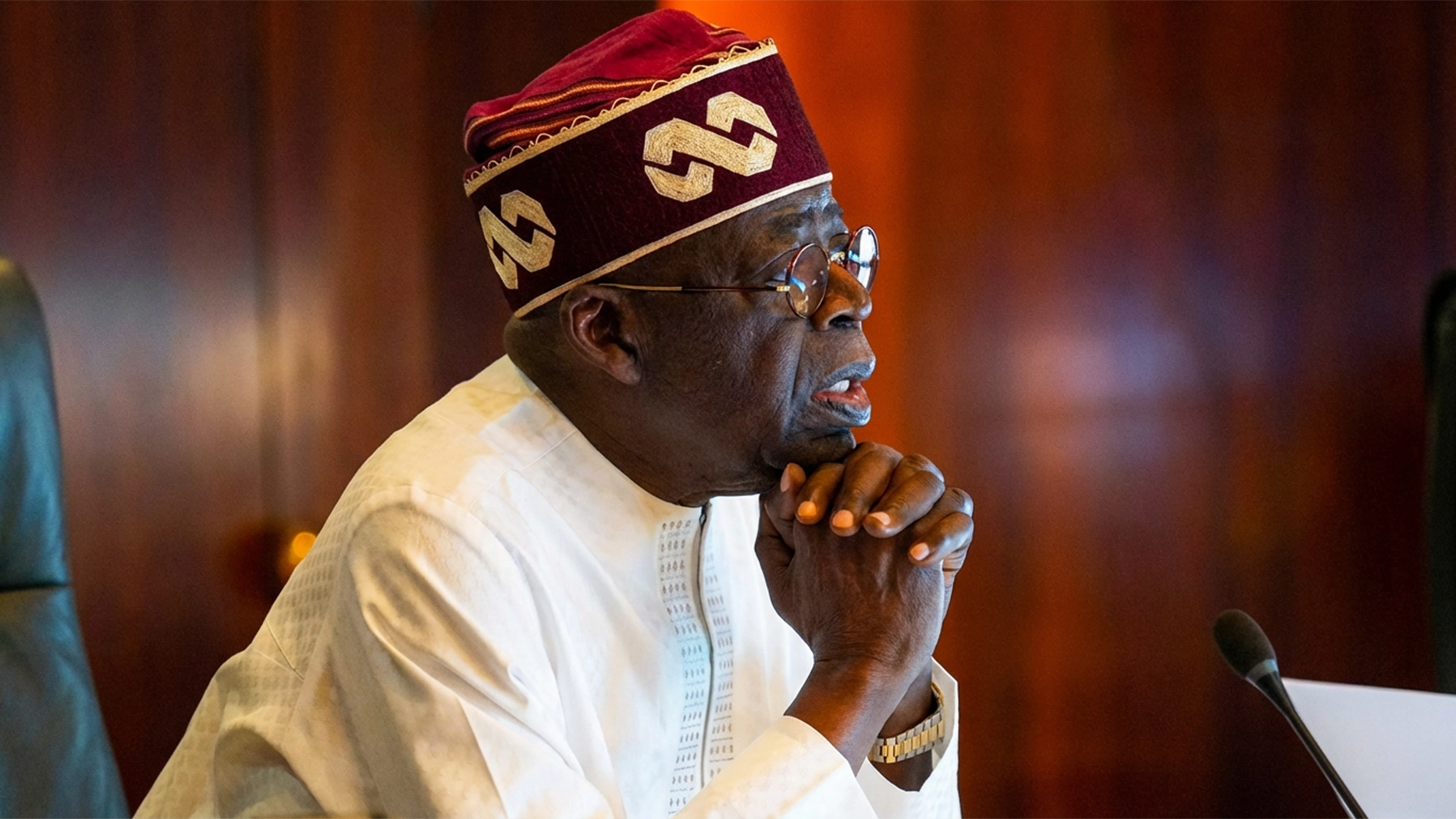
By charging media owners and executives to hold states and local governments accountable with the same tenacity the media holds him accountable, President Bola Tinubu touched on the kernel of the media’s constitutional responsibility as the fourth estate of the realm to hold government accountable to the people. That duty is enshrined in section 22 of the 1999 Constitution, as amended.
Oftentimes, the attention of citizens and accountability agencies focuses more on the Federal Government. That is understandable. The Federal Government is the initiator and driver of political, economic, military, and foreign policies on behalf of the federation, making it the primus inter pares among the three tiers of government. But all three are mandated by the Constitution to provide for the welfare and economic well-being of the Nigerian people, even though the Federal Government takes the lead.
At his recent meeting with media owners and executives, President Tinubu charged them to hold states and local government accountable, the way they hold him accountable.
The problem is not merely the media’s perceived failure to make states and local governments accountable. The media are already doing that, although they can do more or better. States and councils indeed can perform better in terms of governance, considering, among other things, their much-improved revenue from the federation account, and their direct affiliation to the people. Beyond that, the federal government remains the key to the overall development of Nigeria and a reasonable improvement in the welfare of Nigerians. The president must address that fact, given the enormous responsibility and resources allocated to the federal government by the Constitution. Importantly, hardly any meaningful development can take place in a country ravaged by the kind of insecurity Nigeria is presently going through. As the President and Commander in-Chief of the Armed Forces, President Tinubu’s onerous duty is to provide a peaceful and cordial environment for the desired development to flourish.
The Federal Government houses hundreds of commissions and parastatals, in addition to major ministries, departments and agencies, numbering around 263. That makes the Federal Government the number one newsmaker as far as the media is concerned. It is extremely influential and powerful. This is equally the reason the Federal Government takes the largest share of Nigeria’s problems and challenges.
States and local governments have their shares of responsibilities and challenges as well. The Constitution vests in states concurrent powers to make laws for the peace, order and good governance of states. States are to oversee governance in local governments. It is the states’ responsibility to manage public funds in their care for the maximum welfare, freedom and happiness of citizens. States’ social and educational responsibilities include the provision of shelter and educational opportunities for their citizens.

Because of overlapping concurrent responsibilities, both the Federal Government and states function in areas such as education, economic development, infrastructure and utilities, finance, taxation and others, either jointly or separately. Citizens should educate themselves on what each tier is supposed to deliver, and hold them to account.
In revenue allocation, states take 26.72 per cent and local governments 20.6 per cent. The Federal Government takes 52.68. The Federal government partly funds primary education. The reason is to ensure standardisation and equity. The Federal Government also funds primary healthcare in local government areas. The Federal Government is responsible for the construction and maintenance of federal roads that crisscross states, and is partly responsible for the provision of public housing and social amenities located in states.
This fiscal arrangement is often criticised for making states perpetually dependent on federal allocation. More so, a lot of them do not deliver much to justify the allocations. Since the removal of the petrol subsidy by the Federal Government, more money now accrues to states and local governments. Monies shared at the Federation Account Allocation Committee (FAAC) have increased substantially, according to government data. In 2024, states were reported to receive around N5.22 trillion. The three tiers now share around N2 trillion to N3 trillion monthly, since the end of 2025 and into 2026. In July and August, 2025, for instance, FAAC distributed N4.33 trillion and N3.83 trillion, respectively, to the three tiers, according to the figures supplied by the National Bureau of Statistics (NBS).
That’s good money that should reflect in the well-being of citizens in the states and local government areas. But the two tiers do not live up to citizens’ expectations due to misappropriation, mismanagement and misplacement of priorities by Governors.
Institutional weaknesses in states make them susceptible to corruption. Procurement processes are compromised by governors despite the Public Procurement Law of 2007, and other accountability laws that promote transparency and due process in the awarding of contracts. State Assemblies that should oversee public expenditures in states are weak and often in cahoots with governors.
In July 2025, the chairman of the Economic and Financial Crimes Commission (EFCC), Ola Olukoyede, said the commission was investigating 18 governors, and that those found wanting would face the law at the end of their tenure. The long wait is attributable to Section 308 that grants immunity from civil and criminal proceedings to the President, Vice President, Governors and their Deputies. To make public officers at that level accountable, that provision should be amended. The EFCC having to wait until governors leave office sounds like a case of shutting the stable after the horse has bolted. The delay gives room for evidence to be tampered with, and witnesses to change their stories deliberately or due to memory loss.
Another impediment to making governors accountable is the seeming attitude of the federal government to overlook their misdeeds once they join the ruling party. This is not helpful in the fight against corruption.
Certainly, governors and local government operators should be made accountable for the huge allocations they collect at FAAC monthly meetings. The Federal Government should not be the cynosure of all eyes for lapses in governance and infrastructure deficits in states. Citizens hardly notice the difference. The task to hold states and local governments accountable cannot be left for the anti-corruption agencies alone. Citizens must play their part by paying attention and asking questions.
The media have a constitutional responsibility to demand accountability from the three tiers. The media should not be blinded by the overwhelming presence of the Federal Government to the extent of losing sight of states and the local governments, where chunks of resources are located. Civil societies should shine the light on the activities of states and local governments, in addition to continuous monitoring of the Federal Government.
Federalism, in its true sense, will give clarity to issues of accountability and transparency among the federating units. It is hard for states that do not generate revenues of their own to understand the meaning of accountability. States should overcome their laziness and stop being mere cost centres.
It is also in the interest of political parties to ensure that governors implement manifestos that are designed for the well-being and safety of citizens. Parties must borrow a leaf from the welfarist ideologies of defunct political parties in the first and second Republics. States should pay greater attention to agriculture.

