 Follow Us on Google News
 Follow Us on Google Discover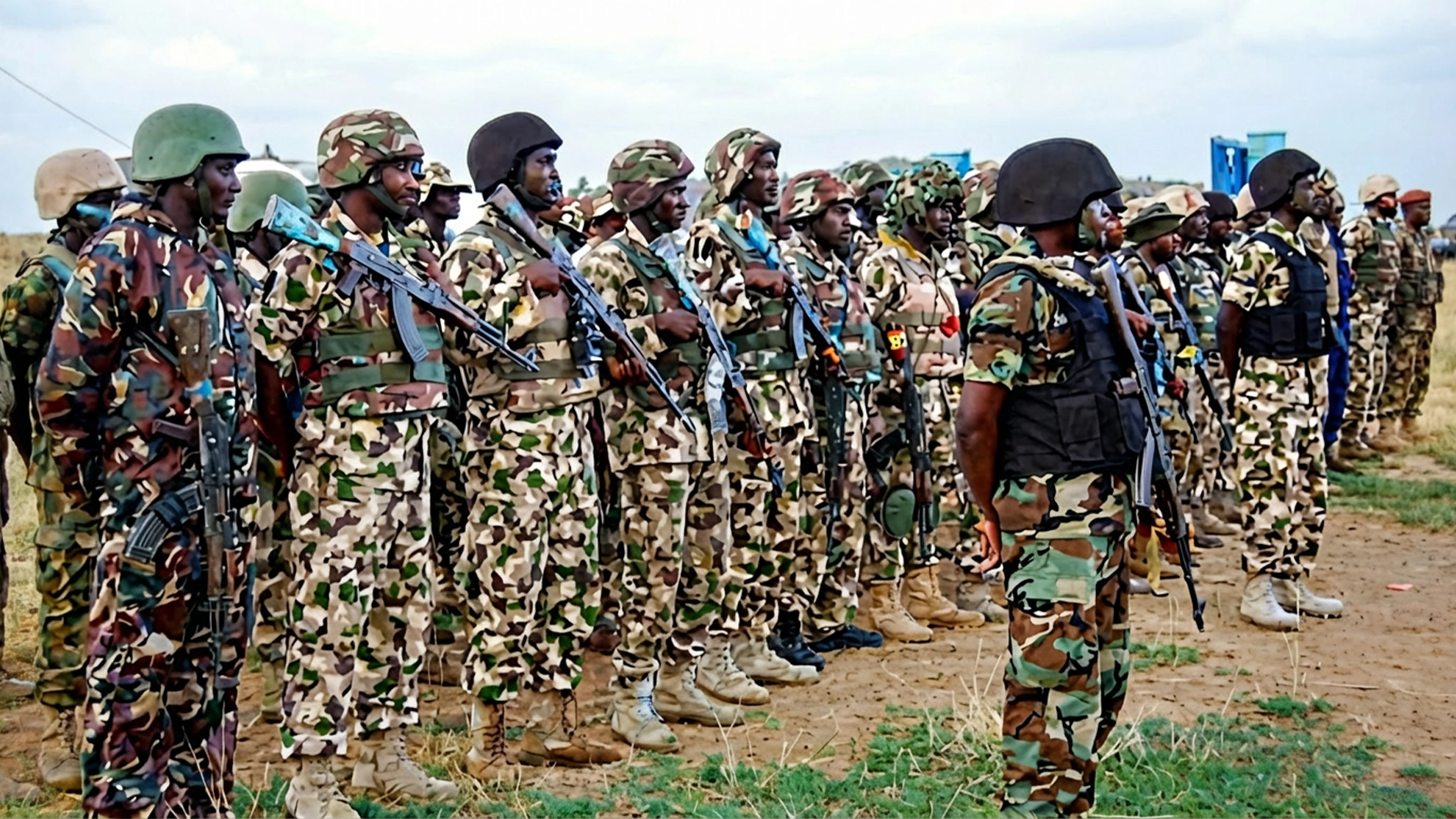
The Federal Government deserves commendation for raising the minimum monthly salary of Nigerian soldiers from N49,000 to N100,000. There could never have been more justification for the old wage amid the current security crisis and the rising cost of living. The increase represents an acknowledgement of the sacrifices members of the armed forces make daily. However, it should be viewed as the beginning of broader welfare reforms. Troops in conflict zones must be able to fight unfettered by poor living conditions, uncertainty about their families’ welfare, or inadequate weaponry. The country’s seriousness about combating insecurity, therefore, must align with its commitment to equipping, supporting and valuing its brave soldiers.
While announcing the new minimum salary, the Minister of Defence, Gen. Christopher Musa (rtd), disclosed in the same breath that the defence budget remains inadequate for the tasks before the military. His words deserve attention. There is no denying that the country indeed faces critical security challenges. In the North-East, Boko Haram and the Islamic State West Africa Province continue to unleash terror. Heavily armed bandits still roam the North-West. Across several states, kidnappers leave trails of anguish. There are violent criminal networks in the North-Central, separatist violence in parts of the South-East, crude oil theft in the Niger Delta, and piracy along maritime corridors.
The increase must be welcomed without pretence that this singular act will resolve the deeper issues affecting combat effectiveness. Military welfare goes well beyond monthly pay. While the increase has corrected a grave imbalance, the welfare initiative must embrace operational allowances, decent accommodation, quality feeding, healthcare, insurance, education for dependants, reliable medical evacuation, and rehabilitation for wounded personnel. It must also encompass sustained support for the families of the fallen.
Military history has proven time and again that, beyond weapons, battles are also won by high morale. Whenever soldiers believe that their country values them, they fight with confidence and discipline. On the other hand, troops who feel neglected suffer declining morale, which, in turn, affects operational performance. This is why persistent reports concerning poor welfare deserve serious attention. Despite repeated denials by the government, complaints about welfare have continued to surface, suggesting that weaknesses might exist within military administration. Delays, bureaucratic bottlenecks or financial leakages undermine confidence in the institution and diminish the sense of national appreciation on which military service depends, at least in part.
The welfare issue has manifest in videos and testimonies circulate on social media, purporting to show soldiers complaining about difficult conditions at operational bases. The military has dismissed some of these materials. Also, social media often proves to be an unreliable arbiter when the truth is in demand. There is no smoke without fire, the good old proverb insists. When such narratives persist, they should encourage transparency rather than defensive dismissal. The courage of the Nigerian soldier has rarely been in doubt. However, courage becomes insufficient when troops are sent into battle with weapons inferior to those of the adversary.
Rather than sheer numbers, technology has increasingly shaped modern warfare. Soldiers no longer have to face enemy fire when reconnaissance can be handled by drones. With the growing sophistication of Nigeria’s security challenges, there is a corresponding need for sophisticated responses in the form of satellite imagery, electronic surveillance, artificial intelligence-assisted analysis, secure digital communications and precision-guided systems. These technologies reduce unnecessary risks and should be considered an investment in personnel welfare.

There must be sustained efforts to ensure defence resources reach their intended destination. To do otherwise is to court the consequential loss of soldiers’ lives. Substantial sums have, over the years, been allocated to defence. Whether these allocations have translated into better conditions for troops is a legitimate question that the authorities should be able to answer with complete transparency. Better welfare may not eliminate betrayal, but it reduces the vulnerability of poorly treated personnel to corrupt inducement, especially amid allegations of internal sabotage and intelligence leaks that have been linked to successful ambushes against troops.
A healthy military institution is one in which every rank feels respected, protected and fairly rewarded according to responsibility and sacrifice. The gap between senior officers and the rank-and-file should never become so wide that junior personnel, who undertake most frontline operations, perceive themselves as carrying disproportionate risks without commensurate support. Furthermore, welfare should not end with serving personnel. Their families should never face prolonged bureaucratic struggles after losing loved ones in service to the nation. Their children should never lack meaningful educational support. These and other guarantees reinforce confidence among troops that, should the worst happen, their families will not be abandoned.
Societies all over the world reveal their values through the treatment of those entrusted with their defence. It is, therefore, time the country reviewed its priorities. Nigerian soldiers operate on dangerous frontlines so that millions of ordinary citizens may pursue their lives in relative peace. The government has taken a welcome first step by doubling their minimum monthly salary; it should follow up the gesture with an overhaul of military welfare, operational capability and accountability.
It is worthwhile to borrow from a piece of history. When, in 2024, the rebel coalition led by Hayat Tahrir al-Sham (HTS) began to march towards Damascus, the Syrian Arab Army that had propped up the 53-year-old dictatorship of Bashar al-Assad could muster little resistance. Among other factors, military salaries had become nearly worthless, leaving soldiers unable to feed their families. Lacking a powerful ideological or financial incentive to risk their lives for the country and its leadership, the exhausted and underpaid conscripts chose survival.
Seeking to overcome Nigeria’s formidable security challenges, while neglecting those standing between the nation and lawlessness, stretches hope to unrealistic limits. A stronger military begins with better-treated soldiers. Therefore, ensuring the welfare of those who risk everything so that the republic may endure is a task that must be accorded top priority.

