
 Get Guardian on Google
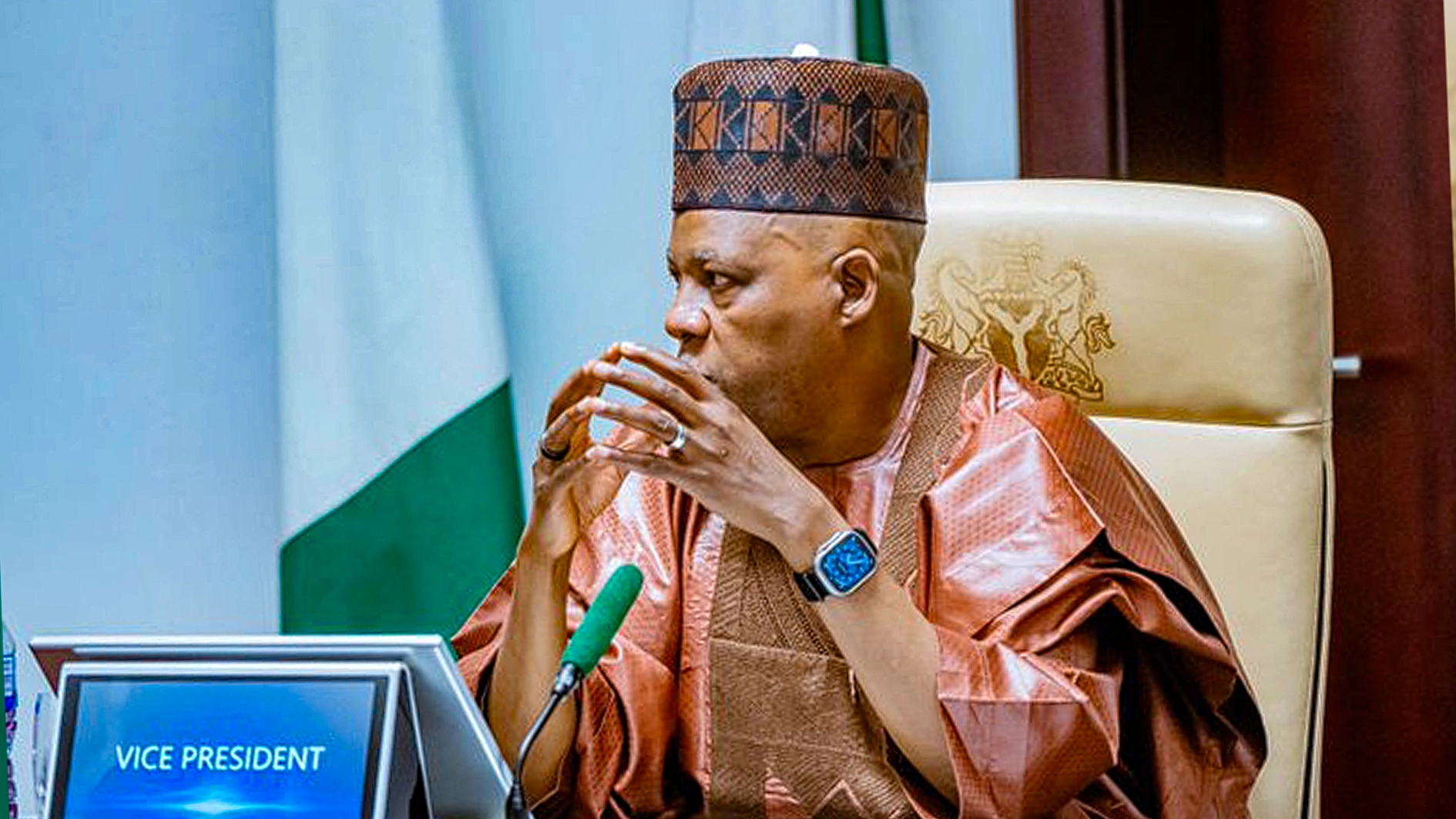
Days before the third Russia–Africa Summit, Nigeria’s ambassador in Moscow, Joseph Iji, told Russian media that Vice President Kashim Shettima would lead Nigeria’s delegation. The Vice President had attended the last edition in St Petersburg in 2023. But when the 2026 summit opened on 28 October, the Nigerian team was led by Sola Enikanolaiye, Minister of State for Foreign Affairs.
Russia is also the only one of the founding BRIC countries that President Tinubu has not visited since he took office in May 2023. He has been to Brazil three times, once on a state visit. He went to India for the 2023 G20 at the invitation of Prime Minister Narendra Modi, and welcomed Modi to Abuja on a historic state visit in November 2024. In 2024, he paid a state visit to China, alongside the Forum on China-Africa Cooperation (FOCAC). Russia is the odd one out.
It is not yet clear whether these are deliberate moves on Nigeria’s part. What is not in doubt is that Nigeria has had almost four years to count what Russia’s war in Ukraine has cost it, and the bill is not a small one.
In February 2022 there were roughly 8,000 Nigerians in Ukraine, about 5,600 of them students. Many were studying medicine in cities like Sumy and Kharkiv, supported by families who had made real sacrifices to put them there. Overnight, those sacrifices became collateral damage. Nigeria’s federal government would end up evacuating over a thousand people on flights from Poland, Romania and Hungary. Many of them were students who had to start their education again. One final year medical student died barely two weeks after returning home.
Then there is the food bill. Russia and Ukraine were major sources of the world’s wheat, and Russia is one of the biggest fertiliser exporters on the planet. Russia is also a significant supplier of Nigeria’s wheat and fertiliser inputs. When the war disrupted supplies and pushed prices up, Nigeria, like the rest of Africa, felt it in import costs and shelf prices.
Inflation was already a problem in the country, but the war made a bad situation worse. Moscow’s exit from the Black Sea Grain Initiative in July 2023 didn’t help. At the St Petersburg summit later that month, African leaders asked Putin to let the grain flow again. The request was ignored.
The cost that should trouble us most is the one in human lives. In August, Ukrainian authorities said at least 215 Nigerians had signed contracts with the Russian army, and that about 25 had been killed or gone missing. Nigerian journalists have independently investigated and reported some of these stories, and the pattern is depressingly familiar. It often starts with a job advert on WhatsApp or Facebook, promising work that looks lucrative by Nigerian standards. Those who accept travel to Russia, sign contracts in a language they don’t speak, and end up on the front line. In a February 2026 warning to potential recruits, Nigeria’s foreign ministry described victims as “being misled and coerced into signing military service contracts.”
Hamzat Kolawole signed his contract on 29 August 2025. Mbah Udoka signed his a month later. According to Ukrainian intelligence, both were dead in Luhansk by late November.
Russia’s ambassador to Nigeria says there is no government programme to recruit Nigerians, and that anyone doing it is acting outside the law. But there are no visible efforts to crack down on these recruiters. Nor is there any sign of Russian help for families trying to bring their sons’ bodies home. It is not enough to disown a practice while benefiting from it. And Nigeria is not the only country whose citizens are being preyed upon in this way.
It is therefore easy to see why Nigeria would be wary. Russia has made life harder for us in more ways than one. Yet it remains an important trading and defence partner. At the 2026 summit, Nigeria signed a customs cooperation agreement with Russia, which shows we are still interested in mutually beneficial relations. Last week the Russian Navy training ship Perekop visited Lagos, and carried out joint exercises with the Nigerian Navy. In the spirit of our historic non-alignment, Abuja should, and will, do business with anyone who offers fair terms.
But being non-aligned does not mean ignoring hard realities. Foreign policy should start with what happens to your own people. By that measure, Russia has given Nigerians little reason for trust or warmth. Our young people have endured great suffering, our food is more expensive, and our young men are being lured to their deaths.
Nigeria should be more vocal about this, and press Russia to do more to ease the pain its war in Ukraine has caused. Until then, we should remain wary. The agreements can continue, but the kind of bilateral attention the other BRIC countries are getting can wait until Russia shows that it sees us as more than collateral damage.
By Babajide Fadoju