 Follow Us on Google News
 Follow Us on Google Discover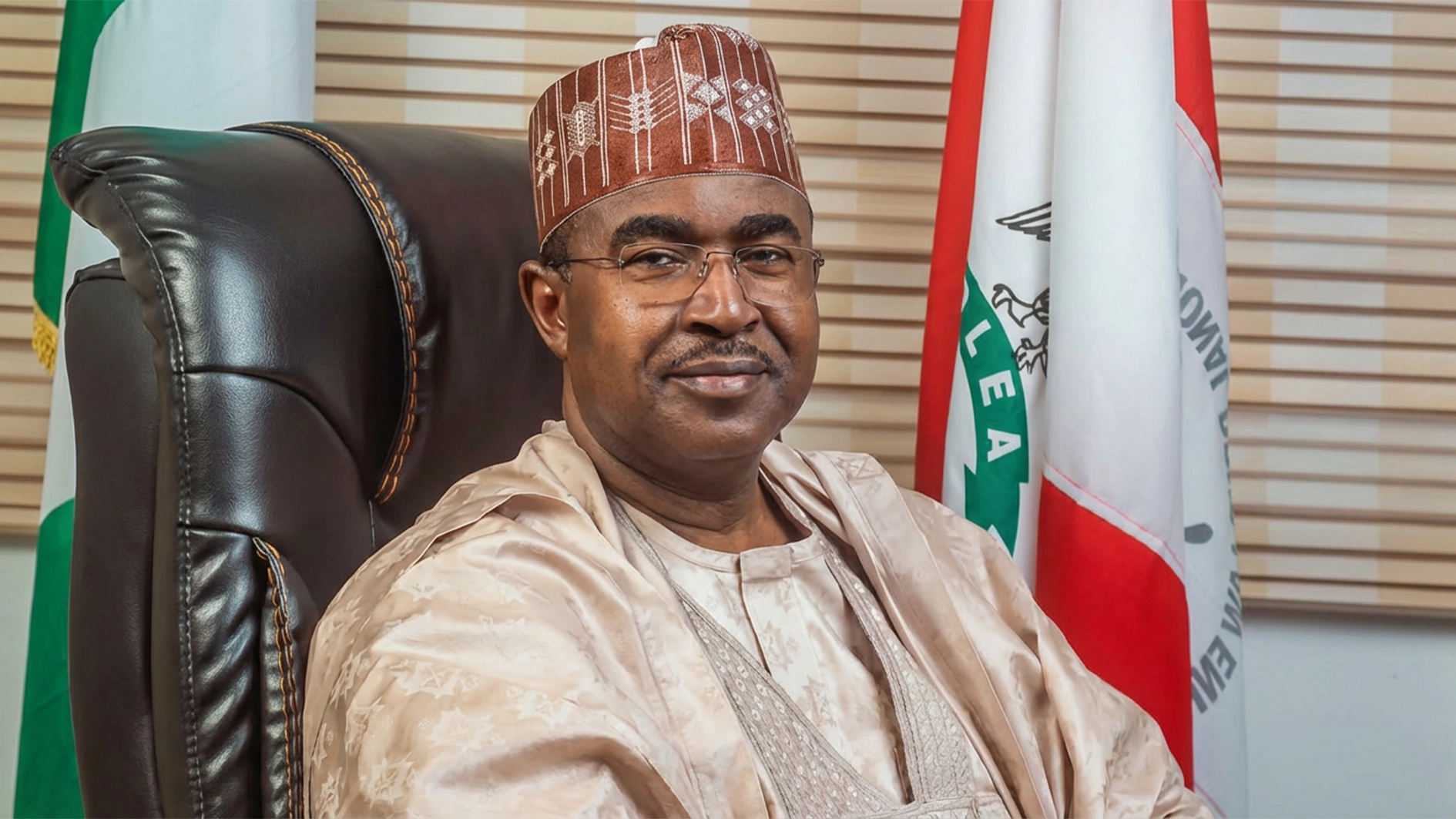
By Emmanuel Nnadozie Onwubiko
Sir: When the custodians of tradition; the kings, obis, emirs, Obas who still command unquestioned moral authority in towns and villages across Nigeria, begin to use their offices to denounce drug abuse and hand over suspects to law enforcement, something fundamental shifts in the fight against narcotics.
Under Brigadier-General Buba Marwa’s stewardship of the National Drug Law Enforcement Agency (NDLEA), that shift is happening. What had too often been framed as a problem for police and hospitals is being recast as a communal crisis that requires chiefs, religious leaders, parents and market women to act in concert. The results are not merely symbolic: they are practical, measurable, and (crucially) scalable.
Marwa’s approach has been deliberate. He has moved the NDLEA beyond raids and seizures, folding prevention, rehabilitation and community-level intelligence into an integrated campaign that treats drug control as a whole-of-society mission. In the last 18 months, the agency reported seizure figures that underline the scale of the challenge and the urgency of public buy-in.
The NDLEA said it intercepted as many as 1.3 billion tramadol tablets over a recent 18-month period; a statistics that shocks because it reframes drug abuse as a supply-chain failure that reaches into households across the country. That level of seizure turns the conversation about drugs into one fit for kings and councils, not just courtrooms and clinics.
What makes Marwa’s model noteworthy; and why it ought to be studied and widened, is how quickly he turned ceremonial meetings into durable partnerships. High-profile visits have multiplied: respected monarchs, from the Alaafin of Oyo to numerous local rulers, have publicly met with the NDLEA chair, offering their blessings and institutional networks to grass-roots campaigns.

These are not perfunctory photo-ops. When Marwa asks traditional rulers to mobilise imams, pastors and village elders to identify and refer young people abusing drugs (and when those rulers answer) the NDLEA gains privileged local intelligence it historically did not have. The Alaafin’s pledge of support after a courtesy visit to Marwa last week demonstrated that the traditional council is ready to be an active node in a national early-warning system against illicit substances.
Why this matters is partly cultural and partly tactical. Culturally, in many Nigerian communities the proclamation of a traditional ruler carries moral and practical force. A warning from an oba or emir is more likely to move a parent than a press release from Abuja; it can change the behaviour of young men who still measure themselves against the expectations of their lineage.
Tactically, traditional rulers are embedded in the social geography of their domains. They see who comes and goes, who is withdrawn from communal life, and where suspicious activity concentrates. When properly organised, they can become the NDLEA’s most effective human sensors, tipping off operatives before a trafficking corridor hardens into an entrenched market.
Marwa has not been coy about the change in strategy. He has repeatedly urged a collective response that pairs hard interdiction with soft interventions: Education, counselling, rehabilitation and community policing. At seminars set up by local councils and in speeches across states, he has warned that drug use in Africa is projected to rise sharply, and that Nigeria is already among the worst hit; an alarm designed to move rulers from ceremonial guardianship to active partnership. The man with the boots on the ground and the legal mandate has, crucially, offered an explicit role to the custodians of custom.
There is an operational lesson embedded in these public meetings. Traditional rulers possess three things that modern bureaucracies struggle to replicate: moral authority, persistent local presence, and access to informal dispute-resolution mechanisms. Marwa’s team is learning to convert those assets into practical outputs: community screening for early signs of drug dependency, facilitation of referrals to NDLEA-supported rehabilitation centres, and assistance in prosecutorial follow-through where trafficking networks are discovered.
He has also sought the help of civic guardianship mechanisms: where a chief recommends local vigil, the NDLEA can validate and then support it with counselling and, where necessary, lawful enforcement. This is a pragmatic hybrid of enforcement and reconciliation that reduces recidivism by restoring social ties as part of recovery. Reports from NDLEA engagements show that governors, council chairmen and, importantly, traditional rulers, are being folded into that hybrid model.
The political calculus is also in Marwa’s favour. Traditional rulers’ endorsements blunt populist complaints about selective enforcement and perceived heavy-handedness. When a respected monarch publicly backs an operation or supports a rehabilitation drive, it lowers the political temperature and invites voluntary compliance. The NDLEA’s messaging, therefore, is less “we will punish” and more “we will restore”; and that rhetorical shift helps reduce the stigma that keeps many families from seeking help for addicted relatives. The agency’s pivot toward compassionate rehabilitation is not an abandonment of enforcement; it is an attempt to make interdiction work by shrinking demand as well as supply.
This is not to suggest the strategy is without friction. Traditional authority in Nigeria is a complex mosaic; not every ruler has the bandwidth or the incentives to join a national campaign. Some crowns are tied closely to local politics; others preside over communities where criminal networks have already co-opted parts of the traditional order. There are risks in relying on feudal or patronage systems to police crime: if not properly guaranteed by law and oversight, nobles can themselves be compromised, and ancient titles can be used to shield family members from scrutiny. The NDLEA must therefore design partnerships that are transparent and accountable; public endorsements must be accompanied by formal memoranda of understanding, clear referral protocols, and mechanisms for independent monitoring.
Legal and policy levers must accompany community mobilisation. The NDLEA should work with the National Assembly and state Houses of Assembly to embed protections for community informants and to support diversion programmes that send low-level users into rehabilitation rather than prisons.
Emmanuel Nnadozie Onwubiko is the founder of Human Rights Writers Association of Nigeria and was National Commissioner of the National Human Rights Commission of Nigeria (NHRC).

