 Follow Us on Google News
 Follow Us on Google Discover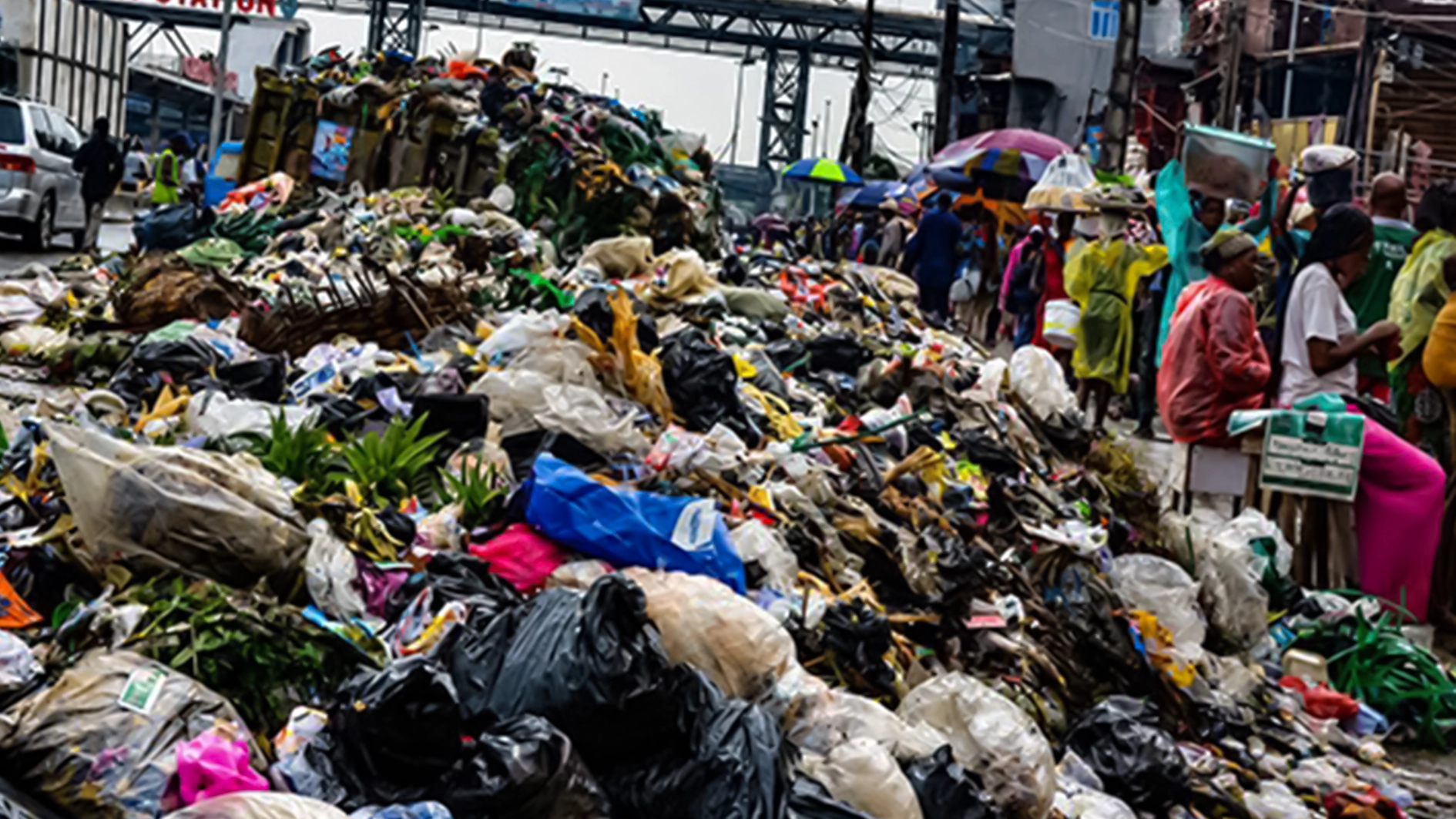
By Kehinde, Paul Owoseni
Sir: On a daily basis in Ifako Ijaiye area of Lagos state, households sit with waste piling up in compounds and along verandas, waiting for disposal. Refuses are stacked up by the road, long before the garbage truck comes to clear it. Sadly, it is becoming a familiar scene in Lagos, a city that now produce more than 14,000 tons of solid waste a day; more than double what it used to generate few years ago.
The gap between what people know they should do with their solid wastes and what circumstances allow them to actually do is why this study was undertaken in the Ifako-Ijaiye area, one of Lagos’s most densely populated and fastest-growing suburbs.
The study examined the responses of 365 residents to answer a question Lagos state policy makers have been circling for years: are the television enlightenment campaigns urging proper waste disposal actually fostering behavioral changes?
The answer is quite contradictory, drawn from a five-part questionnaire measuring exposure, knowledge, perception, habits and the barriers residents face with solid waste disposal. Residents watch, understand, largely agree with what the television campaigns tell them, and yet, the bins overflow, the trucks come late, people still dispose solid waste anywhere they can find, as well as in the drainage. This comes with consequences for a state whose leading contributor to flood damage is non-biodegradable waste. Nigeria’s National Emergency Management Agency has linked flooding in 2025-2026 to more than 240 deaths nationwide and the displacement of over 144,000 people across 27 states in Nigeria.
Do Lagosians really watch and learn?
The study found that television remains the dominant channel through which residents of the area learn about proper waste disposal ahead of radio, print and other digital platforms. As majority of the residents prefer audio-visual format for personal reasons such as ease of commitment to memory. This exposure appears to have paid off in one important respect: knowledge. Residents demonstrated a strong grasp of the health risks tied to poor solid waste handling, from the breeding grounds refuse heaps create for disease-carrying pests to the dangers of open burning and importance of sorting wastes before disposal.

Lagos’ waste problem has outpaced its waste infrastructure for decades and private collectors and government trucks fails to keep up with the ever-growing volume of solid waste. Currently Lagos generates 14,0000 tons of wastes a day, driven by population increase. Ifako Ijaiye itself has grown to over a million residents.
Households’ wastes are primarily handled by government-appointed private operators, informal collectors such as itinerant buyers, while a meaningful portion still ends up in illegal dumpsites, storm drains, according to World Bank data cited in the research. It is against that backdrop that Lagos State and private brands alike have turned to television as a tool of behavior change.
High behavioral control, poor infrastructure
The residents reported avoiding waste burning and instead rely on waste collectors for pickup this same reliance exposes residents to the system’s biggest weakness: when collectors don’t show up on time, which the study and earlier Lagos-focused research both describe as common, households are left holding waste with nowhere sanctioned to put it. Government policy, by contrast, emerged as a genuinely strong behavioral lever. Residents said Lagos State’s environmental rules and the threat of sanctions shaped their disposal habits.
The bigger picture
The findings reveal a city that has tried its best to get ahead of its waste problem. In late 2022, the household brand OMO ran a month-long, youth-focused plastic-recycling campaign under the banner “Dirt for Good,” broadcast on Lagos television stations. Around the same period, the Lagos State Environmental Protection Agency (LASEPA) took its “Eko Clean Air” campaign to Itedo community in Eti-Osa, pairing public education with a cash-for-trash exchange scheme. The state has distributed an initial 40,000 color-coded bins to households and businesses under its “adopt-a-bin” program, green for general waste, blue for recyclables and in 2024 moved to ban Styrofoam and single-use plastics outrightly till date.
Nigeria’s National Policy on Solid Waste Management, has already flagged many of its structural weaknesses in which the Ifako-Ijaiye data surfaces at street level: patchy enforcement of existing waste laws, outdated waste collection systems, and a public that is not always given the tools to act on what it has been taught.
Recommendations from the study
* The study recommends that waste-disposal programs should be aired more frequently and in local languages.
* Allow opportunities for residents to ask questions and engage with campaign presenters, through social media engagement, call-in segments, community forums.
* Word of mouth also has a role to play. Residents who have absorbed the campaign lessons from television are well placed to pass them on to neighbors and family, extending the campaigns’ reach beyond the screen.
* Waste collectors should show up when they are supposed to.

