 Follow Us on Google News



 Follow Us on Google Discover
By Eric Teniola
Continued from yesterday
Oba Ovonramwen reigned at a precarious time in the history of Benin. He succeeded to an empire that was on its decline, “probably because of attacks by other indigenous powers on the peripheral peoples of his Empire, which led invariably to a shrinkage of his dominions and possibly too of his throne”. As Idugbowa, Oba Ovonramwen had to fight off opposition to his accession to the throne of his father in 1888; even after that he could only consolidate his rule through purges and executions.
Yet Oba Ovonramwen was determined from the beginning to make his reign as purposeful as possible by maintaining court in the tradition of his ancestors which he hoped to preserve. The human sacrifices at which the British protested were part tradition which the Oba could not abandon. He lost his throne and power in the bid to defend that tradition against foreign aggression. One result of the aggression was the looting of vast quantities of Benin’s excellent works of art, now scattered over the world.
In 1914, the monarchy was restored under Oba Ovonramwen’s eldest son, Eweka II, who was succeeded in turn, in 1933, by Akenzua II.
Let us now look at the Jaja, King of Opobo. He was famous for his resistance to the imposition of colonial domination. He was a slave sold into house of Anna Pepple of Bonny and rose to the headship of his master’s “house”. He later established himself as the most dominant figure in the politics of the Delta states when he became King of the newly founded Kingdom of Opobo. Succession to the headship of an Ijaw trading “house” was not based on heredity but on one’s ability to provide for the welfare of the members of the house. Jaja’s accession to the headship around 1869 caused resentment in other members of the Anna Pepple house. This culminated in a civil war from which Jaja emerged the victor.

After the civil war in Bonny, Jaja led his house to the Opobo river where he founded the Kingdom of Opobo. Here his business acumen and capacity found full scope; he soon established plantations and built a port and strategically placed trading settlements on the creeks which not only enabled him to control the supply of palm oil to the European merchants along the coast but also made Opobo one of the richest Delta states.
With the wealth came political influence and military power. Such was the strength of Jaja’s army that during the Ashanti war he committed a contingent of his soldiers to the British effort, for which he was awarded a sword of honour by Queen Victoria in 1875.
In 1870, having consolidated his new settlement, he proclaimed Opobo an independent state consisting of 14 of the 18 houses of Bonny. Three years later the new state was recognised by Britain which in 1884 entered into a “treaty” with Opobo, placing the latter under the protection of the British Crown. However, the proclamation of a British Protectorate over the Oil Rivers in 1885 not only heralded the demise of the independence of the coast city-states but also precipitated a quarrel between Jaja and the British.
Jaja was the only ruler in the Delta area who questioned the new political order by seeking a definition of the word “protectorate” from the British, who replied vaguely that Her Majesty’s Government would only extend to his kingdom her “gracious favour and protection”. He accepted the explanation, believing that Opobo’s new relationship with Britain would not affect its independence. Accordingly, he continued to monopolise the oil trade, forbidding anyone to deal directly with European merchants on the coast while continuing his direct exports to Britain. As a result, Jaja saw the British insistence on “free” trade as interference and a violation of the 1884 treaty.
The British Consul in Oil Rivers, Harry Johnston, was opposed to Jaja’s continued independence. In 1887, Johnston abrogated his power to impose customs duties on oil exports from the state. Jaja sent a delegation to London to protest to the Secretary of State for the Colonies. Meanwhile Consul Johnston had written to the British Government requesting permission to expel Jaja who had requested successive threats to compel him to meet British demands. The King was “invited” on board a British gunboat, HMS Goshwk, to meet Consul Johnston. Jaja was reassured by Johnston on the eve of their meeting that “I hereby assure you that whatever you accept or reject my proposals tomorrow no restraint whatever will be put on you—-you will be free to go as soon as you have heard the message of the government”.
But once on board, Jaja was asked to choose between being tried for violating the treaty and seeing Opobo bombed by the British Navy. The King opted for trial, which was then held in Accra, Ghana. He was found guilty and banished in 1887 to the West Indies on a pension of 800pounds per annum. This paved the way for the establishment of an effective colonial authority over the region which in the first year provided nearly 90,000 from import duties alone.
King Jaja’s deportation caused much discontent in the Oil Rivers states. After repeated appeals to British Government, the Colonial Secretary set up a commission to investigate and make recommendations for the administration of the new policy. In 1891, the commission, headed by Major Claude MacDonad, recommended that, in response to popular demand in Opobo, King Jaja should be returned and reinstated. In the same year, King Jaja was allowed to return, but on the way back died on July 7, 1891. His body was subsequently transported to Opobo where it was buried.
There are some countries that fought wars before achieving their independence. I have in mind the Mahdist war fought in Sudan between the British and Egypt. The Xhosa wars between Xhosa kingdom and the British Empire. The Algerian war between France and Algeria, the Dahomey war between Dahomey kingdom and France. The Battle of Mbwila between Congo and Portugal. The Mau Mau rebellion (1952–1960), also known as the Kenya Emergency, was a brutal guerrilla war fought between the Kenya Land and Freedom Army and British colonial forces. The Kenya Land and Freedom Army (KLFA) was led by Dedan Kimathi.
KLFA members mostly belonged to the Kikuyu ethnic group, although there was a great number of people from the Meru, Maasai and Kamba people, among others.
The Rhodesian Bush War was a civil war between three forces: the Zimbabwe African National Liberation Army (ZANLA), the military wing of ZANU led by Robert Mugabe; the Zimbabwe People’s Revolutionary Army (ZIPRA), of ZAPU and Joshua Nkomo, and the Rhodesian Security Forces of Ian Smith.
The Anglo-Zulu War was fought between the Zulu Kingdom and Britain. It had many bloody battles; Britain lost more soldiers than usual for colonial wars.
Britain wanted to war against the Zulu Kingdom so that it could control the region and use African labour in sugar plantations and mines.
In December of 1878, Sir Bartle Frere sent an ultimatum to the Zulu King Cetshwayo. The king did not accept it and Britain invaded the Zulu Kingdom.
The Anglo-Zulu War lasted close to six months, from January to July 1879. It took place in the Zulu Kingdom which is in northeastern modern-day South Africa.
The Maji Maji Rebellion was war between various peoples in Tanzania and Germany.
During colonialism Germans forced Tanzanians to labour for them. Tanzanians had to build their roads and were forced to grow cash crops like cotton for Germans to sell overseas.
Tanzanians warred against the Germans to put a stop to their suffering.
The Maji Maji Rebellion took place on the land of many ethnic groups like the Matumbi and Ngoni peoples in Tanganyika which is now southern Tanzania. It lasted 2 years, from 1905 to 1907.
After Germany won the Maji Maji Rebellion there was a famine called Ukame, or the Great Hunger because of the scorched-earth policies the governor G.A. von Götzen used during the war.
It took more independence movements, led by people like Dr. Julius Nyerere with TANU for Tanzania to become independent from Britain.
The Rif War was a war between the Rif Republic and Spain, later joined by France. Different Amazigh ethnic groups formed the Rif Republic.
At the Berlin Conference Spain decided that the Rif region was Spanish territory, however, until then Spain had no real power there.
The Rif was rich in high-grade iron, that Spain soon started mining, something that Riffians did not want.
The War of the Golden Stool, or the Fifth Anglo-Ashanti War, was a war between the Ashanti Kingdom and Britain.
The Golden Stool was a royal and sacred throne and the symbol of power in the Ashanti Kingdom.
In 1900, at a meeting with Ashanti leaders, Governor Sir Frederick Mitchell Hodgson, demanded to have the Golden Stool and to sit on it – so that Britain could rule the Ashanti and their land, which was rich in gold.
Soon after, the Ashanti kingdom, led by the Queen Mother Yaa Asantewaa, fought back to protect the Golden Stool.
The War of the Golden Stool lasted 7 months, from March to September 1900. The war took place in the Ashanti Kingdom, in the modern-day Ghana.
The Portuguese Colonial War was a war between various African independence movements and Portugal.
Major movements include the African Party for the Independence of Guinea and Cape Verde (PAIGC), the People’s Movement for the Liberation of Angola (MPLA) and the Mozambique Liberation Front (FRELIMO).
During Portuguese colonialism Africans were forced to work, often with no pay, their land was made into official overseas provinces of Portugal.
Africans fought Portugal to end colonialism and take back their land and freedom. During the Portuguese War most African countries were already independent.
The Portuguese Colonial War was fought during the Cold war between 1961 and 1974, it lasted 13 years.
It took place on three different territories, known as Portuguese Africa at the time, today they are the countries of Angola, Guinea-Bissau and Mozambique.
All three countries became independent from Portugal between 1973 and 1974.
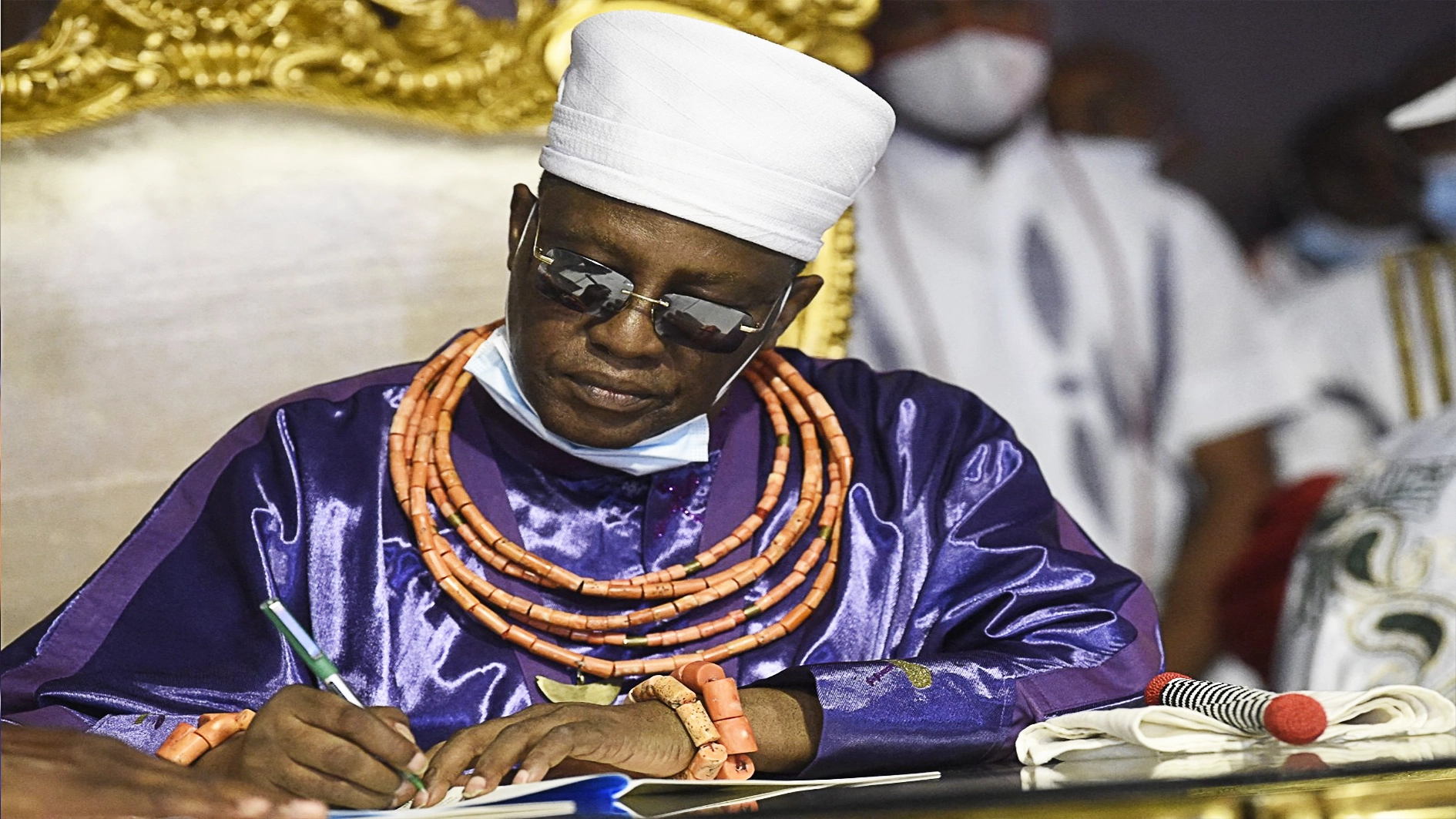
Nigeria is lucky, we did not take part in any military adventure before we got our independence. Our independence was negotiated diplomatically. But some units within the country like Benin, Bonny and Opobo kingdoms experienced brutal British colonization. The great grandson of Oba Ovonramwen, the current Oba of Benin, Oba Eheneden Erediauwa, Ewuare II, was crowned on October 20, 2016. King Charles Douglas MacPepple Jaja, Jeki VI of Opobo has just begun an expected long reign. May their era be peaceful and progressive.
Teniola, a former Director in the Presidency, wrote from Lagos.

