 Follow Us on Google News


 Follow Us on Google Discover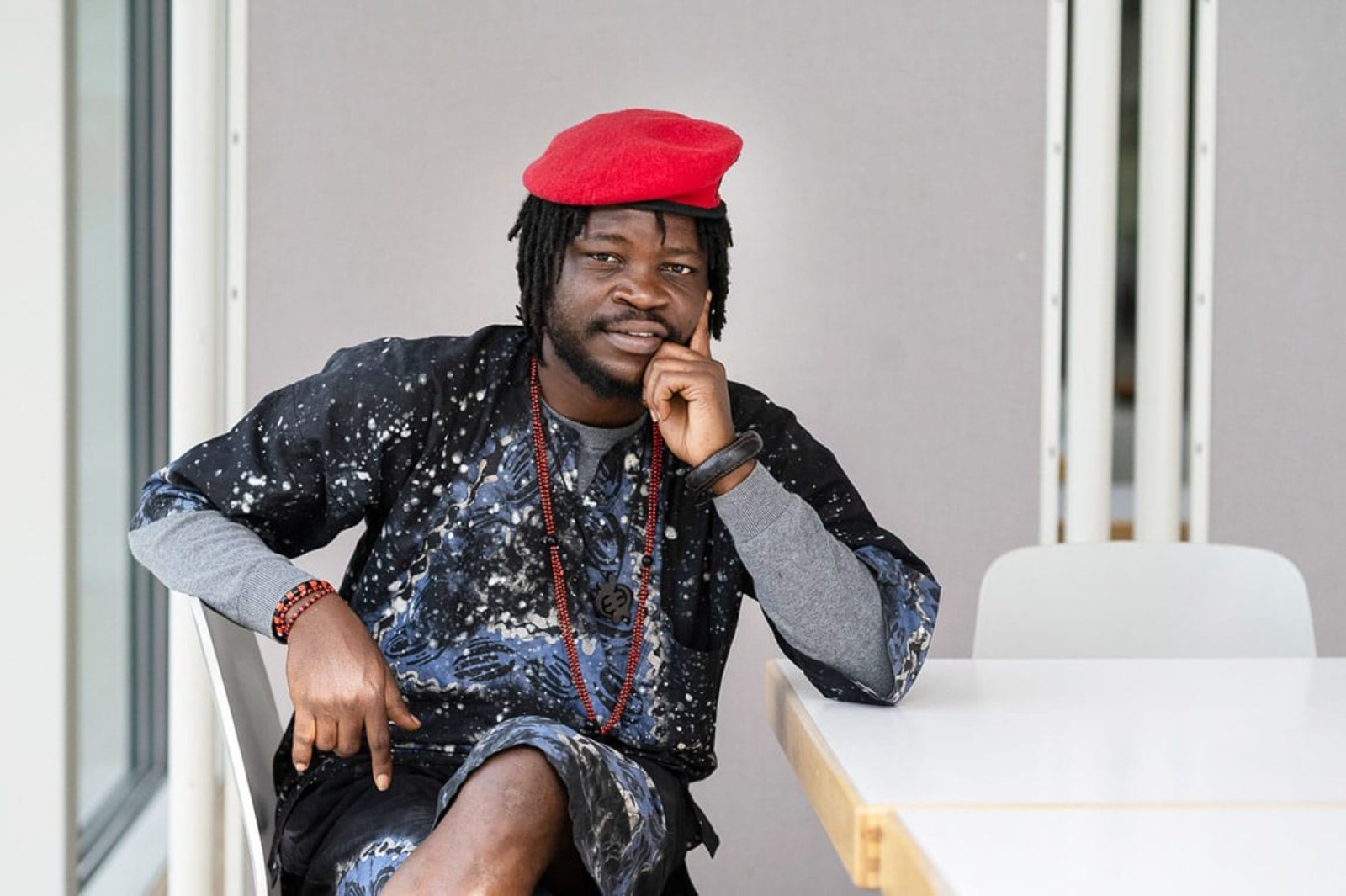
BY Temitope-Maberu Fagunwa
Ìyà l’ọ́mọde má ńjẹ ní ọdún rẹ̀, a Yoruba expression translating as Hardship is what the young endure in their prime, were the words hurled at me earlier this year by the Vice-Chancellor of Osun State University, Professor Clement Adebooye, in the middle of an exchange on an online platform of the university’s branch of the Academic Staff Union of Universities (ASUU). The background to the exchange was an open discussion that positioned young people and students as intellectually inadequate, a submission to which I raised an objection. Beyond the untenable generalization contained in the submission, the university, as a foremost institutional site of knowledge production, transmission, and critical inquiry, cannot absolve itself entirely of the intellectual deficiencies being attributed to those who pass through its walls. If young people are indeed said to constitute a significant stratum of an intellectually deficient society, then prevailing educational institutions must also look inward and confront their own possible share of responsibility for producing the outcomes now being attributed to them. This is all the more strongly so because intellectual formation does not occur in a vacuum. In fact, the United Nations Educational, Scientific and Cultural Organization (UNESCO) has identified supportive learning environments, qualified teaching, appropriate curricula, and sound assessment as fundamental to quality learning and higher-education standards.
I would go on to submit on the platform that to attribute inadequacy or ignorance to students without interrogating the material and institutional conditions under which they are taught, examined, and expected to learn is to reverse the direction of responsibility. The exchange exploded when I brought the discussion home by pointing to the university’s revenue-generating remedial “Summer Programme” as an institutional practice culpable in the production, reproduction, and normalization of the very form of inadequacy under discussion, a concern I had previously raised at a formal academic gathering of the university. The basis of my argument is that the programme is unethical and symptomatic of a deeper institutional problem in which the monetization of students’ academic failure is being pursued at the altar of pedagogical repair. To me, the programme commodifies and appropriates students’ academic difficulties into a source of Internally Generated Revenue (IGR), effectively making failure financially productive. Although the university administration presents the programme as a generous mechanism for assisting students who have failed conventional semester courses, I argue that, in the absence of any demonstrable pedagogical justification for its structure, it is akin to a form of intellectual extortion, as academic difficulties become both a source of IGR and a potential basis for a serious case of intellectual deprivation.
To accurately demystify this programme is to interrogate the language through which it is represented. “Summer” in the designation “Summer Programme” is a plagiarized European academic vocabulary and institutional language. Its uncritical transplantation into an Africa-based university, without any serious interrogation of the climatic and institutional context from which the term derives, is itself revealing. It raises the elementary question of what “summer” is supposed to signify meteorologically within the Nigerian context and, more importantly, exposes the extent to which colonial mentality continues to shape institutional language and reasoning in postcolonial Africa. In the Global North from which the terminology is plagiarized, summer programmes ordinarily provide opportunities for specialized study, professional development, academic enrichment, or carefully structured intensive learning. They are not simply an avenue for auctioning regular semester courses at ₦50,000 per course, nor do they represent the debasement of remedial education into an extraordinarily compressed cycle in which conventional academic content is repackaged and delivered within barely two weeks. These and other anomalies surrounding Prof. Adebooye-led “Summer Programme” at UNIOSUN, which the brevity of this intervention cannot accommodate, formed the basis and pedagogical rationale for my intervention.
While not ruling out the inevitability of failure in any educational system, it must be observed that a meaningful and honest remediation requires more than a compressed period of instruction. It requires engagement with factors behind failure. It requires a commitment to identifying and addressing the conceptual, methodological, or foundational gaps underlying failure, alongside sustained engagement with alternative pedagogical paradigms. The logic in my argument therefore could not have been dismissed. The Vice-Chancellor’s anti-intellectual reaction, however, is not accidental. It is symptomatic of a broader institutional crisis that currently confronts the university system. What is unfolding is a deeper institutional crisis in which the protection of academic standards, critical thinking, intellectual autonomy, and responsible university governance has become subordinated to the abuse of administrative power and financial imperatives. In a flagrant abuse of administrative power, the Vice-Chancellor matched his threat with action by subsequently initiating a deeply flawed and questionable disciplinary process against me.
In its most troubling manifestation, the above represents a retrogressive and degenerative form of university administrative authority that upholds nefarious ideals incompatible with internationally recognized standards of contemporary university governance. It is nothing short of a symbol of a militaristic, dictatorial, and authoritarian mode of university administration that suppresses dissent, cultivates sycophancy, instils fear, and reproduces intellectual backwardness, a nomenclature that, regrettably, has become far too common among university administrators in neocolonial Nigeria. Today’s proliferation of this form of administrative authority, however, must be connected to the longer restructuring of the African university system under neoliberal political economy, exposing the financial imperatives that birthed this institutional crisis. Since the 1980s, Structural Adjustment Programmes (SAPs) imposed an austerity regime that significantly diminished the role of the state in social provision. Advanced under the prescriptions of international financial institutions, particularly the World Bank and the International Monetary Fund (IMF), these reforms had profound consequences.

In Nigeria, SAP was accompanied by currency devaluation, inflation, and a decline in both the value and rate of government allocations to universities. The consequences have been severe and enduring, leaving the university system confronted with a lingering crisis of understaffing, deteriorating working conditions, weakened research capacity, decaying infrastructure, and an absolute collapse in public expenditure per student. The World Bank documented that between 1982 and 1986, a 38 per cent decline in real recurrent expenditure per university student in Nigeria was witnessed. These conditions have continued to shape the Nigerian university system to the present. What has followed has been even more devastating.
The financial disempowerment of the university by members of the political class has gradually ceased to be treated as an exceptional consequence of fiscal crisis and has become an enduring condition of institutional life. This has been accompanied by a sustained political project to ensure that university administration across the system is being placed in the hands of administrators who are less critical of political power and less willing to challenge the conditions responsible for the financial impoverishment of the university itself. In other words, the financially disempowered state of the university system has come to require, from the standpoint of political power, an administrative order that is equally disempowered intellectually and purposefully.
The above provides an important background to the increasingly compromised treatment of academic standards by university administrators. It helps explain the compromised posture of many universities today, where managements perceive the university as a commercial production site, not knowledge production site, in which academic activities in their entirety are to be converted into sources of IGR. This shift informs the packaged “Summer Programme.” It brings into sharper focus the contemporary posture of many public universities as centres of commercial enterprise, with their revenue-generating activities extending into an extraordinary range of ventures, including bakeries, bottled and sachet water production and sales, agricultural production and produce sales, laundries, driving schools, transport services, and even petrol stations. Some universities have in fact gone further by venturing into block moulding, cattle and ram rearing, car washing, hairdressing, barbering, tailoring, cleaning, and weeding services, etc.
But this obsession with IGR is preposterous. A university is not a factory or corporation whose success is measured by extracted revenue, but an institution whose foundational purpose is the production, preservation, and transmission of knowledge. The growing business imagination of the university system is a pointer to the larger influence of state power. Since the dominant social order of the Nigerian state, under its current dispensation is being organized around the imperatives of accumulation, institutions are correspondingly manufactured according to those same imperatives. This is precisely what Foucault explains through his notion of governmentality, where the rationality of state power becomes internalized within institutions, shaping how they organize themselves and conduct their affairs. Could the university environment, therefore, be immune to the influence of state power, particularly the anti-intellectual reasoning that has consistently characterized the Nigerian state? The answer is hardly affirmative. The partisan and parochial interests of university administrators have themselves constituted persistent obstacles to the intellectual autonomy of the university.
The nanny relationship that has developed between many state governments and the administrators of state universities glaringly underscores this aberration. It is here that state governments, having failed to adequately fund the university system, now exhibit the effrontery to give university authorities yearly targets for the amount of IGR to be extracted from students and academic activities. The political authority withdraws funding from the university and then turns around to instruct its administrators on how much money they must extract from the same university to compensate for that withdrawal. For an opportunistic university administration, of which there is no shortage, this creates a win-win situation. IGR becomes an avenue for administrators to embark on an unaccountable, ruthless, and often predatory extraction of resources from students and academic activities, while building class relations, accumulating resources with impunity, and evading accountability under the guise of institutional necessity. This background becomes relevant in decoding the quid pro quo gift that the Government of Osun State recently bestowed upon the Prof. Adebooye-led administration of UNIOSUN.
On 31 August 2026, Governor Ademola Adeleke announced a two-year extension of the Vice-Chancellor’s tenure. By implication, the Vice-Chancellor who came into office in January 2022, would remain until January 2029 rather than January 2027. This ultimately constitutes a direct challenge to the 2006 Osun State University Establishment Law, which, prior to its recent and parochial amendment and before the announcement by the State Government, provided that the Vice-Chancellor would serve a single five-year term and would not be eligible for reappointment. What is particularly disturbing is not simply the continuation of one Vice-Chancellor in office until January 2029. What is at stake is the conception of the university that such a decision represents. Is the university an institution governed by rules, or is it an institutional resource whose rules can be recalibrated when political and administrative interests require it? Yet this gift does not come as a total shock. It must be understood as an outcome of a broader pattern of disregard for standards, procedures, academic conventions, accountability and institutional autonomy that has characterized Prof. Adebooye-led UNIOSUN.
The decision to run an academic programme that falls short of the standards expected of a university committed to academic rigour and excellence for the sake of IGR underscores the opportunistic rush of an administration that has no qualms about prioritizing parochial state interests over university professionalism. This opportunism is yet visible in the case of an institutional blunder committed by the Vice-Chancellor, one that illuminates a deeply rooted and deeply unfortunate commitment to the repression of the principle of university autonomy. On 7 July 2026, Punch reported Prof. Clement Adebooye, while speaking at the inauguration of some of the university’s projects by Governor Adeleke, as stating that the projects were “completely funded by the Osun State Government through our Internally Generated Revenue (IGR).” There is a profound ambiguity in this submission. How can a single financial resource be described simultaneously as belonging to the Osun State Government and as constituting the university’s IGR? What legal or accounting basis permits this treatment? If a revenue is genuinely UNIOSUN’s IGR, by what mechanism does it become State Government funding? And if it is State Government revenue, in what meaningful sense does it remain the university’s IGR?
The Vice-Chancellor’s formulation however is intention. It was aimed at blurring the boundary between state subventions to the university and generated IGR. This act becomes important considering that the persistence of the report that the university has fundamentally become an IGR-driven university. In 2025, the State Government’s projected IGR from the university was approximately five times the amount appropriated directly to the university. This is both shocking and revealing, as it signals the extent to which UNIOSUN has been repositioned within the State’s fiscal architecture as an instrument of revenue generation, and not a publicly funded institution of higher learning. Under this projection, of the ₦7.660 billion in total revenue projected by the government for UNIOSUN, ₦6.375 billion was forecast to come from IGR and ₦1.284 billion from aids and grants. The expected ₦6.375 billion from IGR would be five times the ₦1.183 billion eventually appropriated to UNIOSUN in the State’s 2025 Approved Budget.
In a final submission, the illegality that accompanies the quid pro quo gift at UNIOSUN must be resisted because progressive societies are built on the logic that institution must survive the individual. They are built on law surviving the officeholder. At UNIOSUN, it must be insisted that academic culture must survive political convenience. This is pertinent for what is presented as continuity, gifted by an extension, is the masking of institutional erosion.
Temitope-Maberu Fagunwa, Ph.D. Revolutionary, historian and musician, writes from Accra, Ghana.

