 Follow Us on Google News


 Follow Us on Google Discover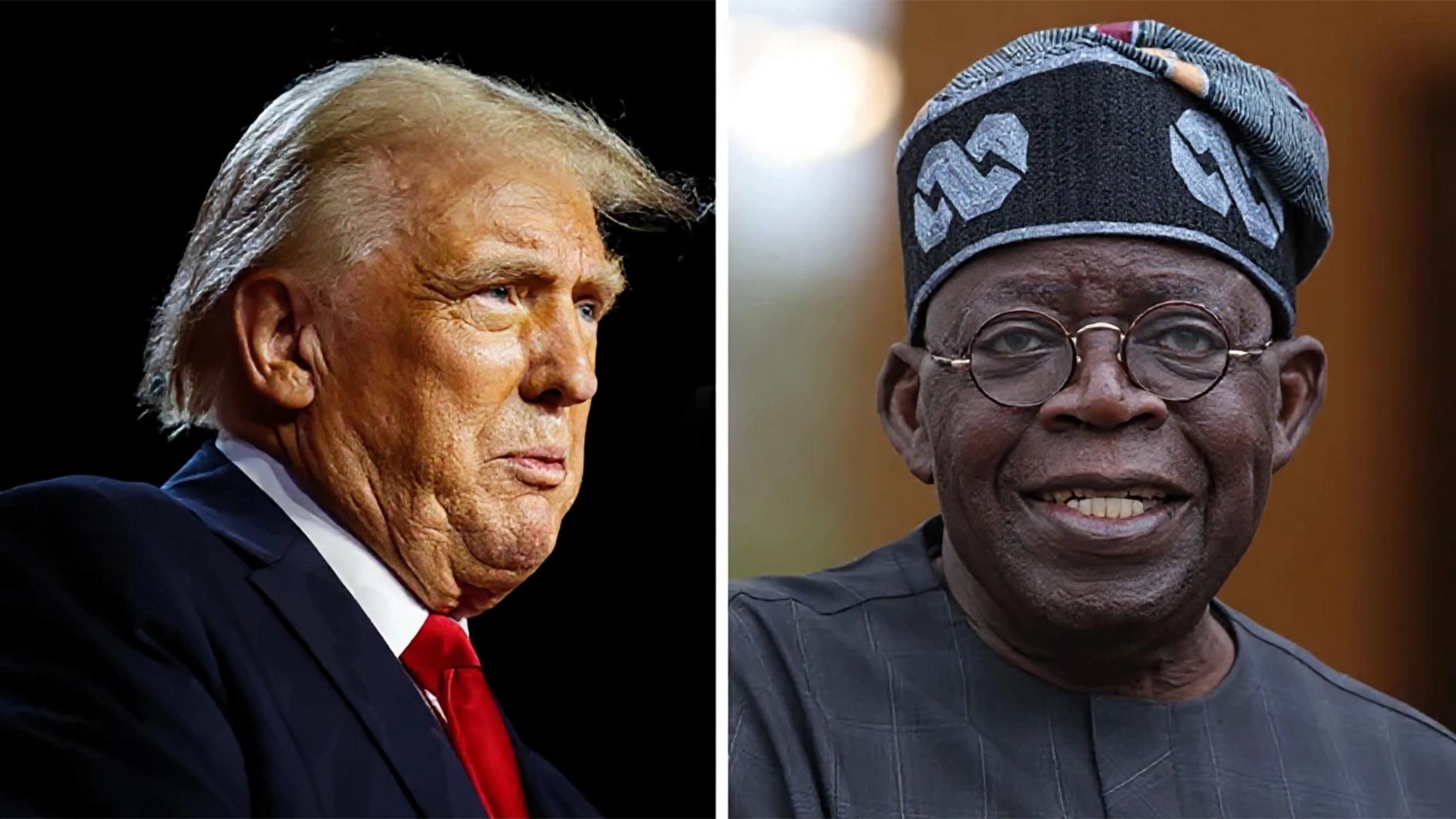
Donald Trump has tasted the most dangerous drug available to a powerful man: easy victory. That happened in Venezuela.
While much of the world slept on January 3, 2026, American forces launched an extraordinary military operation, striking targets inside a sovereign country, capturing President Nicolás Maduro and his wife, Cilia Flores, and flying them to the United States. By morning, Maduro was no longer governing Venezuela. He was an American prisoner.
Trump subsequently announced that the United States would oversee Venezuela’s political transition. Washington moved aggressively into the country’s oil economy. Trump announced arrangements under which tens of millions of barrels of Venezuelan oil would be sold, with the proceeds controlled by American authority.
Whatever one’s opinion of Nicolás Maduro – and there is plenty to criticise about his government – something extraordinary had happened. The president of one sovereign nation had sent American forces into another sovereign nation, removed its head of state, transported him to an American jail, inserted the United States directly into the country’s political transition, and asserted extraordinary control over the economic resource for which Venezuela is famous.
And it worked. At least in the narrow military sense. There was no prolonged occupation, no years-long insurgency, no Fallujah, no Kabul, and no Saigon. The spectacular part was over almost before the world understood what had happened.
For Donald Trump, Venezuela offered something even more intoxicating than oil. It offered the image of victory. And victory is dangerous when it teaches the wrong lesson. Every easy victory whispers to the victor: You can do it again.

Then came Iran.
Iran was supposed to be another demonstration of overwhelming American power. The language from Washington was almost cinematic. Trump initially spoke of roughly four to five weeks. Pete Hegseth assured Americans: “This is not Iraq.” He insisted: “This is not endless.” There would be no nation-building quagmire or democracy-building exercise. This would be different. Quick. Focused. Overwhelming. Decisive.
Trump said America was ahead of schedule. The White House celebrated “overwhelming” success. Trump spoke of “swift, decisive, overwhelming victories.” Hegseth boasted that Iran had been “embarrassed and humiliated.” Washington eventually proclaimed a “decisive military victory.” Iran’s Supreme Leader, Ayatollah Ali Khamenei, was killed, along with senior Iranian leaders. Iranian military installations were devastated, and its naval and air capabilities suffered enormous damage. America slapped Iran. Hard.
But Iran struck back. And therein lies the difference between Venezuela and Iran. Iran had something Venezuela did not. The Strait of Hormuz. Suddenly, the geography began to fight on Iran’s side. A narrow stretch of water became more strategically powerful than aircraft carriers, cruise missiles, and presidential speeches.
Iran realised it did not need to defeat the United States militarily in the conventional sense. It merely needed to make victory unbearably expensive. Threaten shipping. Disrupt energy markets. Raise insurance costs. Push oil prices higher. Force Washington to expend military resources. Make American consumers feel as if they’re in a Middle Eastern war every time they approach a gas pump.
And wait. Four weeks became five. Five became six. Six became months. The “not endless” war refused to end. The “decisive” victory refused to turn into peace. The supposedly humiliated enemy refused to act humiliated. And today, nearly six months after Operation Epic Fury began, the United States remains trapped in the contradiction between battlefield superiority and strategic frustration.
That distinction matters. America can destroy more than Iran. America can fly more sophisticated aircraft. America can launch more advanced missiles. America can devastate Iranian infrastructure. But if Washington cannot achieve its political objectives at an acceptable cost, military superiority does not automatically translate into strategic victory. That is one of the oldest lessons in warfare. Donald Trump is discovering it again.
The Strait of Hormuz has become the geographic veto on Trump’s victory speech. It has become the strait that swallowed the victory parade. Washington and Tehran have even publicly contradicted each other over whether the waterway is truly open and safe. Shipping traffic has collapsed to levels well below normal. Energy markets remain nervous. Iran continues to use the strait as leverage. And so, Washington has reached for another weapon: money.
Scott Bessent has now unveiled what amounts to an economic D-Day against Iran – an effort to suffocate Tehran financially through extraordinary sanctions and secondary pressure on those who continue to do business with it. The administration calls the campaign Operation Economic Outcast. The message is brutally simple: Do business with Iran, and risk doing business with America.
There is one problem. It’s called China. China buys the overwhelming majority of Iran’s exported oil. Beijing has already rejected Washington’s sanctions strategy and signalled its intent to defend its economic interests.
That creates another Strait of Hormuz problem – only this time the strait is called China. Sanctions are devastating when everyone important obeys them. They become substantially less so when the world’s second-largest economy decides not to.
Washington knows this. That may explain why the latest American sanctions have been ferocious toward Iranian entities while conspicuously cautious about directly punishing major Chinese financial institutions. Threatening China is easy. Confronting China economically, while also confronting Iran and engaging in a trade confrontation with Canada, is something else entirely.
Perhaps Trump thought Canada would fold. After all, Venezuela folded militarily. Iran was supposed to fold militarily. Why shouldn’t Canada fold economically? But Mark Carney is no Nicolás Maduro. Canada is not Venezuela. And Canadians appear increasingly determined that their country will not become Donald Trump’s economic protectorate – or his proverbial “51st state.”
Carney has drawn a line in the sand on Canadian sovereignty. When Washington reportedly sought restrictions that would affect Canada’s ability to negotiate its own trade relationships, Carney called the demand unacceptable. Canada walked away. Trump imposed tariffs. Canada announced retaliation. Dollar for dollar.
This is the problem with bullies. Bullying works magnificently until somebody punches back. And Canada punched back. Not because Canada possesses America’s economic weight. It does not. Not because Canada can inflict more economic damage on the United States than the United States can inflict on Canada. It cannot. But because sovereignty sometimes means accepting pain rather than buying comfort through submission.
Carney appears to understand something many leaders of smaller countries never learn: The bully’s greatest weapon is not his strength. It is your fear of his strength. Once you show you are prepared to absorb some pain, the calculation changes.
And now comes the political clock. November 3, 2026. The American midterm elections – just 70 short nights away. Every seat in the House of Representatives will be contested. Control of Congress is at stake. Trump enters that election season carrying an Iran war that has lasted far longer than the rhetoric surrounding its opening suggested. He carries high gas prices. He carries foreign-policy frustrations that extend beyond Iran. And he still carries the Jeffrey Epstein controversy that refuses to disappear.
I am not claiming that the Iran war was launched to bury the Epstein files. That claim has been widely made by Trump’s critics, but an allegation is not proof. What can be said is that Iran did not make Epstein disappear. The scandal survived the missiles.
And Trump now faces a particularly dangerous political reality: the appearance of an American president who promised overwhelming strength but has been unable to translate that force into a clean political conclusion. For a president who has built much of his political mythology around winning, that is dangerous. For a Republican president, it may be even more dangerous.
Because the Republican political brand has spent decades wrapping itself in the language of military strength, Republicans do not want to campaign in November explaining why America is still wrestling with Iran.
Trump needs a reset. A photograph. A headline. A surrender. A spectacle. A victory. Preferably quick, overwhelming, and against an opponent incapable of meaningful retaliation. In other words, Trump needs another Venezuela.
So, who will give the bully his victory? This is the question smaller and weaker states should now be asking. Not because there is evidence that Washington has secretly selected another country for invasion. There is no evidence. But prudent governments do not wait until American aircraft are airborne to conduct geopolitical risk assessments. This brings me to Africa, specifically Nigeria.
Nigeria should be paying attention. Donald Trump has already shown he is prepared to use American military force inside Nigeria. On Christmas Day 2025, American forces struck Islamic State targets in northwestern Nigeria. Importantly, the operation was conducted in cooperation with Nigeria. But the context matters. Trump had previously threatened unilateral American action if Nigeria failed to protect Christians from extremist violence. Reuters subsequently reported that Nigerian cooperation in the Christmas operation may have helped Abuja avoid the humiliation of unilateral American military intervention.
Think carefully about what that means. The precedent already exists. American weapons have already struck Nigerian territory under Donald Trump. Washington has already publicly questioned Nigeria’s ability or willingness to protect parts of its population. Trump has already threatened action and has already demonstrated elsewhere that when he believes another country’s government is incapable of solving a problem he defines as affecting American interests, sovereignty does not necessarily restrain him.
Now ask the uncomfortable question: What has fundamentally changed in Nigeria since Christmas? Has terrorism disappeared? Have the killings ended? Have vulnerable communities suddenly become safe? Has the Nigerian state demonstrated unquestionable control over every inch of Nigerian territory? If the answer is no, what precisely makes Abuja confident that the Christmas strike was the end of the matter?
And there is another complication: Bola Tinubu. Nigeria enters this dangerous geopolitical moment with its leader entangled in an extraordinary American court battle over historical law-enforcement records. A federal Freedom of Information Act lawsuit seeks FBI and DEA records related to historical investigations involving Bola Tinubu.
A U.S. federal judge previously rejected the FBI and DEA’s attempts to refuse to confirm or deny the existence of relevant records and ordered the agencies to search for and process non-exempt, responsive records. The litigation continues. The FBI has recently sought permission to privately explain to the judge why portions of the material should remain withheld, citing law-enforcement techniques, confidential information, and potential risks to individuals.
Tinubu denies wrongdoing, and the historical proceedings frequently discussed in connection with these allegations resulted in civil forfeiture rather than a criminal conviction. Those distinctions matter. But geopolitically, something else matters, too. The Nigerian leader enters an extraordinarily consequential election season while politically sensitive American law-enforcement records concerning him remain the subject of active litigation in Washington.
Nigeria’s presidential election is scheduled for February 20, 2027. Trump’s midterm election is on November 3, 2026. Two elections. Two leaders. Two enormous sets of political stakes. And an increasingly unpredictable relationship among sovereignty, American power, and Trump’s domestic politics. Nigeria would be foolish not to think through every conceivable scenario.
What would “victory” in Nigeria even look like for Donald Trump? It need not resemble Venezuela. Nobody should imagine American helicopters landing at Aso Rock tomorrow morning. Geopolitical coercion takes many forms. It could mean another unilateral counterterrorism strike. It could mean an expanded American military campaign against extremist groups operating in Nigeria. It could mean Washington declaring that Abuja has failed to protect Christians and reserving the right to act independently.
It could mean sanctions against Nigerian officials, visa restrictions, financial pressure, intelligence disclosures, diplomatic isolation, or pressure tied to security cooperation. Or a combination of military, economic, and political coercion designed to force Abuja into visible concessions that Trump can present domestically as another example of a foreign government yielding to American power.
Again, I am not predicting that any of these things will happen. I am asking whether the Nigerian government has seriously considered that they could. After Venezuela, that question is no longer paranoid. It is strategic planning.
Is anyone in Abuja thinking about this? That is the question that troubles me. Does the Tinubu government see the geopolitical chessboard? Does anyone in Aso Rock have a team conducting serious scenario analysis of Trump’s need for a foreign-policy victory before November? Has Nigeria assessed how another dramatic terrorist attack against Christians could alter Trump’s political calculations?
Has Abuja considered what would happen if American conservative media suddenly demanded that Trump “do something” about Nigeria again? Has Nigeria developed a diplomatic strategy involving Congress, the Pentagon, the State Department, American religious organisations, the African Union, ECOWAS, and major European partners?
Has Nigeria quietly strengthened ties with countries capable of raising the diplomatic cost of unilateral intervention? Has Abuja developed a communications strategy to explain Nigeria’s security crisis to Americans before Trump defines it for them?
Most importantly: Has Nigeria actually improved the security situation that created the vulnerability in the first place? Sovereignty cannot survive indefinitely as a press release. A country protects its sovereignty, in part, by ensuring that outsiders cannot plausibly claim they must enter its territory to perform functions the government has failed to perform.
Do not give the bully his Venezuela. Nigeria cannot outgun the United States. That would be an absurd proposition. Neither could Canada economically overpower America. What Canada demonstrates is something more important. National strength begins long before military confrontation. It begins with competent government, institutional credibility, strategic alliances, economic resilience, diplomatic preparation, domestic legitimacy, and leaders whose personal vulnerabilities cannot easily become national vulnerabilities.
Nigeria’s greatest protection against becoming anyone’s geopolitical trophy is not bravado. It is competence. Secure your people. Control your territory. Take terrorism seriously. Protect Christians. Protect Muslims. Protect everybody. Build a credible intelligence capability. Engage Washington relentlessly. Strengthen regional alliances. Diversify strategic partnerships. And never allow another government to acquire the moral pretext – however selectively or opportunistically invoked – to violate Nigerian sovereignty.
Donald Trump has learned something from Venezuela. Power can move with extraordinary speed when the target is weak. Iran has taught him something different. Some countries can make victory painfully costly. Canada is teaching him something else. Even America’s closest neighbours can refuse to kneel.
Nigeria must decide which lesson it wants Trump to learn about Nigeria. Somewhere between Caracas and Tehran, between the Strait of Hormuz and Ottawa, a dangerous political equation may now be forming. A president needs a victory. The midterm clock is ticking. Iran refuses to provide one. China refuses to make one easily. Canada refuses to surrender one. And so, the question travels outward across the map: Who will give Donald Trump a desperately needed victory? Nigeria should make certain that the answer is not Nigeria.
Absolutely certain.
Dr Vitus Ozoke is a lawyer, human rights activist, and public affairs analyst based in the United States. He writes on politics, governance, and the moral costs of leadership failure in Africa.

